 বাংলা
বাংলা 
 Русский
 English
 Bahasa Indonesia
 Bahasa Malay
 ไทย
ไทย Español
 Deutsch
 Български
 Français
 Tiếng Việt
 中文
中文 हिन्दी
 Čeština
 Українська
 Română

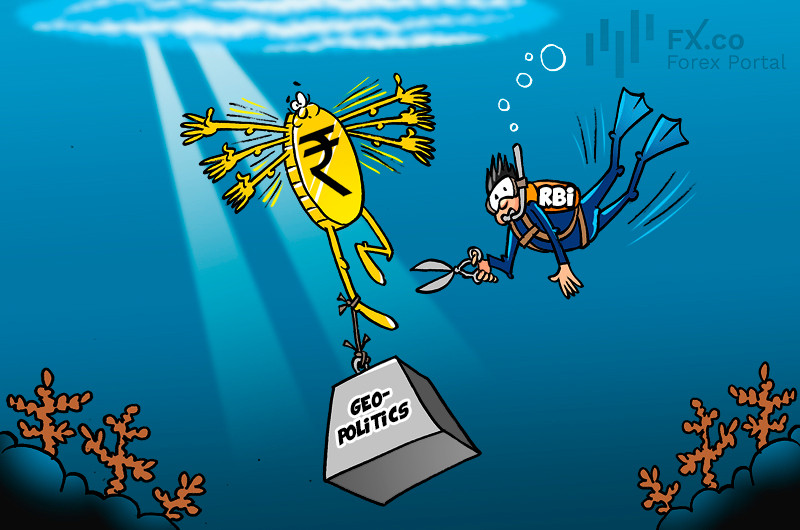
The Reserve Bank of India (RBI) is likely to keep policy rates unchanged at its upcoming June meeting but to adopt a noticeably firmer stance on future action. In a new analytical report, BofA Global Research says the Indian regulator finds itself in a difficult macroeconomic position, forced to stimulate domestic growth while defending the Indian rupee. The currency continues to face strong pressure amid heightened global geopolitical tensions, a sharp rise in commodity prices in world markets, and a widening trade deficit. Nevertheless, current domestic conditions do not yet justify emergency measures. In April, the consumer price index registered 3.48%, which is below the central bank’s 4% target, and current industrial activity shows no clear signs of overheating.
Despite stable core inflation around 3.7%, financial markets are increasingly pricing in future tightening of monetary conditions. International investors expect more than 100 basis points of rate increases in India over the next year amid growing concerns about rupee weakness and the risk of imported inflation. Although wholesale prices in the country have surged due to higher energy costs, their direct effect on the retail sector has so far been limited. Analysts note that the regulator’s traditional response to currency weakness is to raise rates to increase the appeal of local assets. However, in the present situation, small steps by the central bank could be ineffective, and only substantial tightening could stabilize market sentiment.
Over the longer term, experts forecast inevitable strengthening of inflationary pressures in the Indian economy. Because of high global fuel and energy prices, headline inflation could exceed 5% by September 2026 and remain elevated into early 2027. A major risk factor is climatic anomalies: the probability of an El Niño event is estimated at 82%, which could disrupt the seasonal monsoon rains and hit the agricultural sector and food production. Nevertheless, in recent months, the Reserve Bank of India has continued to flood the financial system with liquidity, prioritizing support for growth over strict defense of the exchange rate. The baseline scenario envisages holding rates in June to prepare investors gently for a future policy tightening cycle with the first rise expected around December.