 বাংলা
বাংলা 
 Русский
 English
 Bahasa Indonesia
 Bahasa Malay
 ไทย
ไทย Español
 Deutsch
 Български
 Français
 Tiếng Việt
 中文
中文 हिन्दी
 Čeština
 Українська
 Română

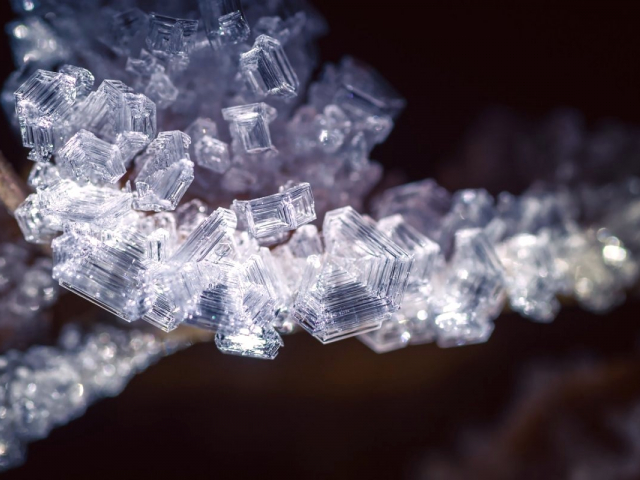
Geometric civilization
Under strong magnification, it stops being white dust. A monolithic, geometrically perfect structure appears. Sodium chloride crystallizes as cubes that often fuse into intricate stepped pyramids. The edges of those cubes are perfectly straight. The surfaces are smooth, as if polished by a craftsman. At certain angles of light, they resemble ancient ziggurats or abandoned megacities of a lost civilization. These monumental architectural works hide in the saltshaker on your kitchen table.
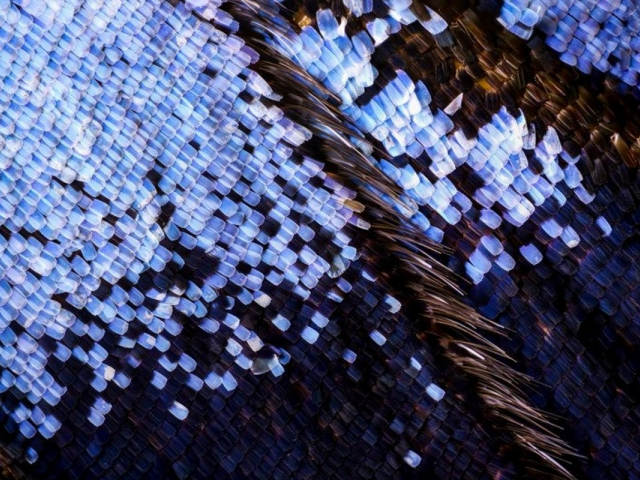
Photonic jungles
Its bright color is an optical illusion made by billions of tiny scales. Each scale is a complex, ribbed structure that refracts light and creates incredible neon shades. Under strong magnification, the wing becomes endless rows of tiles, like dragon scales or futuristic solar panels. The ribs of the scales look like the texture of alien corals that glow from within. This is a world where color is born not from pigment but from nano‑geometry, producing a staggering landscape hidden in every flap of a butterfly wing.
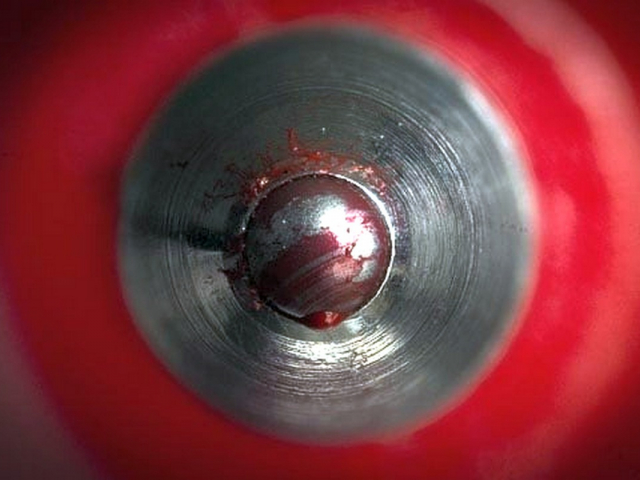
Technogenic monolith
A familiar tool we use every day looks like a complex industrial object on the micro level. At the tip sits a perfectly smooth metal ball held in a steel tip. Under magnification, the ball looks like a giant metal monolith or an orbital station floating in the void. The gap between the ball and the tip appears as a dark canyon. Traces of substance around the ball add texture that resembles spent fuel. This is a world of pure function, the aesthetic of industrial space reflected in a pen refill.
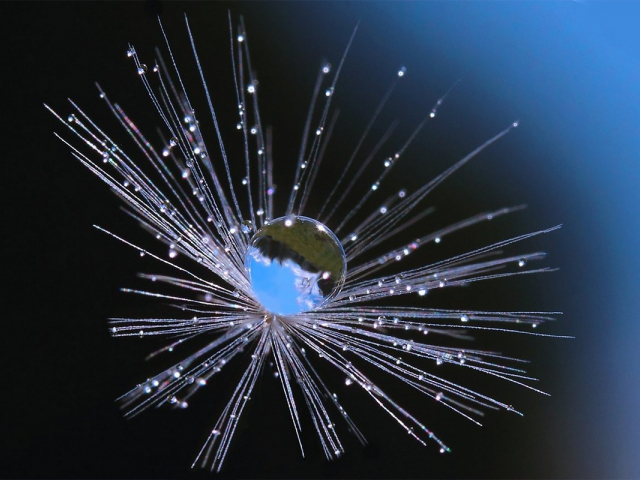
Fragile universe
Before us, there is a world of incredible fragility and complex aerodynamics, where hundreds of ultra‑fine hairs form a perfect parachute. Under strong magnification, those hairs look like an intricate web strewn with tiny drops of water. At the center, where they converge, the structure looks like the core of a fragile frozen star or like a neural network frozen while waiting for an impulse. Here, lightness is absolute. This universe can collapse from the slightest breath, yet it can travel kilometers in search of a new life. A fragile dandelion seed on the wind.
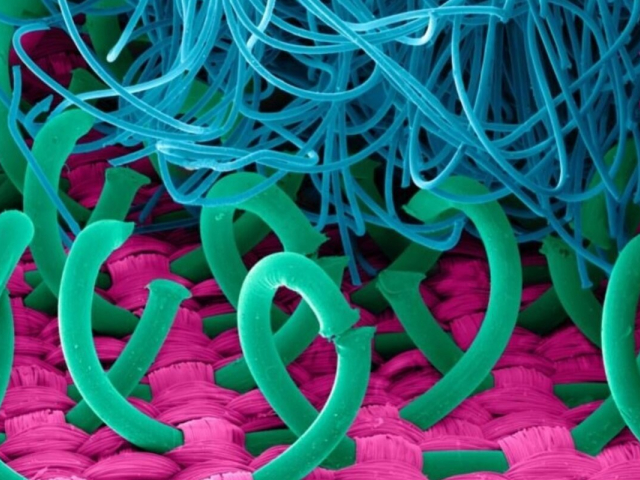
Mysterious forest
Under the microscope, the secret of its grip is revealed. On one side, there are many stiff nylon hooks that resemble the talons of predatory birds or animals. The other side is a chaotic tangle of soft loops that look like tangled jungle or dense clouds. On contact, the hooks embed into the loops, creating thousands of micro‑connections. In macro photography, this process looks like a battle of two worlds — hard geometry versus soft chaos. This is a biomimetic masterpiece: a simple structure produces one of the most reliable fasteners in the world, a hook‑and‑loop fastener for clothing.
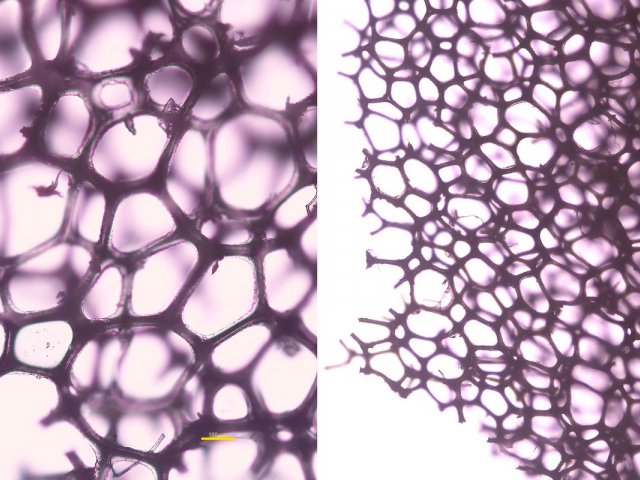
Synthetic labyrinth
An ordinary household item becomes an endless, frightening maze under the microscope. The porous structure of polyurethane looks like interwoven organic fibers or the innards of a fantastic creature. Voids and caverns appear bottomless, and the thin walls between them look like transparent membranes. At this scale, the prosaic object resembles a mysterious coral reef. Water bubbles trapped in the pores look like alien artifacts. They get entangled in a network made for one purpose — to absorb like a sponge.
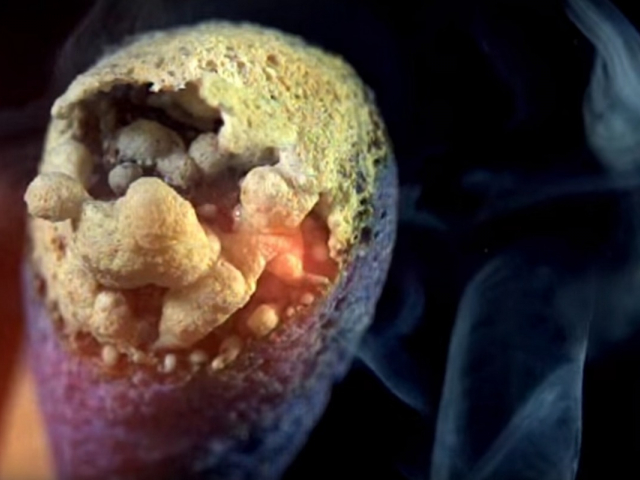
Sleeping volcano
Before an eruption, it is a sleeping volcano, a landscape frozen while it waits for energy. Under magnification, its surface looks like solidified lava or the porous soil of a distant red planet. A chemical mix of potassium chlorate and sulfur forms an uneven, knobby texture with deep craters and sharp peaks. Inside those microwaves, a destructive force hides, ready to become a zone of fire at any moment. In fact, every irregularity plays a role in a chain reaction when we strike a match on the box’s side.