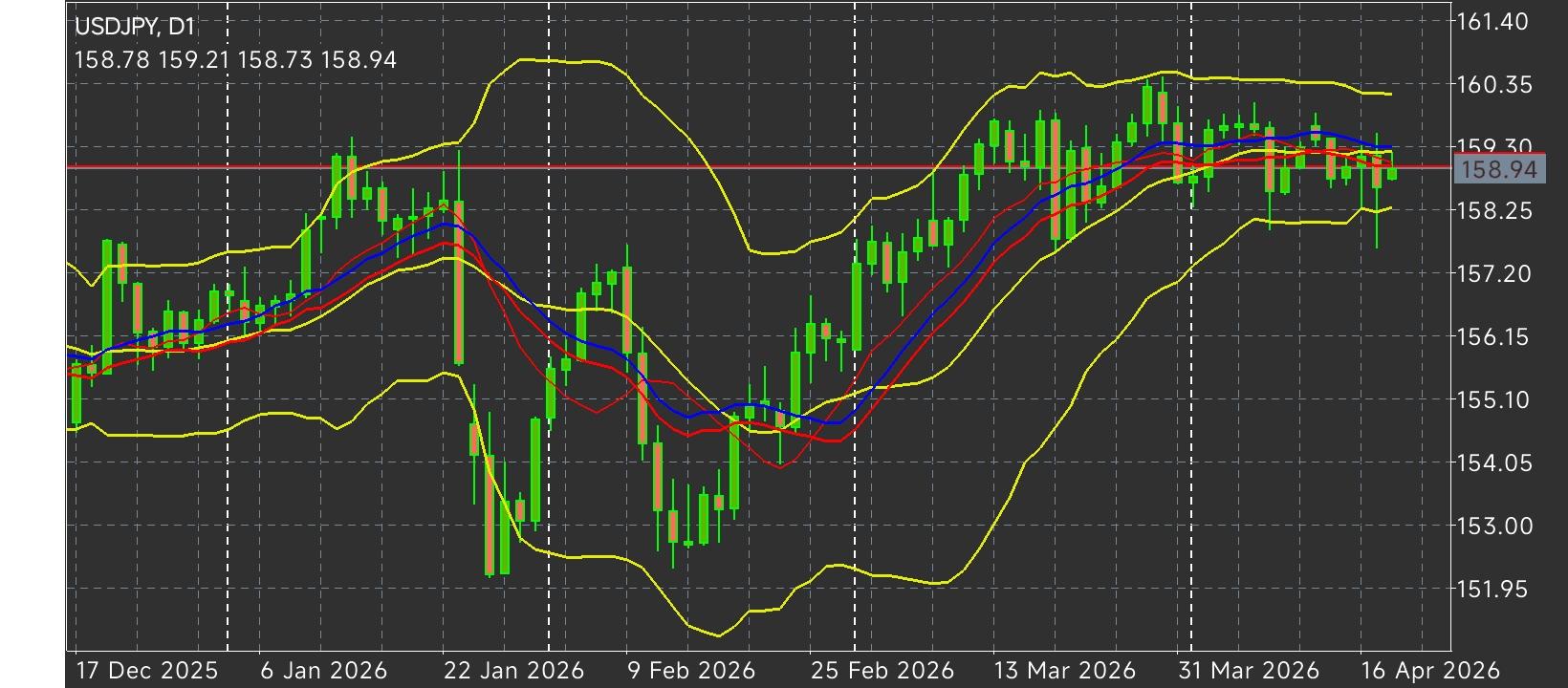
 The Geopolitical Tremor: USD/JPY Pierces 159.00 as Honshu Earthquake and Diplomatic Deadlock Paralyze the Yen
 The USD/JPY pair ascended toward the
159.00 handle during Monday’s European session, gaining approximately
0.25% as a "perfect storm" of natural disaster and geopolitical friction battered the Japanese Yen (JPY). The fundamental narrative shifted violently following a massive
7.3 magnitude earthquake off the east coast of Honshu, Japan. While Hokkaido Electric Power provided a modicum of relief by confirming no abnormalities at the
Tomari nuclear power plant, the subsequent tsunami observations reported by NHK have reignited fears of structural economic disruption. This "nature-driven" volatility has exacerbated an already weak Yen, which was already reeling from a dovish repricing of the
Bank of Japan (BoJ). Investors now overwhelmingly expect the BoJ to maintain its ultra-loose stance during the
April 28 meeting, as the twin threats of regional instability and negative energy shocks render a rate hike nearly impossible for the foreseeable future.
The "No-Talks" Premium: Greenback Resilience Amid Iranian Defiance While the Yen grapples with internal shocks, the
US Dollar (USD) has solidified its status as the global safe-haven of choice. The
US Dollar Index (DXY) climbed to
98.30 after Iran’s foreign ministry spokesperson,
Esmail Baghaei, delivered a diplomatic blow by stating there is "no plan for a second round of negotiations" with Washington. The primary point of contention remains the
US naval blockade, which Tehran views as an active act of aggression that fundamentally "undermines" the Islamabad peace framework. This breakdown in diplomacy has triggered a flight to quality, benefiting the Greenback’s reserve status as the April 22 ceasefire deadline approaches without a clear path toward extension.
The Warsh Factor: A New Era at the Federal Reserve? On the domestic front, the markets focus is pivoting toward the
Senate Banking Committee, where
Kevin Warsh, President Trump’s nominee for Federal Reserve Chairman, is set for his confirmation hearing on Tuesday.
Inflation De-anchoring: With global oil prices remaining elevated due to the
Strait of Hormuz instability, investors are desperate for clarity on whether Warsh will adopt a "hawkish" stance to re-anchor inflation expectations.
Policy Divergence: Any hint that the Fed under Warsh might prioritize price stability over growth—despite the geopolitical headwinds—would likely broaden the yield differential between the US and Japan, providing further jet fuel for the USD/JPY bullish run.
Technical Trend Architecture: The 159.00 Barrier and the 160.00 Horizon From a structural perspective, the USD/JPY technical setup is transitioning from a steady climb into a potential high-volatility breakout phase.
The Immediate Resistance: The pair is currently testing the
159.00–159.20 zone. A sustained hourly close above this region would signal that the market has successfully "digested" the Honshu earthquake news and is positioning for a fundamental re-rating.
Momentum Profiling: The
Relative Strength Index (RSI) is trending higher toward the
65 level, indicating robust buying pressure. However, the pair remains beneath the psychological "Intervention Zone" of
160.00, where Japanese authorities have historically signaled their discomfort with Yen depreciation.
Strategic Support and Expansion Objectives: The USD/JPY is navigating a high-stakes technical corridor defined by regional disaster and global deadlock:
Immediate Support (158.40): This level represents the recent price pivot and the
200-hour EMA. As long as the pair holds above this floor, the "buy-the-dip" mentality is expected to persist.
The Bullish Objective (160.00+): Should the Warsh testimony lean hawkish and the tsunami damage prove significant, a run toward
160.20 is highly probable. This would represent a multi-decade high and likely trigger a fresh round of verbal intervention from Tokyo. As the markets digest the Tomari plant safety reports and wait for the Warsh hearing, the USD/JPY stands as the definitive barometer of "Risk-Off" sentiment. The pair remains skewed to the upside, fueled by a Yen that is being squeezed between the shifting tectonic plates of the Pacific and the rigid blockade in the Persian Gulf.
*The market analysis posted here is meant to increase your awareness, but not to give instructions to make a trade
 Italiano
 Русский
 English
 Bahasa Indonesia
 Bahasa Malay
 ไทย
ไทย Español
 Deutsch
 Български
 Français
 Tiếng Việt
 中文
中文 বাংলা
বাংলা हिन्दी
 Čeština
 Українська
 Română
