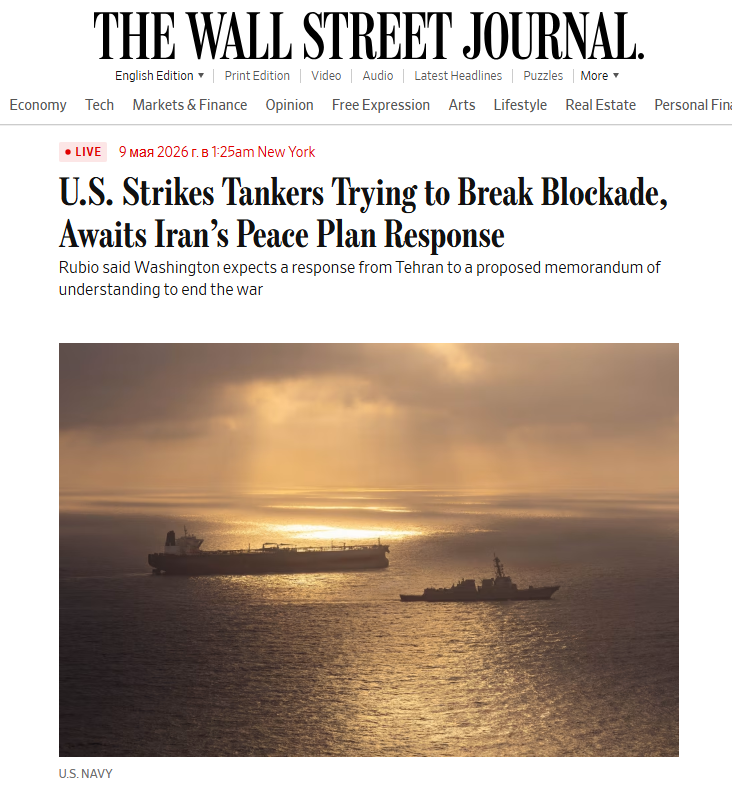
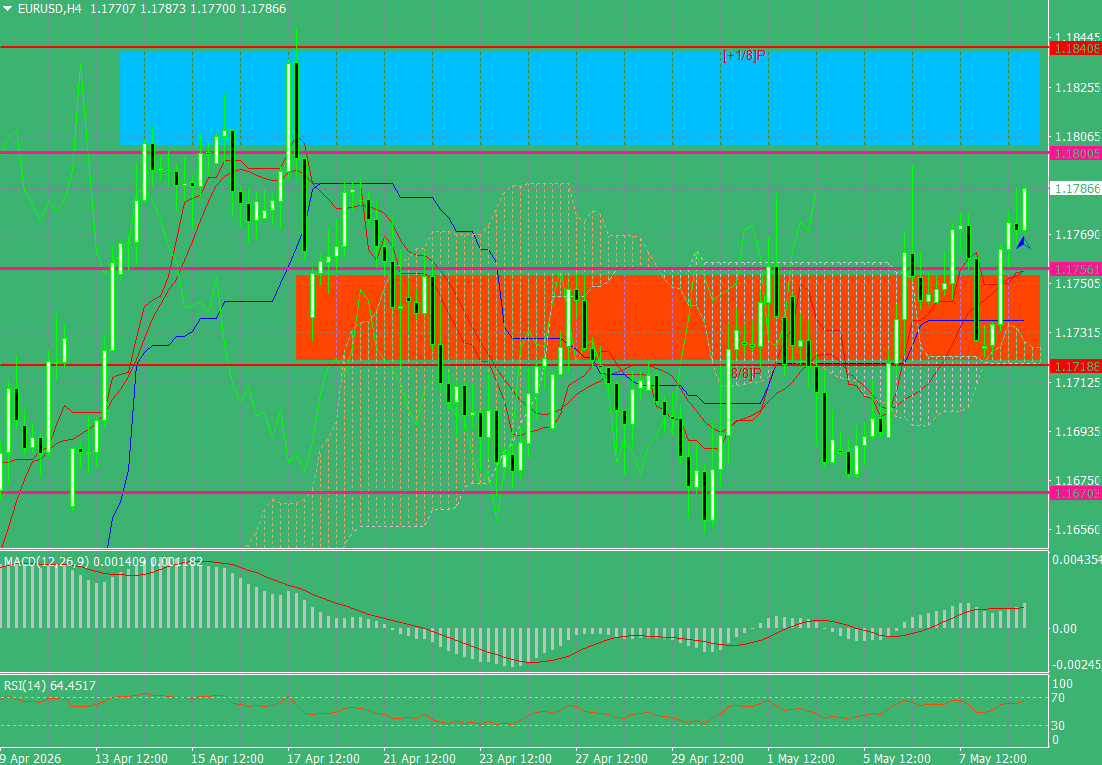
The EUR/USD pair ended the trading day on a major note. What is the basis for the bullish fervor? Let's start by recalling the unanimous forecasts of analysts that were heard before the release of US employment data. Almost all experts (and quite rightly) pointed out that this indicator would be the main influencing factor on the dollar exchange rate, sharing the pedestal with news regarding the US-Iran conflict. Employment increased by 115K, instead of the expected 65K, almost doubling analysts' expectations. As for military affairs, after US troops struck two Iranian tankers yesterday trying to bypass the American naval blockade, Iran's National Security Council emphatically stated that no agreements with the US could be made after that. Will Trump's assurances that negotiations are ongoing and going well negate this statement? It would be funny to assume that cunning speculators would fall for these simple tricks, especially from the American president, who seems to have seven Fridays in a week. How do seasoned analysts justify what has happened? Let's turn to an authoritative source - the Wall Street Journal. Traditionally referring to another "leak of information," the newspaper drew a significant conclusion - details of the negotiations, supposedly postponed to next week, remain unclear. At the same time, the article authors shared their observations, noting that "optimism is in the air." They did not explain the basis of this optimism, limiting themselves to reporting that the positive data on non-farm employment "likely offset weak wage data and optimism about the war." Can the data on average hourly earnings, which remained at the same level of 0.2% instead of the forecasted 0.3% increase, offset one of the main indicators that the Fed relies on? It's hard to believe. Actually, analysts could find more coherent justifications for what is happening if they don't want to point out the real reasons. What could be a real reason? Intervention aimed at creating a safety cushion to compensate for the effect of what is expected to happen in the near future, possibly even over the weekend. Additional evidence for this version is that at the end of trading, instead of traders taking profits as expected given the circumstances, the pair continued to rise. This fits perfectly with the behavior traditions of the American regulator. If the Bank of Japan was interested (which is also in its traditions) in loudly announcing its intervention plans for quite some time before implementing them, the Fed hides in the bushes because it has the opposite goal. Japan aims to strengthen its national currency, while the US, on the contrary, aims to prevent the dollar from rising to an unacceptable level from their point of view. By the way, Japan's intervention has already played into the hands of its overseas partner, spending a total of about 54.7 billion dollars on buying its own currency. After the Americans sell off the dollar, Japan may be satisfied with the achieved result without further interventions, if... if, despite all the efforts of their American colleagues, the dollar does not start a sharp rise. Speculating on how trading will unfold in the near future seems pointless. Only insiders, whom I am not familiar with, know about it. The reins may loosen at the beginning of the week, interventions may continue, or if nothing happens to trigger another wave of traders buying the dollar as a reserve asset, the market may just act on its own. From a technical point of view, the situation clearly favors the bulls, but even ignoring the fundamentals, they may be unsettled by the auxiliary resistance at the 18th figure base, as well as the level of 1.1840 (Murray 8.8). The nearest support is at the level of 1.1756 (H4 Tenkan). Next is the Kijun line, located halfway to the key level of 1.1718 (Murray 8.8).
*The market analysis posted here is meant to increase your awareness, but not to give instructions to make a trade
 Italiano
 Русский
 English
 Bahasa Indonesia
 Bahasa Malay
 ไทย
ไทย Español
 Deutsch
 Български
 Français
 Tiếng Việt
 中文
中文 বাংলা
বাংলা हिन्दी
 Čeština
 Українська
 Română