 Deutsch
 Русский
 English
 Bahasa Indonesia
 Bahasa Malay
 ไทย
ไทย Español
 Български
 Français
 Tiếng Việt
 中文
中文 বাংলা
বাংলা हिन्दी
 Čeština
 Українська
 Română

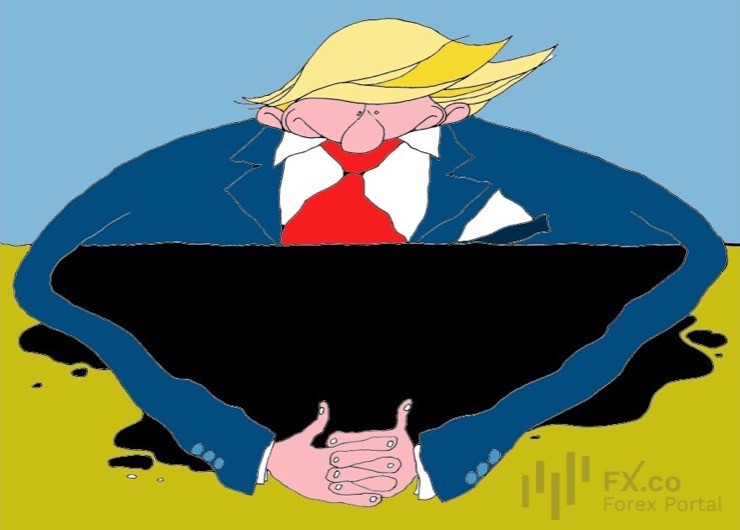
Investors are discussing the so‑called "Donroe doctrine" as a potential basis for expanding US influence over oil‑producing states. This shift could have long-term implications for the value of companies that provide oilfield services.
The term is used by Bernstein analysts in the wake of comments by US President Donald Trump and is being framed as a modern analogue to the Monroe Doctrine of 1823. The historical doctrine, laid out by President James Monroe, called for US neutrality in European conflicts and opposed further European colonization in the Western Hemisphere.
Bernstein notes that the scale of the original concept, described by historian Henry Kissinger as "all‑encompassing," could be applied to the current approach of the Trump administration, which analysts have provisionally labeled the "Donroe doctrine."
The report focuses primarily on Venezuela and Iran, where crude output remains well below historical levels. Venezuelan production is estimated at 0.9 million barrels per day in 2025 compared to 2.6 million barrels per day in 2016. Iran’s output is pegged at about 3.5 million barrels per day compared to roughly 6 million barrels per day in 1974.
Bernstein estimates that restoring output in both countries would require sustained investment. Analysts put incremental upstream spending at roughly $40 billion a year over the next decade, including about $27 billion annually for Venezuela and $13 billion for Iran.
As a result, global upstream capital expenditure could remain around $600 billion a year through 2035, above the estimated $560 billion in 2025.
Bernstein assesses that the near‑term impact on the oil‑service sector would be limited. Venezuela and Iran combined account for about 5% of Schlumberger’s revenue and less than 2% of revenue across the oil‑service companies covered in the analysis.
The firm does not expect a material revenue uplift for the sector in 2026 but stresses the potential long‑term implications if investments in those countries ramp up. Analysts add that investors have treated the oil‑service sector cautiously over the past four years, although interest has risen over the last three months.
The broker says the sector could benefit from "potential, albeit still highly uncertain," new opportunities in Venezuela and Iran. Companies that fit Bernstein’s criteria include Schlumberger, Tenaris, and Vallourec, which combine exposure to oilfield services, onshore operations, and an impact on the US market.
The report also examines possible effects on oil prices. Bernstein warns that beyond a potential short‑term rally, concerns about oversupply could re‑emerge in the medium term. The current global surplus is estimated at about 3.5 million barrels per day, and a possible production increase in Venezuela and Iran could add to that pressure.
Over the longer term, analysts note that abundant, cheap oil has historically supported global economic growth, with demand continuing to rise modestly even as oil intensity declines.
Bernstein underscores that current production levels in Venezuela and Iran remain "extremely low," creating potential opportunities for parts of the oil‑service sector, although political and economic prospects in both countries remain uncertain.