 Deutsch
 Русский
 English
 Bahasa Indonesia
 Bahasa Malay
 ไทย
ไทย Español
 Български
 Français
 Tiếng Việt
 中文
中文 বাংলা
বাংলা हिन्दी
 Čeština
 Українська
 Română

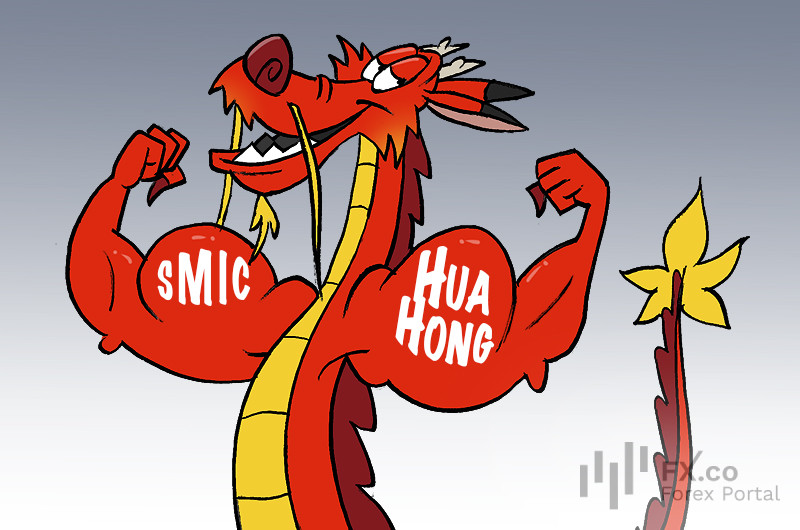
Chinese semiconductor manufacturers have reported record financial results for 2025, primarily driven by stringent export restrictions imposed by the United States. Cut off from Western technologies, China has been compelled to accelerate its import substitution policy, ensuring guaranteed multi-billion-dollar demand for local producers amid the global AI boom.
Analysts and market participants anticipate further explosive revenue growth this year. Faced with isolation, Chinese tech giants are aggressively buying up domestic components to build their own AI infrastructure, despite their technological lag behind global standards.
According to Paul Triolo, a partner at consulting firm Albright Stonebridge Group, export restrictions imposed by the US against China’s tech sector in recent years have “injected ‘rocket fuel’ into Chinese semiconductor demand,” significantly amplifying growth driven by the development of electric vehicles and AI data centers.
China’s largest contract semiconductor manufacturer, SMIC, reported a 16% increase in revenue for 2025, reaching a record $9.3 billion. Analysts at LSEG estimate that this figure could exceed $11 billion in 2026. The second-largest company, Hua Hong, saw a record revenue of $659.9 million in the fourth quarter and forecasts sales volumes between $650 million and $660 million in the upcoming quarter.
Current dynamics are supported by two key factors. On the one hand, the booming production of electric vehicles in China ensures stable demand for older-generation chips. On the other hand, the need for high-performance components for AI is growing rapidly.
Recent US bans on the export of advanced AI accelerators from Nvidia to China have forced Beijing to leverage administrative resources. Authorities are strongly advising local corporations to transition to domestic alternatives, even if their performance lags behind American competitors.
“While China is not yet a leader in the highest-performance GPUs, these domestic solutions are filling the domestic 'computing gap' and driving record sales,” Parv Sharma, a senior analyst at Counterpoint Research, explained.
Memory chip manufacturers have gained the most from the current situation, with revenue at ChangXin Memory Technologies showing a dramatic 130% surge year-over-year, exceeding $8 billion.
However, despite historic financial records, the technological gap between China and global leaders remains significant. National giants like SMIC and Hua Hong still lack capabilities for industrial-scale production of advanced chips comparable to Taiwan's TSMC.