 Deutsch
 Русский
 English
 Bahasa Indonesia
 Bahasa Malay
 ไทย
ไทย Español
 Български
 Français
 Tiếng Việt
 中文
中文 বাংলা
বাংলা हिन्दी
 Čeština
 Українська
 Română

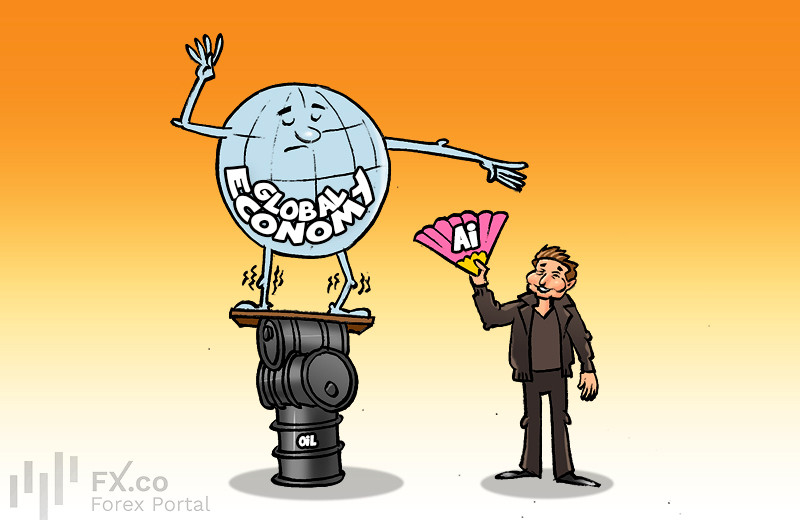
The global economy is proving unexpectedly resilient. The OECD now expects world growth of 2.9% in 2026, up from the prior forecast of 2.8%, despite a protracted crisis and persistently high energy costs. The investment boom around artificial intelligence has been the chief lifeline for global output, propping up headline statistics.
That AI‑driven spending spree has produced clear winners and losers. The US growth outlook has been revised up to 2.2%, South Korea’s economy is set to expand about 3.7% on stronger electronics exports, and India could grow as much as 7.1%. By contrast, Saudi Arabia, instead of posting the anticipated expansion, is headed for a 1.8% contraction. Europe is also seeing a reshuffle: Germany is recovering toward 1.1%, leaving France at a modest 0.4% as the weakest G7 economy.
That excess resilience comes with a cost — inflation across the G20 is forecast to settle at about 4.1%. The OECD expects the US Federal Reserve and the European Central Bank to deliver another 25‑basis‑point hike before year‑end and then hold interest rates through 2027, while the Bank of Japan is projected to nudge borrowing costs up toward 2%. A key downside risk is an El Niño‑driven crop shock. If agricultural disruptions coincide with elevated oil prices, global economic growth could slump to 2.3%, forcing central banks into even tougher monetary tightening.
Comments: