 Deutsch
 Русский
 English
 Bahasa Indonesia
 Bahasa Malay
 ไทย
ไทย Español
 Български
 Français
 Tiếng Việt
 中文
中文 বাংলা
বাংলা हिन्दी
 Čeština
 Українська
 Română

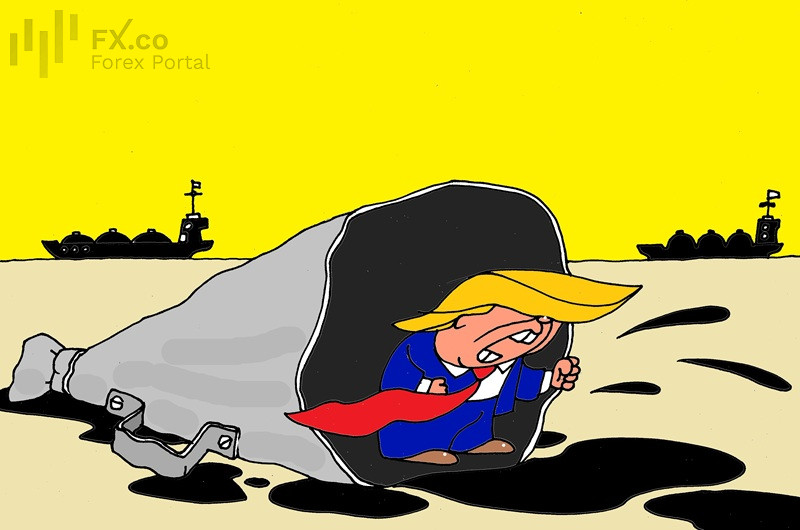
The oil market has effectively stopped reacting to US President Donald Trump’s geopolitical rhetoric, with traders instead tracking the movement of actual tankers and record‑high freight rates, Bloomberg reports.
Verbal interventions from Washington have largely lost their bite. While the White House’s April threat to push Iran “back to the Stone Age” sent Brent up about 7%, similar statements in October were ignored as investors weary of “geopolitical roulette” rely on real‑time physical supply data.
Logistics, not politics, are the problem. Clarkson data shows that VLCC charter rates for the Gulf-to-China route have surged from $65,000 to roughly $1.6 million per day, pushing the cost to ship a barrel from the region from $2 to $33. The result is a striking price anomaly: physical Dated Brent trades around $135.74 per barrel while paper futures are near $100.
Against that backdrop, traditional investors are rapidly trimming their positions. Open interest in Brent futures has fallen to its lowest level since March 2025, and market control is shifting toward CTA trading algorithms, which tend to amplify technical volatility.
Despite recent US Treasury sanctions on 17 vessels linked to Iran’s shadow fleet, physical flows through the Strait of Hormuz have recovered to about 14.2 million barrels a day, which is roughly 80% of pre‑conflict volumes. Overall, the global crude shortfall has narrowed: Energy Aspects estimates that the supply gap has shrunk from 4 million barrels a day in May to about 1.6 million barrels a day.
Comments: