 Deutsch

 Русский
 English
 Bahasa Indonesia
 Bahasa Malay
 ไทย
 Español
 Български
 Français
 Tiếng Việt
 中文
 বাংলা
 हिन्दी
 Čeština
 Українська
 Română


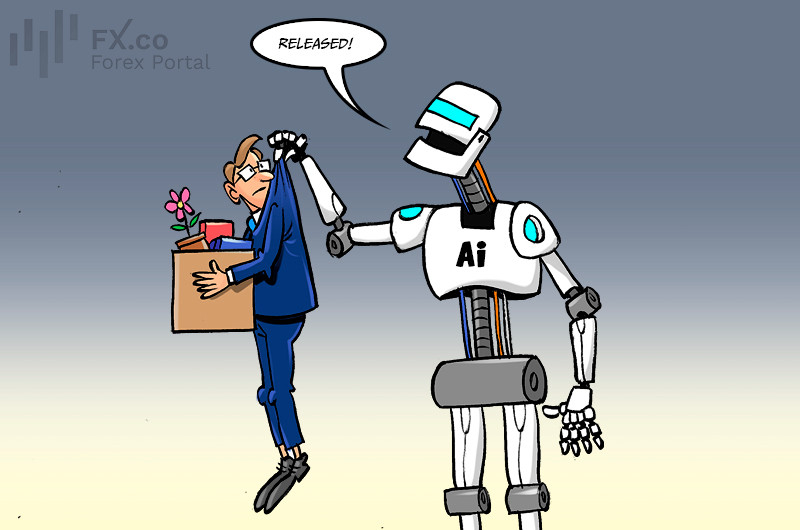
The US labor market is showing initial signs of pressure from artificial intelligence. Goldman Sachs analysts estimate that the impact of neural networks on employment is now detectable in the data, though widespread layoffs have not yet materialized.
In the occupations most vulnerable to automation, hiring over the past three months has lagged the long‑run trend by about 10,000 jobs. That shortfall has been fully offset by construction activity. New infrastructure projects and data centers for AI have created enough vacancies to compensate for losses among office workers. The spring peak in public announcements of job cuts tied to algorithmic adoption now appears to be behind us.
Wall Street expects more significant disruption over the longer term. Economists calculate that if AI raises aggregate productivity by 15%, roughly 9% of workers could be temporarily displaced. An additional 3% of jobs could be put at risk through hiring freezes. Historical evidence supports the pattern: prior technological revolutions reduced employment in affected occupations by about 25% over five years on average.
Two factors are currently muting a large‑scale shock. First, only 23% of US firms are using AI in day‑to‑day processes. Second, the economy’s overall resilience allows businesses to adapt without abrupt layoffs. Analysts warn, however, that a recession may change the calculus: an economic downturn is likely to force companies to accelerate automation and pursue deeper workforce cuts.