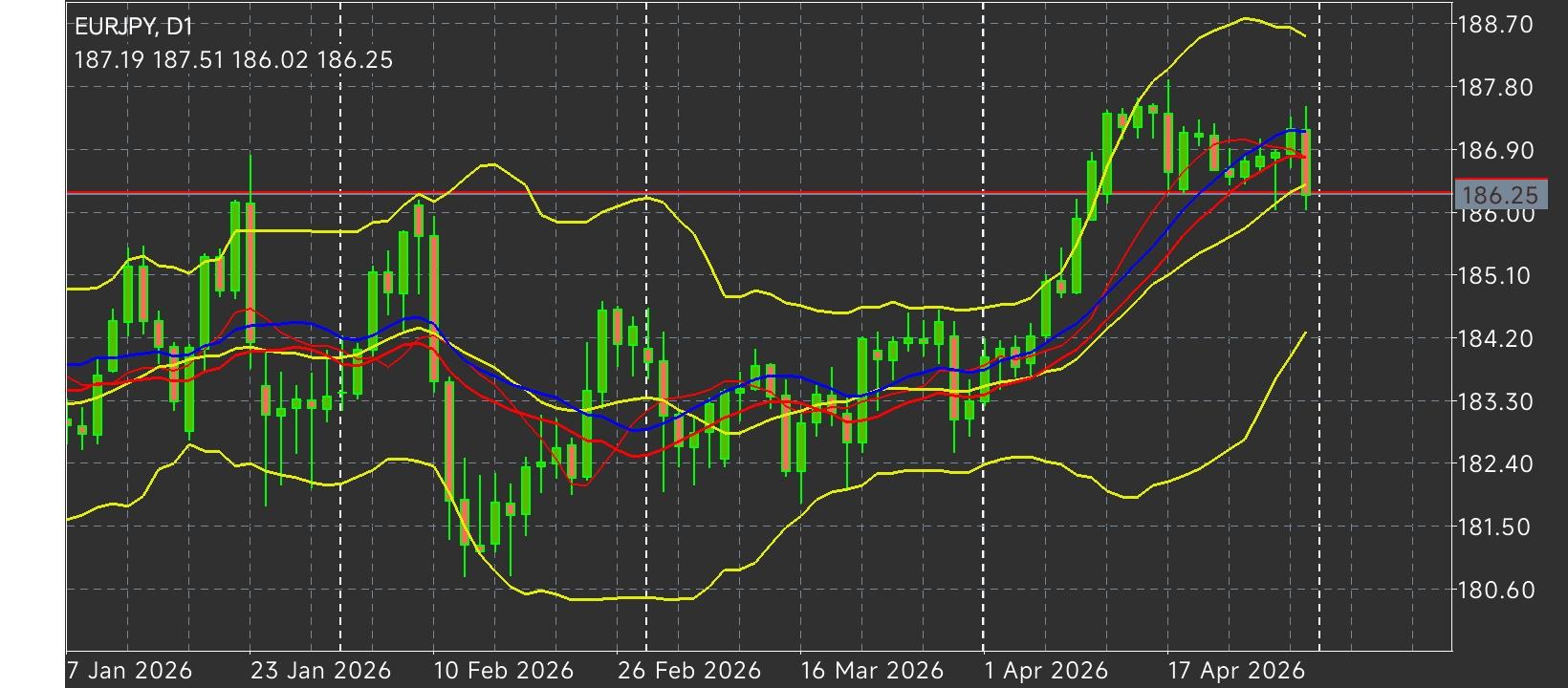
 The Tokyo Ultimatum: EUR/JPY Retreats to 186.20 as Katayama Signals "Bold Action" Near the 160.00 Rubicon
 The
EUR/JPY cross experienced a sharp reversal during Thursday’s session, retreating from a two-week peak above
187.50 to settle near
186.20 as the "intervention alarm" rang loudly in Tokyo. The catalyst for this retreat was a stern verbal broadside from Japanese Finance Minister
Satsuki Katayama, who declared that the "timing for bold action is approaching." With the
USD/JPY breaching the psychologically critical
160.00 "red line," the Ministry of Finance is signaling a zero-tolerance policy toward speculative Yen depreciation. For Japan—a nation structurally dependent on energy imports—the combination of a plummeting Yen and the
Strait of Hormuz blockade represents a double-edged inflationary sword. Despite the
Bank of Japan’s (BoJ) recent hawkish tilt, the market is primarily focused on the immediate threat of direct FX intervention, which has effectively capped the Euro’s multi-day rally.
Stagflationary Signals: German Labor Woes vs. Eurozone Inflation The fundamental backdrop for the Euro is becoming increasingly complex as the bloc grapples with divergent economic indicators.
The German Labor Setback: Disappointing jobless data from
Destatis weighed on sentiment, as the unemployment rate ticked up to
6.4% in March. The increase of
20,000 jobless individuals—far exceeding the anticipated 4,000—overshadowed a resilient
0.3% GDP growth figure. This suggests that while the industrial engine is still turning, the "energy tax" from the Middle East conflict is starting to erode the labor market's structural integrity.
HICP Heat: Inflation across the Eurozone remains a primary concern for Frankfurt. The preliminary
Harmonized Index of Consumer Prices (HICP) rose to
3% YoY in April, comfortably exceeding market expectations. This energy-led surge is forcing the
European Central Bank (ECB) into a corner, as policymakers must now balance a softening labor market against an inflation rate that refuse to stay below target.
Technical Trend Architecture: The 187.50 Rejection and the 185.00 Trap From a structural perspective, the EUR/JPY chart reveals a market that has transitioned from a bullish breakout attempt into a "Volatility Compression" phase driven by policy fear.
The Supply Rejection (187.50): The failure to sustain trade above the
187.50 level is a significant technical rejection. This area now serves as a major horizontal supply zone. On the 4-hour chart, the "long-legged" candles near this peak suggest that institutional sellers—and perhaps some preemptive BoJ-linked flows—are active at these elevated levels.
Intervention Support: The pair is currently testing initial support near
186.15. Below this, the
185.50 zone represents the next tactical floor. However, the true technical "danger zone" lies near
184.80, where a breach could trigger a rapid liquidation toward the
182.00 handle if Tokyo pulls the intervention trigger.
Strategic Roadmap: The ECB Verdict and the "Line in the Sand" As the market enters the final hours of the April trade, EUR/JPY is caught in a technical pincer between a hawkish ECB and a defensive MoF:
The ECB Pivot (Near-Term Hikes): While the ECB is expected to hold rates today, any explicit guidance toward a
June or July hike—necessitated by the 3% HICP reading—would typically be Euro-positive. However, in the current regime, Euro strength may be immediately countered by Japanese intervention if the cross pushes back toward
188.00.
The Katayama Guardrail (160.00 USD/JPY): Traders must monitor the USD/JPY pair as a lead indicator; as long as the Greenback stays above 160.00, the "Intervention Risk" for EUR/JPY remains extreme.
The Bearish Extension: A sustained move below
186.00 would suggest that the market is de-risking ahead of the "Golden Week" holiday in Japan. For your
cent account strategy, watching for a breakdown of the
185.80 support during the ECB press conference could offer a high-probability entry for a move toward the
184.50 extension. Ultimately, EUR/JPY is no longer trading purely on economic fundamentals; it is trading on "Intervention Vigilance." While the Eurozone’s inflationary heat supports higher rates, the threat of "bold action" from Katayama suggests that the path of least resistance in the near-term may be a corrective slide toward the
184.00 – 185.00 value zone.
*Die zur Verfügung gestellte Marktanalyse dient zu den Informationszwecken und sollte als Anforderung zur Eröffnung einer Transaktion nicht ausgelegt werden
 Deutsch
 Русский
 English
 Bahasa Indonesia
 Bahasa Malay
 ไทย
ไทย Español
 Български
 Français
 Tiếng Việt
 中文
中文 বাংলা
বাংলা हिन्दी
 Čeština
 Українська
 Română