 English
 Русский
 Bahasa Indonesia
 Bahasa Malay
 ไทย
ไทย Español
 Deutsch
 Български
 Français
 Tiếng Việt
 中文
中文 বাংলা
বাংলা हिन्दी
 Čeština
 Українська
 Română


Demand for the Euro remains very restrained, but the potential for growth remains, as many traders are cautious about further tightening of monetary policy in the US.
For example, according to yesterday's CME Group, the market accounts for only 1.4% of the likelihood of higher rates at the next meeting of the committee in September this year. In general, the probability that the Fed will at least once again hike rates this year, is estimated at 46%. It is expected that rates will continue to remain relatively low in the US, until economic growth and inflation once again resumes growth.
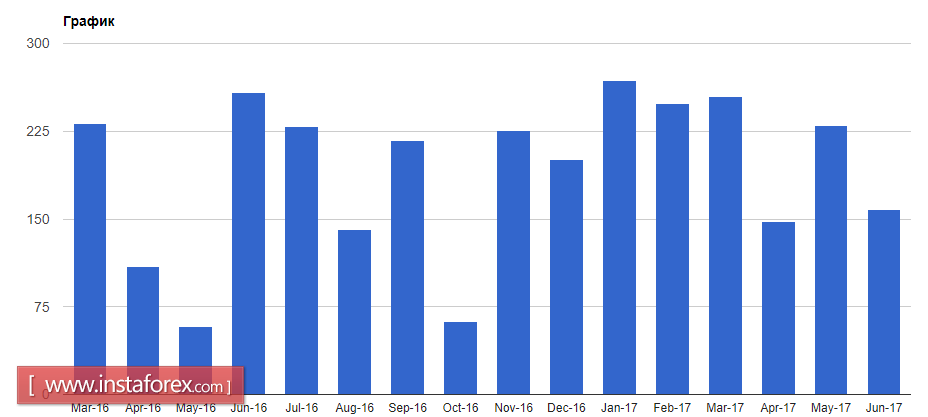
Important data from ADP will be released today, which will indicate a change in the number of employed in the private sector of the United States. It is expected to grow by 187,000 in July of this year against 158,000 in June. If the data will be better than forecasts, then the US dollar can sharply strengthen against a number of world currencies, including the euro.
As for the technical picture of EURUSD, then much will depend on overcoming the highs of this month. If a breakthrough in the resistance range of 1.1840-1.1850 occurs, we can count on a new upward wave with an update of the levels around the 19th figure and an exit at 1.1960 in the near future. If bulls in the euro do not have enough strength, it is likely to form a downward correction in the support area of 1.1790, and its removal will lead to a fall of the trading instrument towards lows of 1.1730 and 1.1675.
Commodity currencies fell against the US dollar after yesterday's major drop in oil.
Data on the unemployment rate in New Zealand did not support the NZDUSD pair. According to a report by Statistics New Zealand, unemployment in the country in the second quarter of this year fell to 4.8%, compared with 4.9% in the previous quarter. The number of unemployed decreased by 3,000 people. Economists had expected that unemployment in New Zealand in the second quarter was 4.9%. The level of economic activity in the country was 70.0%.
The Australian dollar also fell against the US dollar, with no support from the Reserve Bank of Australia. It is expected that at the end of this week, during the quarterly meeting of the central bank, the regulator will make a statement about lowering its forecast of economic growth, which will put even more pressure on the Australian dollar.
Returning to oil prices, it should be noted that the impact of "Saudi Arabia", which could be observed throughout the previous week, appears to be gradually dwindling down. Investors are returning to the topic of real realities of the price of oil, as well as the ability, or inability, of the Organization of Petroleum Exporting Countries to cut production and help to reduce the surplus of the world supply.
In this regard, the pressure on oil prices may increase again, especially if today's data from the US Department of Energy shows a rise in stocks in storage facilities.