English
 Русский
 Bahasa Indonesia
 Bahasa Malay
 ไทย
ไทย Español
 Deutsch
 Български
 Français
 Tiếng Việt
 中文
中文 বাংলা
বাংলা हिन्दी
 Čeština
 Українська
 Română


Yesterday, Britain launched a decline in the pound, stating that they will not pay 40 billion euros for withdrawing from the European Union. The categorical and uncompromising position of the United Kingdom can force the EU countries to go on tightening trade relations with the island kingdom. Obviously, such a possibility is perceived by the market exclusively as a negative for the UK, which affected the pound.
Then came the turn of the single European currency to lose its positions. The reason lies in very good JOLTS data on open vacancies, the number of which increased from 5 702 thousand to 6 163 thousand.
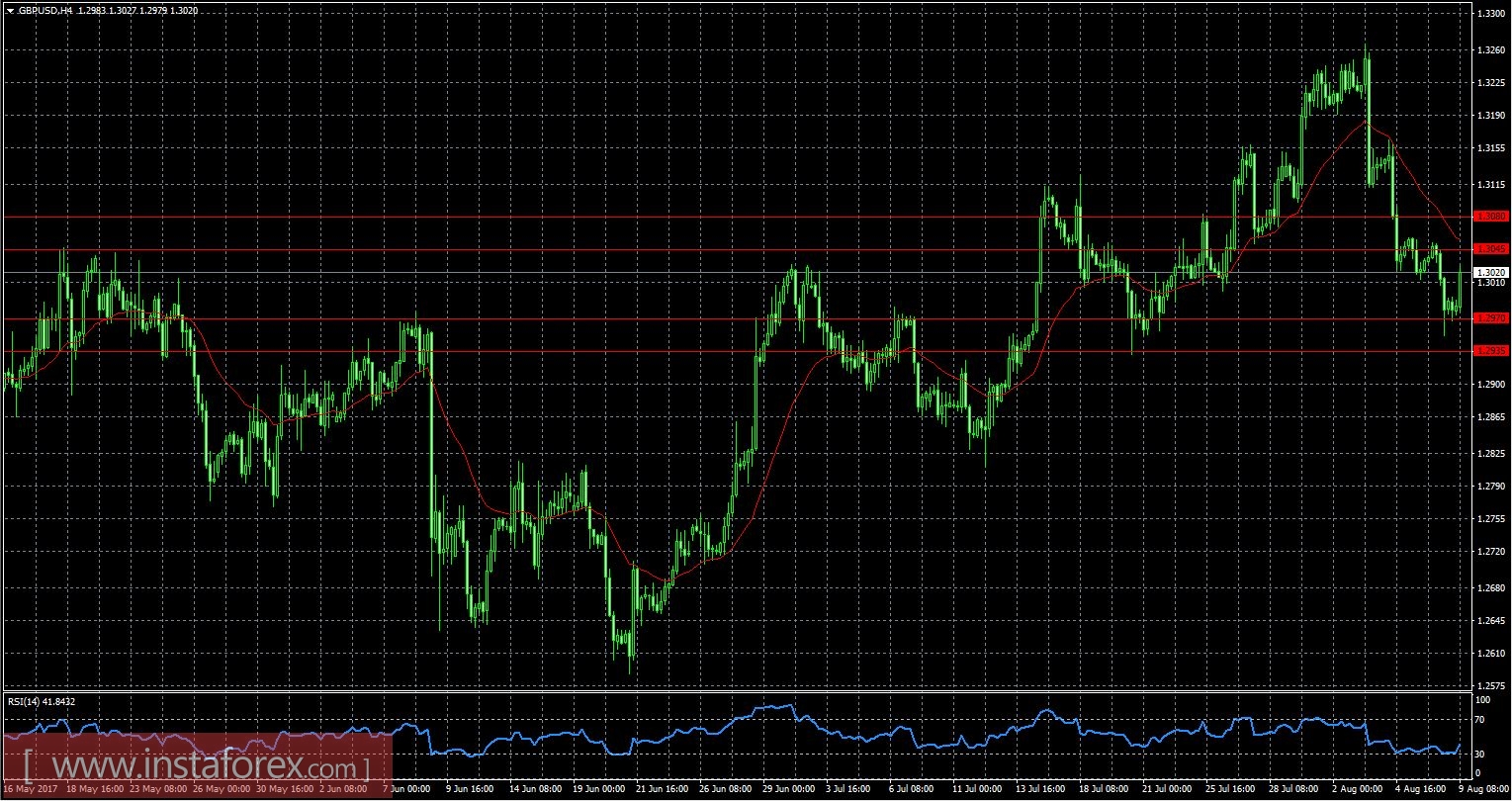
Nevertheless, both the euro and pound are heavily resold, and if there are no compelling reasons for the growth of the dollar, the market will eliminate imbalances. The pound has already begun to recover to the values from which its yesterday's fall began. In principle, today there is no reason for the growth of the dollar, unless, of course, politicians threw them. In Europe, no meaningful data comes out, and in the US only preliminary data on labor costs and labor productivity are expected. It is projected that labor costs will increase by 1.2%, which is lower than inflation, which is frightening since it predicts a decline in consumer activity. But labor productivity can show an increase of 0.7%, which is also not too joyful. The fact is that if the forecasts are confirmed, then salaries will outstrip the productivity of labor.
The euro / dollar pair will gradually increase to 1.1805.

The pound / dollar pair will also grow, and the benchmark is 1.3045, and then 1.3080.