 English
 Русский
 Bahasa Indonesia
 Bahasa Malay
 ไทย
ไทย Español
 Deutsch
 Български
 Français
 Tiếng Việt
 中文
中文 বাংলা
বাংলা हिन्दी
 Čeština
 Українська
 Română


The pair continues to form a medium-term accumulation zone. The whole current month passes in the light phase, which indicates the importance of monthly extremes, which are the determining levels of support and resistance.
Medium-term plan.
The main resistance at the end of this week is a weekly short-term fault of 1.1846-1.1830. While the pair is trading below this zone, the probability of continuing the formation of the medium-term accumulation zone remains high. To continue the long-term impulse upwards, it is necessary to close the trades of the current week above the level of 1.1846. If this happens, then the update of the monthly maximum will be only the first goal of the next phase of the upward movement. The lower boundary of the flattened zone is the weekly fault of 1.1659-1.1643.
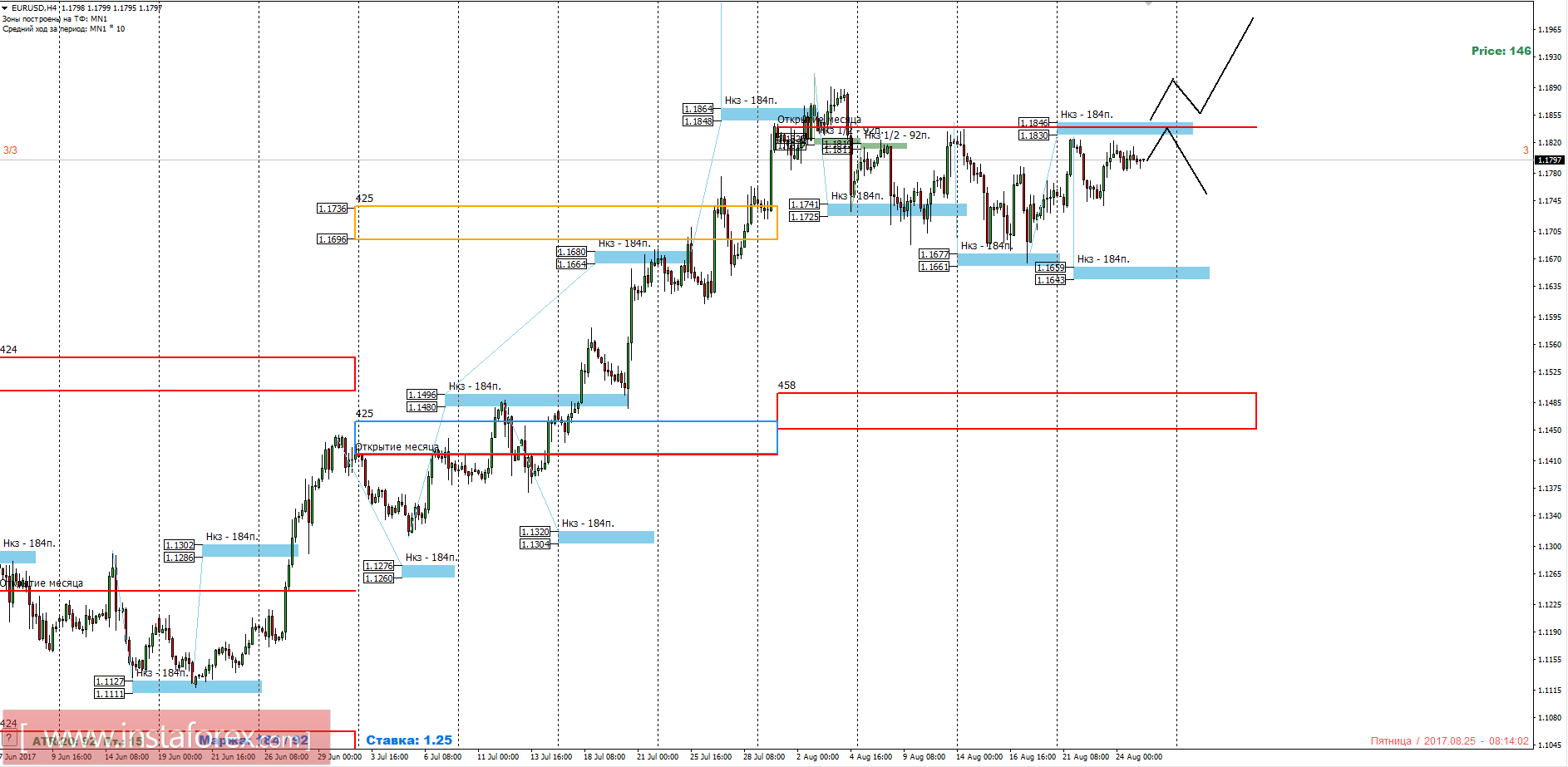
The upward movement in the long term remains a priority, therefore any drop can be used to find advantageous prices for the purchase. To implement an alternative downward model, it will be necessary to form a reversal pattern on the junior time frame.
Intraday plan.
On the younger time interval, the formation of the ascending model continues. Two days ago, NCP 1/2 1.1743-1.1735 was tested, which led to an increase in demand. The main goal of the upward movement remains the weekly short-term fault of 1.1846-1.1830. While this zone is not tested, the probability of updating the weekly maximum is 70%. For the formation of a downward model, a breakdown and consolidation below the level of 1.1735 at one of the American sessions will be required. This will again test the monthly minimum in the short term.
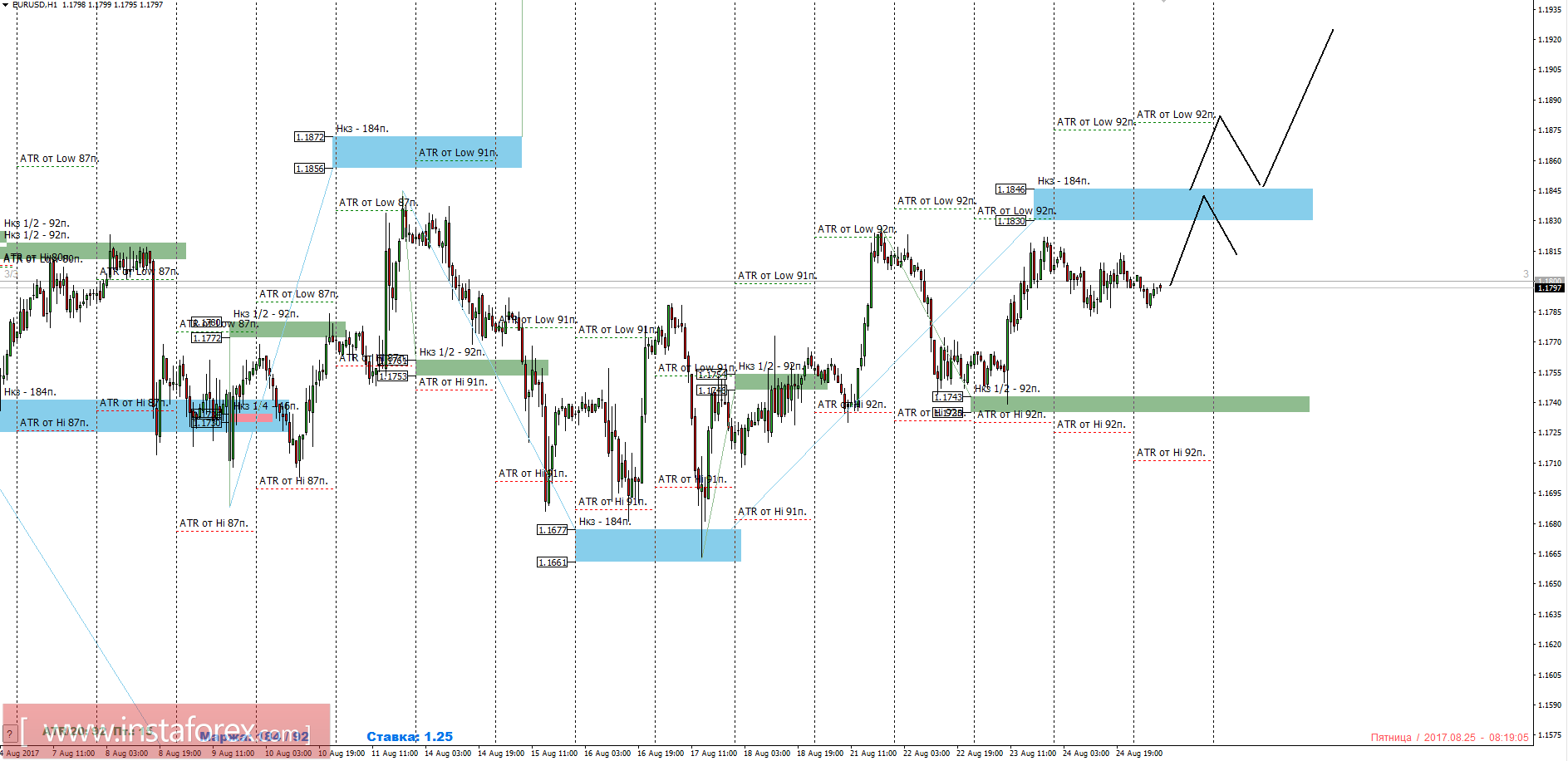
The daytime short-term fault is the daytime control zone. The zone formed by important data from the futures market, which change several times a year.
The weekly short-term fault is the weekly control zone. The zone formed by important futures market marks, which change several times a year.
The monthly short-term fault is the monthly control zone. The zone, which is a reflection of the average volatility over the past year.