 English
 Русский
 Bahasa Indonesia
 Bahasa Malay
 ไทย
ไทย Español
 Deutsch
 Български
 Français
 Tiếng Việt
 中文
中文 বাংলা
বাংলা हिन्दी
 Čeština
 Українська
 Română


Last week, the pair reached the monthly short-term fault of August 140.00-139.25, which allowed to observe the increase in demand. On the younger time frame, a reversal pattern was implemented, so the target is the nearest weekly short-term fault.
Medium-term plan.
The upward movement is a priority because of the implementation of the reversal pattern on the younger time frame. The first goal of growth is a weekly short-term fault of 143.47-143.09. Achievement of this zone will allow to fix a part of purchases and transfer the rest to a break-even point. It is important to note that the growth was started from the limits of the monthly short-term fault of August 140.00-138.40. This indicates the strength of the upward movement. In case of pairing above the level of 143.47 in one of the American sessions, the next growth target may be the upper monthly short-term.
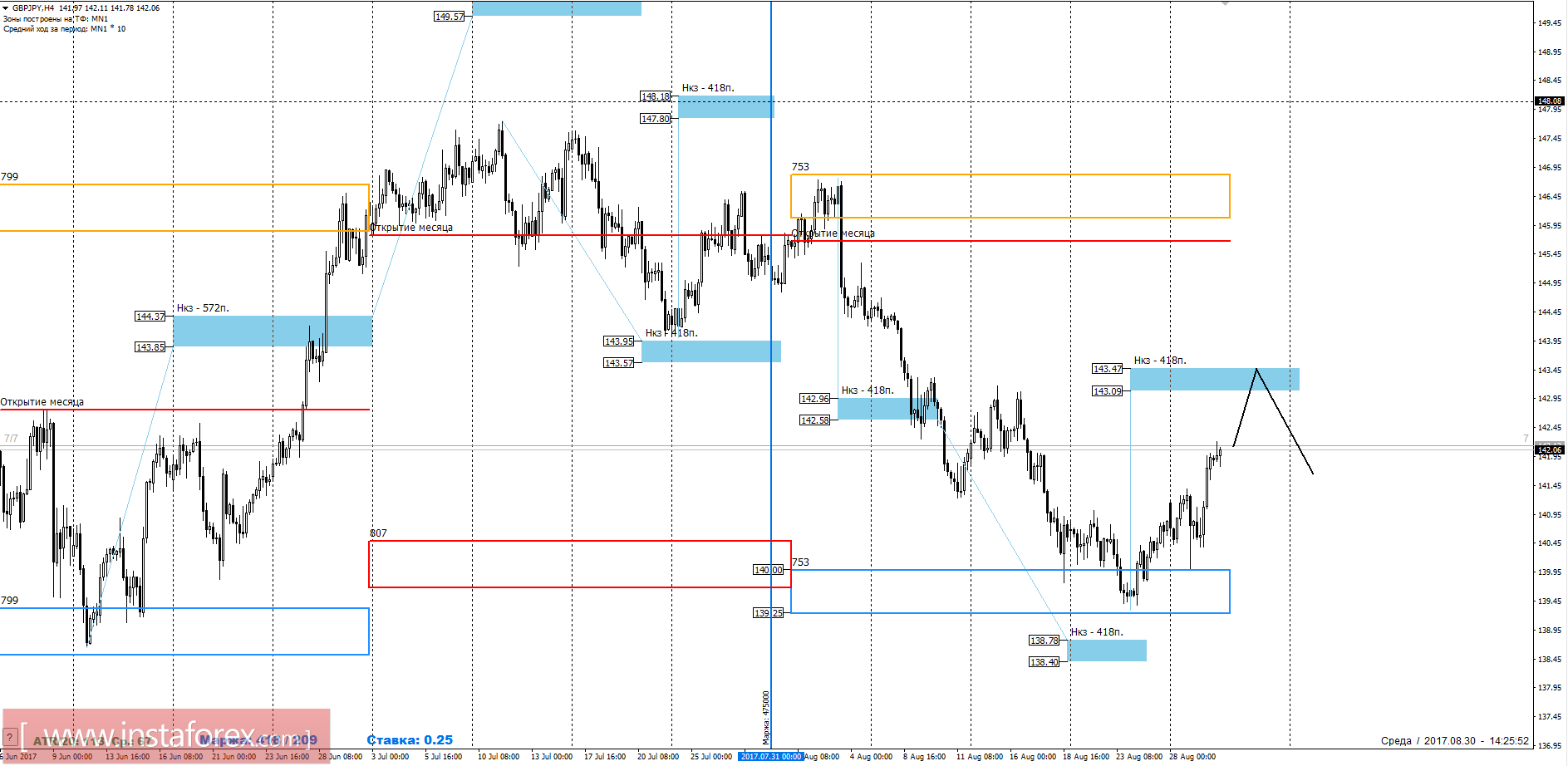
To form an alternative model, it will be necessary to stop the growth within a week's short-term and the emergence of a large supply. This will allow considering the resumption of the downward movement, where the target will be the minimum of August.
Intraday plan.
Yesterday, the formation of the reversal model occurred as the pair managed to break through and consolidate above the NCP 1/2 141.38-141.19. This fact allows us to consider growth as a priority and any reduction can be used to find favorable prices for the purchase. Today, within the average daily course, there is NCP 1/4 141.26-141.17, so the test of this zone will allow obtaining favorable prices for the purchase of the instrument. Purchase from the control zone is the main trading plan for today.
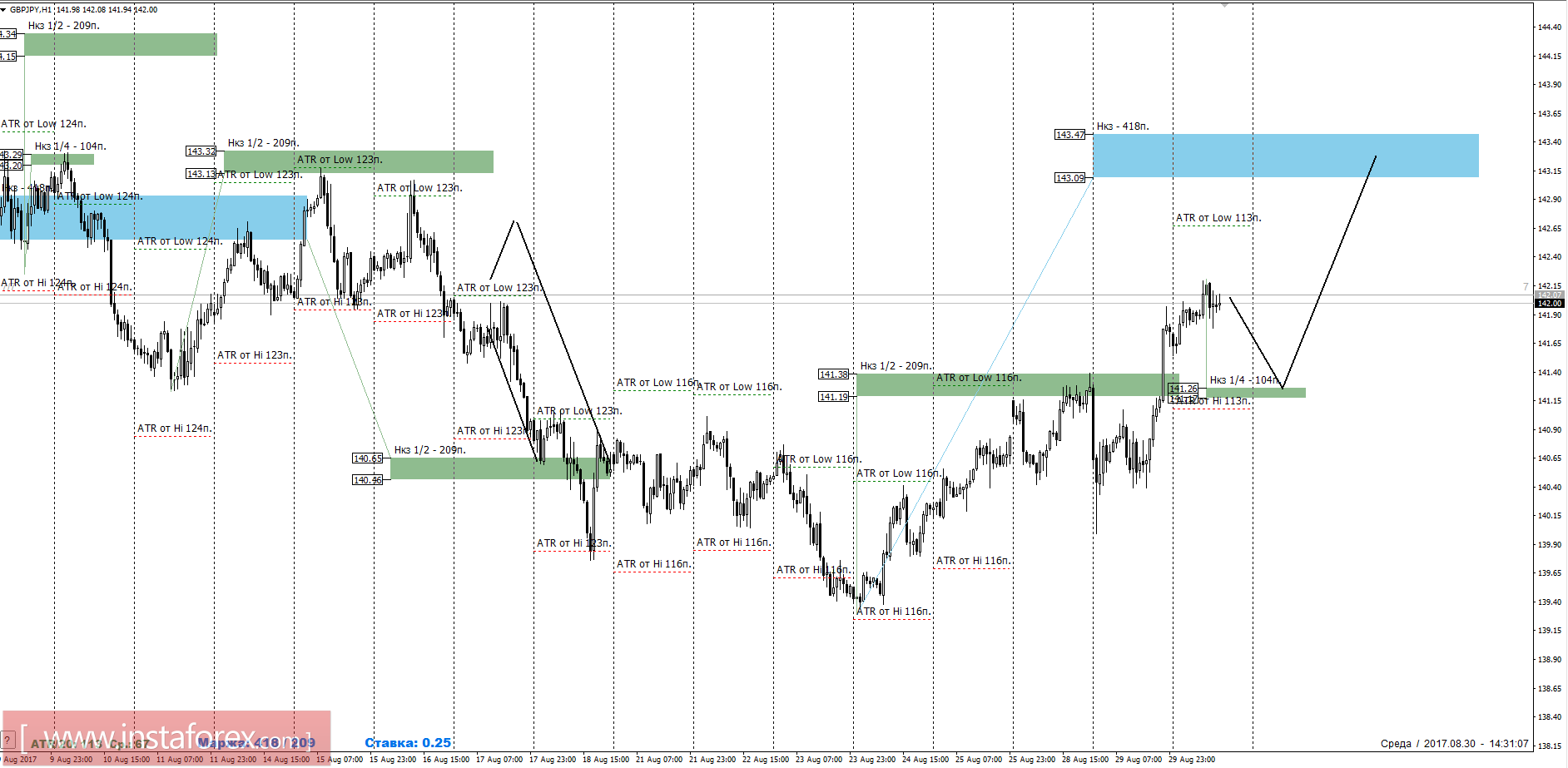
The daytime short-term fault is the daytime control zone. The zone formed by important data from the futures market, which change several times a year.
The weekly short-term fault is the weekly control zone. The zone formed by important futures market marks, which change several times a year.
The monthly short-term fault is the monthly control zone. The zone, which is a reflection of the average volatility over the past year.