 English
 Русский
 Bahasa Indonesia
 Bahasa Malay
 ไทย
ไทย Español
 Deutsch
 Български
 Français
 Tiếng Việt
 中文
中文 বাংলা
বাংলা हिन्दी
 Čeština
 Українська
 Română


The euro reacted negatively to data on the unemployment rate in France, which, in the third quarter of this year, increased. This adds to the fears of a slowing labor market growth which will negatively affect the prospects for economic growth in the fourth quarter of this year.
According to the report of the national statistics agency Insee, unemployment in France for the third quarter rose to 9.7% from 9.5% in the previous quarter.
Data on inflation also failed to please traders who are betting on the further strengthening of the euro.
According to the Eurostat report, inflation in the eurozone for October of this year decreased compared to September. Thus, the annual rate was at 1.4% against 1.5% in September, while the European Central Bank expects to reach just below 2%. Basic inflation in October fell to 0.9%.
The US dollar slightly yielded to the position of the euro and the British pound after the release of weak fundamental statistics on the number of Americans who submitted initial applications for unemployment benefits.
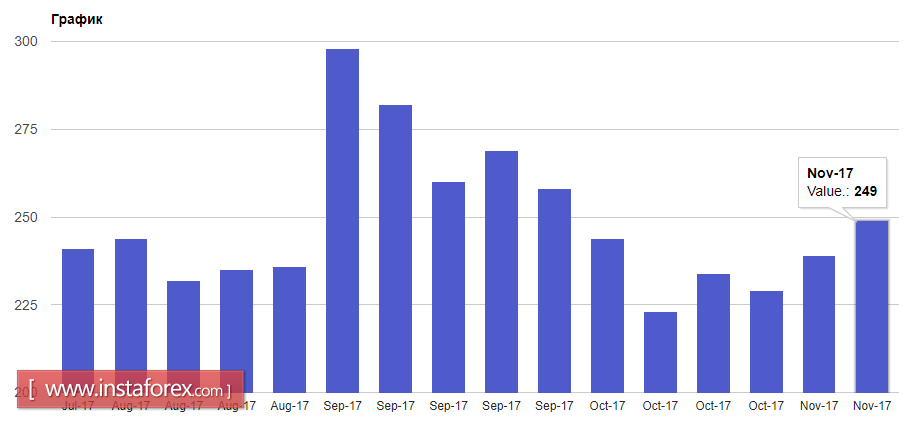
According to the report of the US Department of Labor, the number of initial applications for unemployment benefits in the US for the week beginning November 5 and ending November 11 increased by 10,000 and amounted to 249,000. Economists had expected the number of applications to be at 235,000.
The technical picture for the EURUSD pair has not changed significantly. Only a rise above 1.1800 will lead to a larger upward trend for the euro, which may affect resistance at the level of 1.1855. This level coincides with the upper boundary of the medium-term side channel and so far, is a serious problem for euro buyers. Only its breakdown can form a new upward wave that is capable of updating the annual highs.
The British pound rose after a report that retail sales in the UK increased for the month of October due to the growth of second-hand goods, which offset the decline in sales of footwear and wardrobe items.
According to official data, retail sales in the UK for October 2017 increased by 0.3% compared with September. Economists forecast a sales growth of 0.1%. Compared to the same period in 2016, retail sales decreased by 0.3%.