 English
 Русский
 Bahasa Indonesia
 Bahasa Malay
 ไทย
ไทย Español
 Deutsch
 Български
 Français
 Tiếng Việt
 中文
中文 বাংলা
বাংলা हिन्दी
 Čeština
 Українська
 Română


Last week, the monthly control zone (KZ) at 1951-1.1911 was reached on November 1, which stopped the medium-term growth of the pair. The current movement forms a medium-term accumulation zone, where the lower boundary will be the weekly fault at 1.1792-1.1776.
Medium-term plan.
The upward movement of November remains to be in a medium-term momentum, which indicates the need to find favorable prices for the purchasing the instrument at more suitable prices. It is important to understand that the achievement of a monthly KZ requires a complete or partial fixation of purchases. The current downward movement will remain corrective until the pair trades above the weekly KZ of 1.1792-1.1776. If the instrument will be fixed below this zone, then the upward impulse movement will end and it is possible to consider a new flat phase.
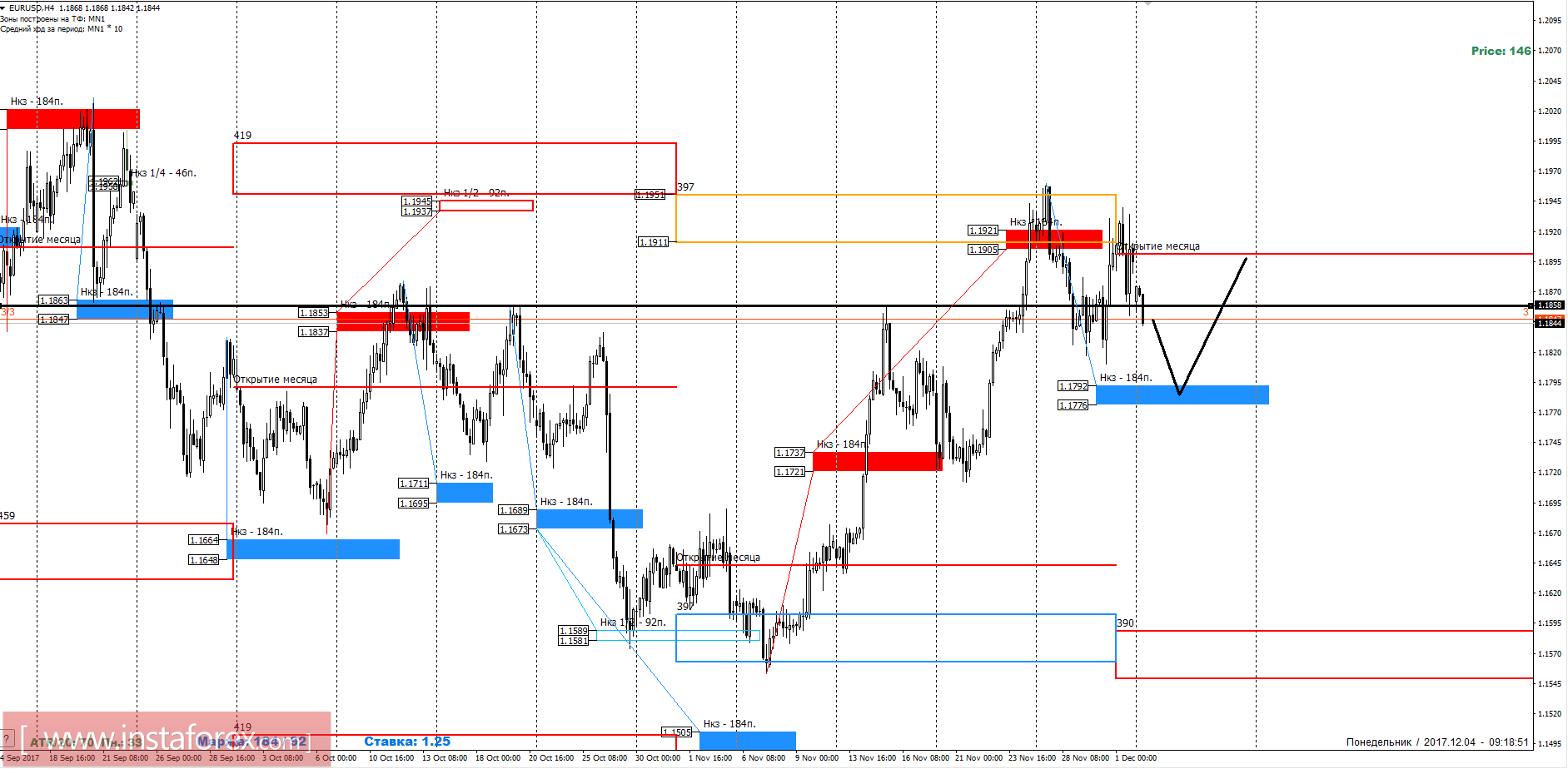
To form an alternative model, closing the trading today above the opening point is necessary. This will allow you to view purchases from current marks. The first target of growth will be the November maximum.
Intraday plan.
As part of the intraday movement, the priority remains the fall to the weekly KZ 1.1792-1.1776. This became possible because the pair failed to gain a foothold above the weekly control zone (NKZ) 1/2 1.1909-1.1901. The probability of testing a weekly KZ is 70%. Reaching this zone will allow fixing some portion of the sales that were opened last week, and the remaining will be withdrawn in breakeven. The weekly KZ is located outside the daily average, therefore, it may take more than a day to implement the downward model.
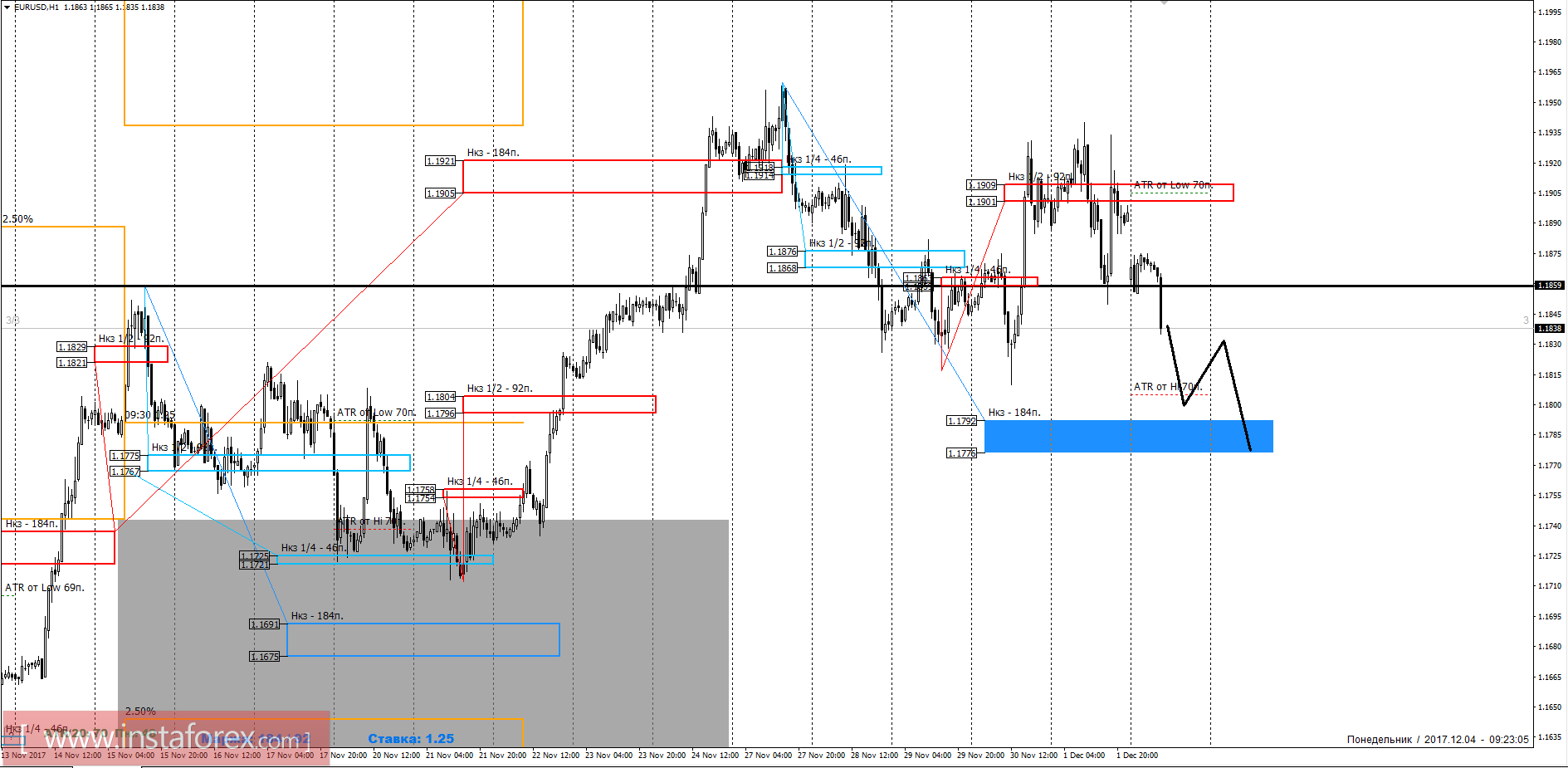
Daytime CP is the daytime control zone. The zone formed by important data from the futures market, which change several times a year.
Weekly CP is the weekly control zone. The zone formed by important futures market marks, which change several times a year.
Monthly CP is the monthly control zone. The zone is a reflection of the average volatility over the past year.