 English
 Русский
 Bahasa Indonesia
 Bahasa Malay
 ไทย
ไทย Español
 Deutsch
 Български
 Français
 Tiếng Việt
 中文
中文 বাংলা
বাংলা हिन्दी
 Čeština
 Українська
 Română


Last week, there were two important events. One of which is the update of the annual maximum which led to the appearance of a large supply and the formation of a medium-term accumulation zone.
Medium-term plan.
The movement of the pair last week was divided into two parts. Strong growth in the first half led to the renewal of the annual maximum, which, in turn, allowed us to observe a strong growth in the supply and a decline of the pair to the weekly short-term of 12387-1.2371. The test of this zone will determine the further medium-term priority. If the pair is held higher, growth will resume, and the target will be the monthly NKZ February. If one of the American sessions closes below the level of 1.2371, the top-down model will become a priority. The goal of the fall will be the lower monthly NKZ of February.
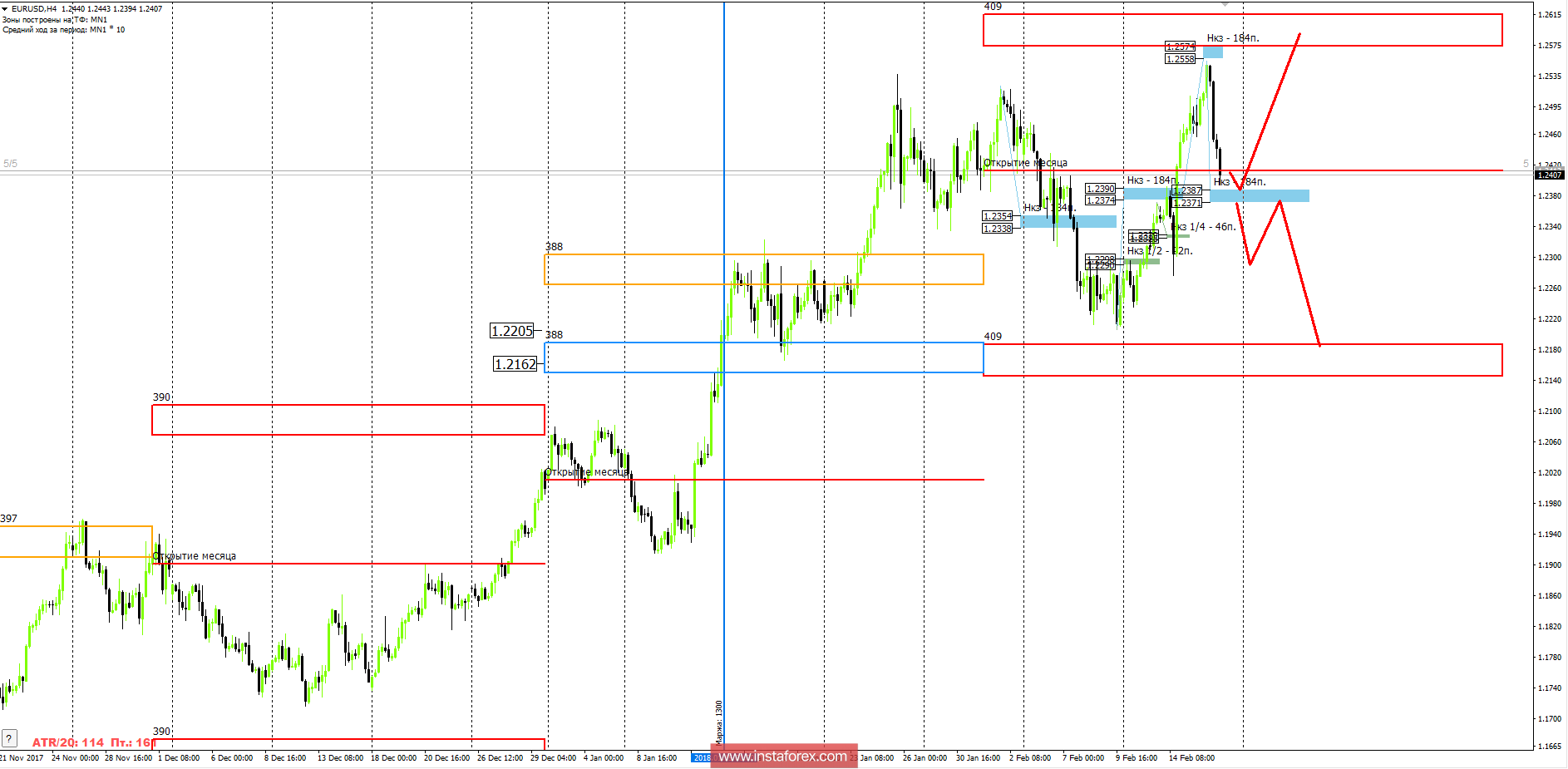
Formation of the medium-term accumulation zone, where the defining levels will be the extremes of February, is more interesting in terms of avoidance and the risk/profit ratio when making transactions.
Intraday plan.
On Friday, the pair was able to overcome the average daily turn and gain a foothold below NKZ 1/2 of 1.2471-1.2463, which indicates the restraint of the ascending structure. The first goal of the fall is the weekly KZ of 1.2387-1.2371, where fixation of sales will be required if they are already open. The weekly short-circuit test will determine further plans since the fixation below this zone will open the way for a medium-term fall. Any growth on Monday must be perceived as corrective since the probability of updating the Friday's minimum is 90%.
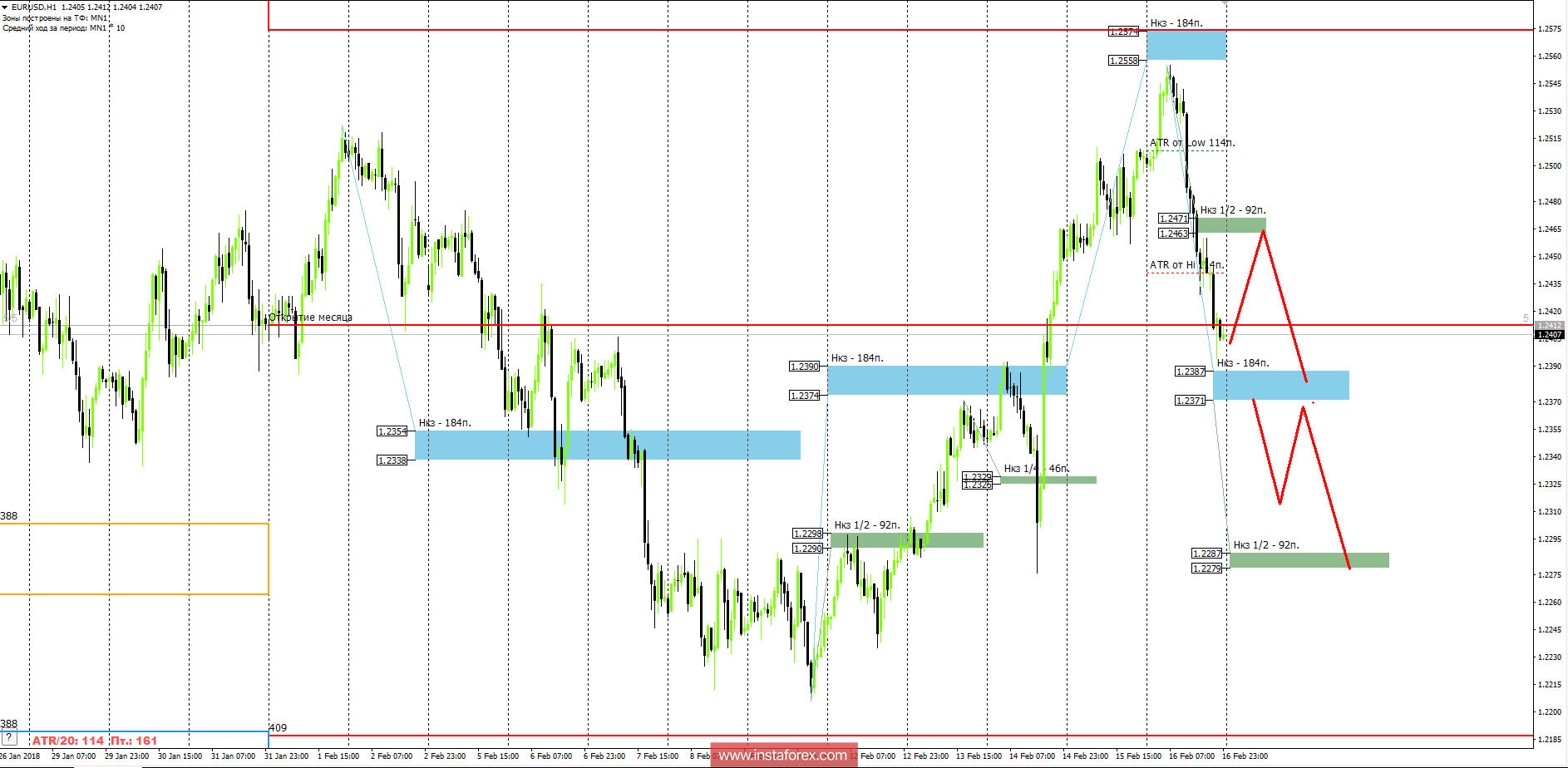
The daytime CP is the daytime control zone. The zone formed by important data from the futures market that change several times a year.
The weekly CP is the weekly control zone. The zone formed by marks from important futures market which change several times a year.
The monthly CP is the monthly control zone. The zone is a reflection of the average volatility over the past year.