 English
 Русский
 Bahasa Indonesia
 Bahasa Malay
 ไทย
ไทย Español
 Deutsch
 Български
 Français
 Tiếng Việt
 中文
中文 বাংলা
বাংলা हिन्दी
 Čeština
 Українська
 Română


Last week, growth occurred after the pair tested the monthly short-term fault of February 1.3826-1.3779. This allows us to continue working within the medium-term accumulation zone formed by the extremes of the current year.
Medium-term plan.
Last week, the growth was impulsive, so the downward movement should be considered as corrective until the reversal pattern is formed. On Friday, the pair returned to the weekly short-term fault of 1.4045-1.4020, which will allow to determine the further development of events on Monday. If there is a consolidation below the specified zone, the descending movement will continue, and the target of the decrease will be the weekly short-term fault of 1.3888-1.3863. If the price is kept above the level of 1.4020, the upward movement will continue, and its goal will continue to be the upper monthly short-term fault of February.
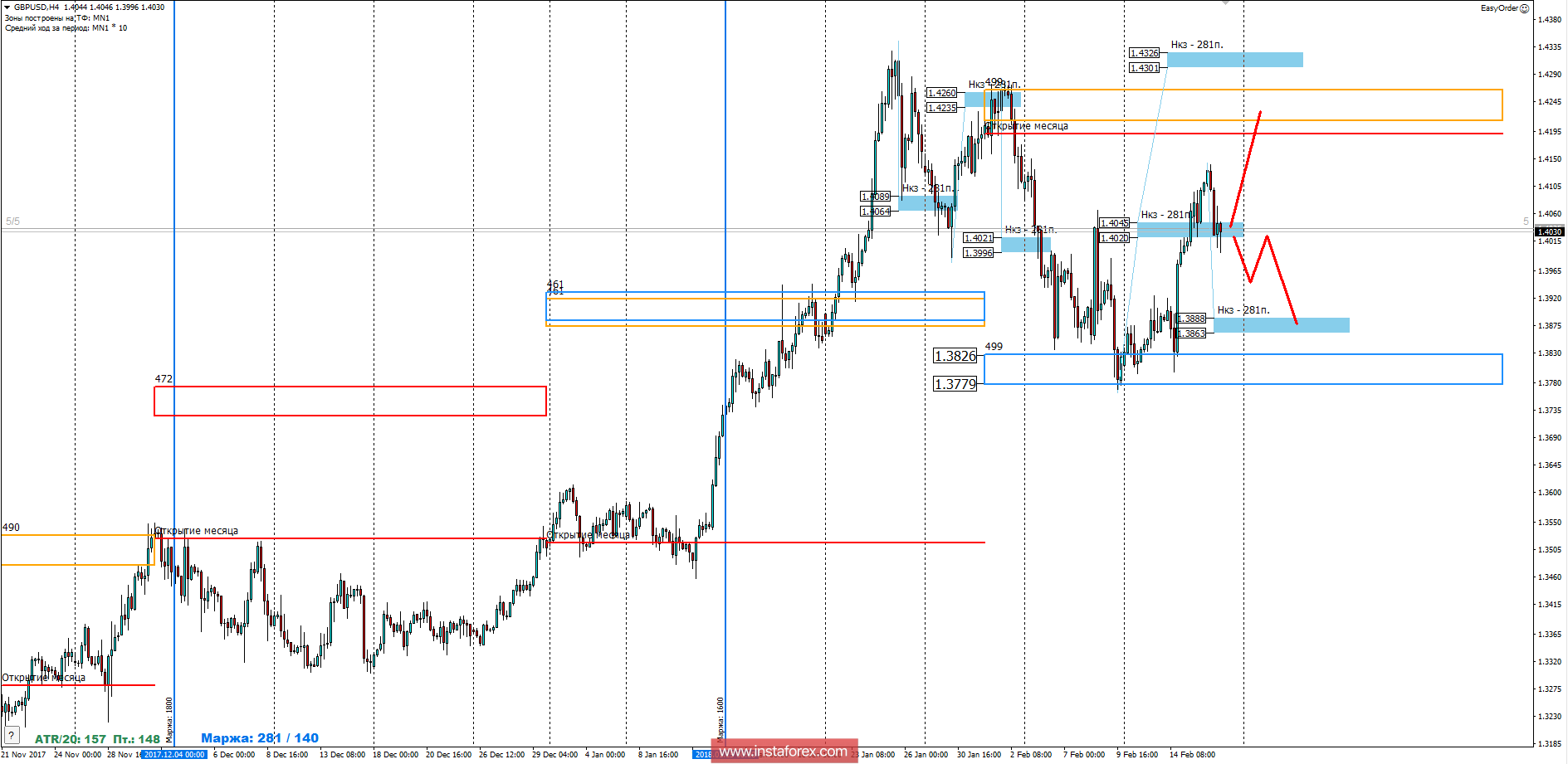
Working in the flat range implies fixing a profit on its borders. Purchases opened last week should be partially closed at current levels, since in the event of a decrease, an upward structure violation will occur. The rest should be transferred to a breakeven and left in case of a monthly short-term fault.
Intraday plan.
On Friday, the downward movement allowed the pair to reach the main support of the NCP 1/2 1.4016-1.4004. While the pair is trading above this zone, the upward movement remains an impulse, and the probability of updating the monthly maximum is 70%. To disrupt the bullish movement, one of the nearest American sessions will need to close below the level of 1.4004. This will allow you to look for sales, the purpose of which will be the weekly short-term fault of 1.3888-1.3863.
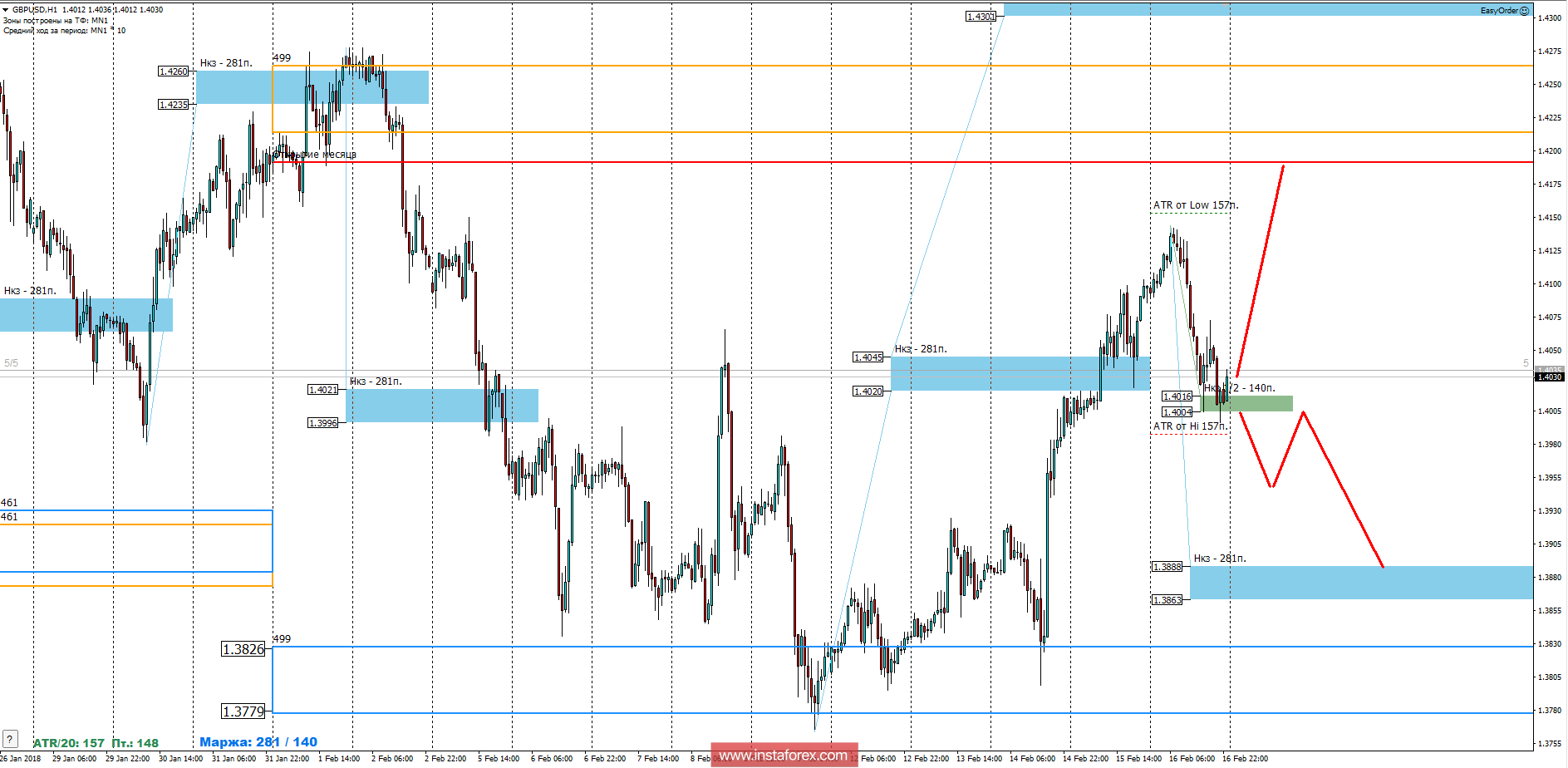
The daily short-term fault is the daytime control zone. The zone formed by important data from the futures market, which change several times a year.
The weekly short-term fault is the weekly control zone. The zone formed by important futures market marks, which change several times a year.
The monthly short-term fault is the monthly control zone. The zone, which is a reflection of the average volatility over the past year.