English
 Русский
 Bahasa Indonesia
 Bahasa Malay
 ไทย
ไทย Español
 Deutsch
 Български
 Français
 Tiếng Việt
 中文
中文 বাংলা
বাংলা हिन्दी
 Čeština
 Українська
 Română


The data on employment in the US, which were published on Friday, were significantly worse than expected. This initially led to some weakening of the dollar but it still could not stop its upward trend, despite being limited.
According to the data presented, the number of new jobs increased by only 164,000, while an increase of 191,000 was expected as shown in the consensus forecast. The positive news was the revision towards an increase in the number of new jobs for the month of March from 103,000 to 135,000. Another important point was the reduction in the unemployment rate from 4.1% to 3.9%. It was assumed that the figure will drop to 4.0%.
The dollar first fell on the data on the number of new jobs, which turned out to be weaker than the forecast. The greenback reacted with a decrease in relation to the major currencies. However, the market began to realize that under the current employment situation which is at 3.9%, it will be increasingly difficult for employers to find worthy candidates. Over 150,000 of this number is quite adequate, and besides, the Fed, following the May meeting, made it clear in its resolution that the process of raising interest rates will continue.
Observing the whole situation, the question arises, if inflationary pressures accelerate this year or, conversely, decrease, what will the regulator do?
In our opinion, the Central Bank will face a difficult question. Indeed, amid rising inflation pressures, according to the principles of monetary policy, the Fed will have to raise rates to curb inflation. However, this may cause a noticeable slowdown in economic growth and in the possible future, the beginning of a new wave of recession. Against this background, the dollar will grow during the period of high interest rates not only because of its increase, but also growth in demand for the dollar, as an asset of asylum. The process of inhibition of inflation, on the contrary, will force the regulator to slow down with an increase in rates, which will become a negative factor for the US currency.
Estimating the same short-term outlook for the dollar, we believe that it still has the opportunity to continue growing against the main currencies, primarily on the wave of their weakness towards it.
Forecast of the day:
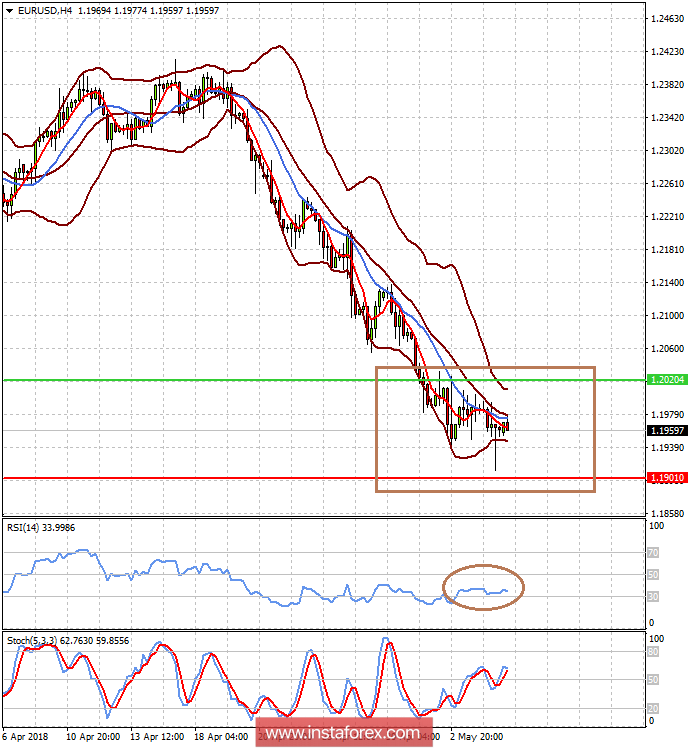
The EURUSD pair is moving in a narrow range on the wave of the absence of the publication of important data and significant events today. It is likely that such dynamics will continue although potentially, the pair can continue its desire to decrease to 1.1900.
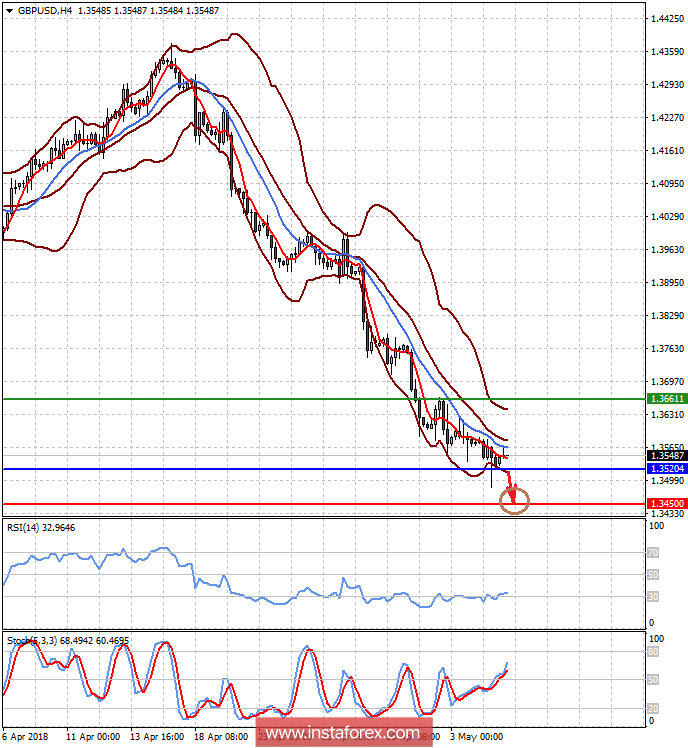
The GBPUSD pair is also consolidating, but it may continue to fall to 1.3450 after falling below 1.3550.