 English
 Русский
 Bahasa Indonesia
 Bahasa Malay
 ไทย
ไทย Español
 Deutsch
 Български
 Français
 Tiếng Việt
 中文
中文 বাংলা
বাংলা हिन्दी
 Čeština
 Українська
 Română


On Monday, August 5, the Chinese national currency has updated at least since 2008. Beijing responded with a devaluation of the yuan to Washington's actions that provoked an escalation of the protracted trade war.
Recall that on the first day of August, US President Donald Trump caused a shock in financial markets with the promise to introduce 10% tariffs on the remaining $ 300 billion of Chinese imports. It is expected that this decision will come into force on September 1, 2019. At the same time, the American leader does not rule out raising tariffs above 25% in the future. Experts believe that in this way, the head of the White House violates the previous agreement on ending the escalation of the trade conflict reached at the G20 summit.
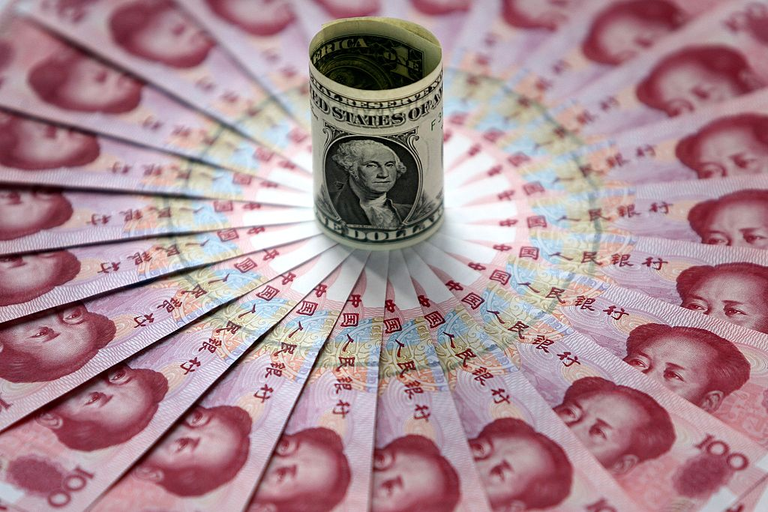
The devaluation of the national Chinese currency was a response to Washington's rhetoric of tightening as the yuan fell to 7.0240 for $1 for the first time since May 2008. Sinking below 7 could be critical for the Chinese currency, analysts say. The People's Bank of China (NBK) set the midpoint for the CNY = PBOC daily trading range at 6.9225 for 1 US dollar. This is the lowest figure since December 2018, experts emphasized.
The escalation of trade tensions has raised concerns about the global financial market as to how much China will allow the yuan to weaken. The caution of investors are also caused by the formation of a negative external background at the beginning of a new week. The PRC indices and oil quotes are traded in the red during the Asian session, continuing to regain the deteriorating trade relations between Beijing and Washington. Market participants expect new tariffs for Chinese goods to be introduced, which may provoke a response from the Celestial Empire. Prolonged trade conflict directly affects the rate of economic growth and it will remain a key topic in the near term.
Brent crude oil is trading at $61 a barrel and this week may drop to $60, analysts say. Despite the significant reduction in stocks and the tense situation in the Persian Gulf, commodity traders may increase sales because of the threat to demand from China against the background of the trade conflict, as well as because of Iran's activity in the oil market.
Not too positive current trends may continue in the near future that makes it difficult for investors to remain optimistic at the present situation.