 English
 Русский
 Bahasa Indonesia
 Bahasa Malay
 ไทย
ไทย Español
 Deutsch
 Български
 Français
 Tiếng Việt
 中文
中文 বাংলা
বাংলা हिन्दी
 Čeština
 Українська
 Română


During the Asian session on Monday, the dollar/yen pair reached the level of 104.46, updating almost three-year low. The last time the price was on such bottoms was in the fall of 2016, as part of a downward trend that led the pair to the 99th figure. To date, the southern trend is not so pronounced: the southern impulses are followed by very large-scale northern reversals. But in general, since April this year, the pair has been gradually and methodically reducing – if the price was around 110-111 four months ago, now the USD/JPY traders update the annual low almost every week.
The southern trend of the pair is due to two common reasons: the growth of anti-risk sentiment in the currency market and the weakening of the US currency. Often these factors are interrelated, as they are "obligated" to China, or rather the US-China trade conflict. So, it happened this time: another exchange of blows in the trade war, on the one hand, increased interest in protective assets, and on the other hand – increased the likelihood of reducing the Fed's interest rate at the September meeting. This fact put significant pressure on the yield of 10-year Treasuries (the indicator reached multi-year lows, now at 1.453) and indirectly – on the position of the US currency. The dollar index continues to gradually go down after reaching multi-month highs. The situation in the foreign exchange market is changing quite rapidly – yesterday's "highs" are replaced by today's "lows".
The decision of China and the United States to exchange another tariff strikes coincided with the speech of Fed head Jerome Powell, who in Jackson Hole announced further easing of monetary policy. Although he did not say this directly, he made it clear that the Federal Reserve will act "in accordance with the situation", while focusing on the negative consequences of the global trade conflict. Given the recent actions of Washington and Beijing, it becomes obvious that the regulator will respond to them shortly, most likely – in September.
Let me remind you that on Friday, China announced that it had decided to introduce additional tariffs for imports of US goods worth $ 75 billion in response to the recently announced increase in tariffs for imports of Chinese goods. The list of more than five thousand products (to be more precise, 5078) from the United States – they will be subject to additional duties in the amount of 5-10%. The tariff increase will take place in two stages: first – on September 1, second – on December 15, that is, when the US tariffs should come into effect. According to preliminary information, the new duties will affect agricultural products, oil, and small aircraft. And that's not all: from December 15, China will resume the 25% tariff for cars and spare parts of American production.
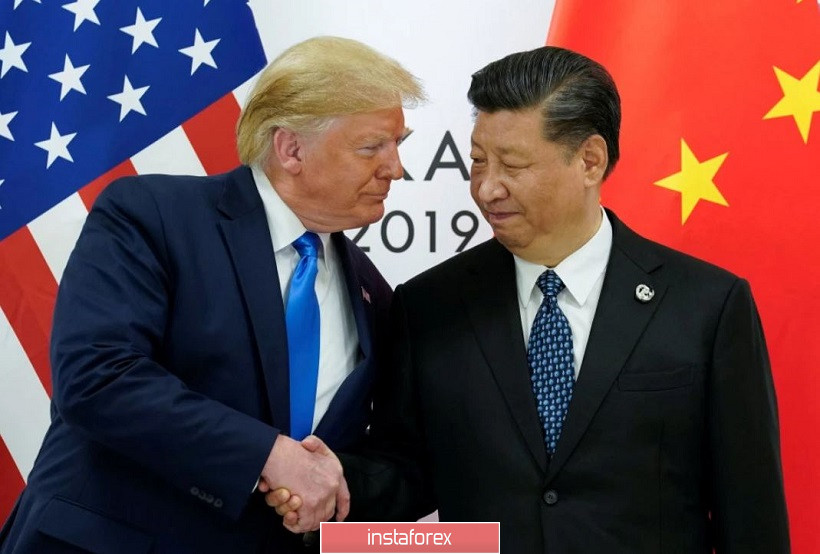
Trump reacted instantly – on the same day, he reported that the States will increase duties on Chinese goods in September and October by an additional 5% compared to previously announced figures. That is, from the first day of autumn, duties on goods worth $300 billion will increase from 10% to 15%, and from October 1, duties on goods worth $250 billion will increase from 25% to 30%. Also, the American President once again criticized the Fed, asking in one of his tweets: "Who is our enemy to a greater extent – Jerome Powell or Chinese President Xi?". He also recommended American companies to leave China, which, in his opinion, "appropriated the intellectual property owned by the United States for many years." Therefore, as Trump added, "America will be much better off without China."
Of course, all these are emotions – but at the same time, the fact remains – the trade war moved into the "hot phase" again, with all the ensuing consequences. This is further evidenced by another fact: today, the dollar/yuan pair began trading with a gap, reaching a historic high of 7.147. Not so long ago, in early August – the People's Bank of China assured Washington that it would not use the national currency as a weapon in a trade war. But, as we can see, the facts say the opposite. Beijing can further devalue the yuan, protecting the export sphere of its country, thereby causing the just anger of the American President, who cannot cope with the uncontrolled Fed.
Thus, the circumstances speak in favor of further easing of monetary policy at the September meeting of the Fed. But a 25-point reduction in the interest rate will not satisfy Donald Trump (let me remind you that he demands to reduce the rate by 100 basis points at once) – the American President will continue to exert political pressure on the Fed. Also, given the exchange rate of the yuan, it is likely that the market will again talk about currency interventions. And although the White House has "closed" this topic, the sharp devaluation of the Chinese currency, paired with the relatively weak downward dynamics of the dollar, can affect Trump's position: new times require bold decisions.
In other words, further growth of anti-risk sentiment will put pressure on the USD/JPY pair: in such conditions, bears can re-test the support level of 104.60 (the lower line of the Bollinger Bands indicator on the daily chart).