 English
 Русский
 Bahasa Indonesia
 Bahasa Malay
 ไทย
ไทย Español
 Deutsch
 Български
 Français
 Tiếng Việt
 中文
中文 বাংলা
বাংলা हिन्दी
 Čeština
 Українська
 Română


The single European currency was in a difficult situation: between the hammer of Brexit and the anvil of the monetary policy of the European regulator. Experts fear that in case of negative developments, the euro, along with the pound and the US dollar, will begin to sink. These fears are not unfounded: the "European" is already trying to find the bottom, analysts say.
An unstable external background undermines the European currency, which is stubbornly trying to resist. On the one hand, it is traumatized by a kind of "swing" with the protracted signing of an agreement on Britain's exit from the EU, and on the other, a difficult situation related to the monetary policy of the ECB. These factors put a lot of pressure on the euro, experts say. To them are also added a slowdown in the global economy and a decline in economic growth in the eurozone. This was mentioned in his report by Mario Draghi before resigning as head of the ECB.
In his last speech, the head of the European regulator confirmed the need for long-term incentive measures in the current monetary policy. M. Draghi is sure that this is necessary to maintain basic inflationary pressures and the development of inflation in the medium term. A comprehensive package of incentive measures will provide monetary incentives that will help soften borrowing conditions for companies and households, M. Draghi noted. He confirmed the previous decision regarding the purchase of ECB assets from November 1 of this year in the amount of € 20 billion per month. The regulator kept the key rate at the previous position, left the interest rate on loans at a zero level, the deposit rate at minus 0.5% per annum, and the margin loan rate at 0.25% per annum.
Analyzing the speech of the former head of the ECB, experts agree that M. Draghi's attempt to help the European currency is worthy of respect, but it looks weak. It looks like a requiem for a "European." No wonder M. Draghi mentioned that the eurozone economy is on the verge of stagnation, although he noted that the popularity of the euro has never been higher than now. Nevertheless, the position of the single currency is shaken by internal contradictions between the economies of the eurozone. Fuel to the fire is added by the slowdown of the German economy and the instability of the Italian economy. Experts find it difficult to answer where the economic vector of the eurozone will go and how the European currency will behave.
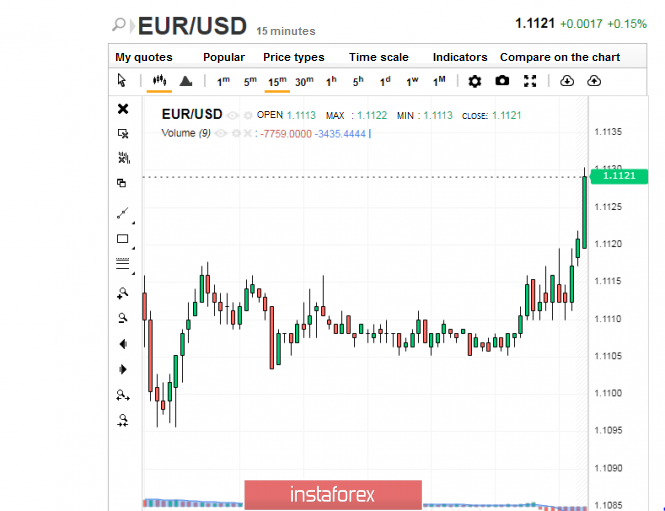
After the ECB meeting and the speech of M. Draghi, the EUR / USD pair sank sharply, having fallen in price by 0.2% and dropping to the minimum value of 1.1112. On the morning of Friday, October 25, the pair was able to catch up and return to a neutral position at the level of 1.1105–1.1106.
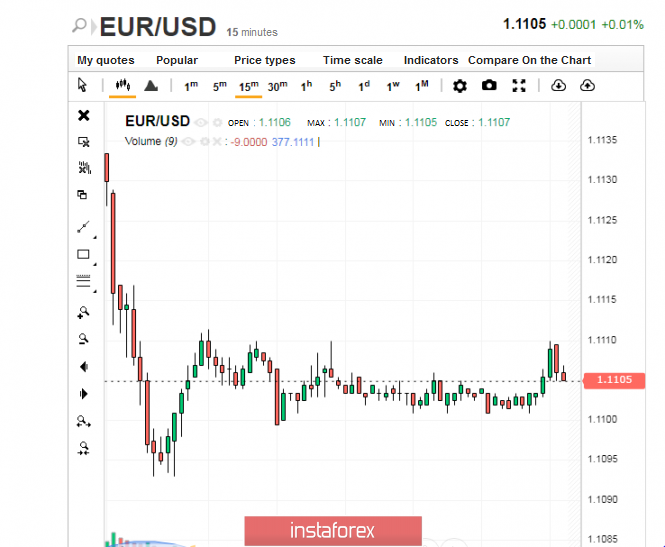
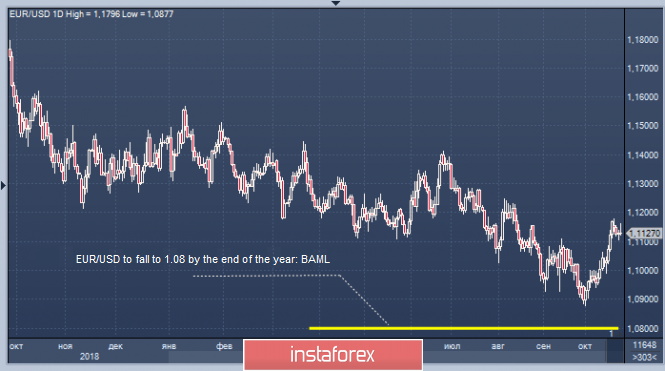
Many analysts predict a significant subsidence of the European currency. They are confident that the euro will sink to the bottom in the coming months, from which it will be very difficult to get out. More so, currency strategists at Bank of America Merrill Lynch believe that the fall of the "European" will open the way for the US dollar. The US currency will grow in the short term, overtaking a colleague in the pair. In addition, the European currency will be outsiders by the end of this year, having dropped to a critical level of 1.0800, according to the bank.
A similar position is held by many experts. Some of them are not so pessimistic and give the euro a chance, believing that the sinking of the euro will not exceed 1.1087. To implement this scenario, sellers of the EUR / USD pair need to overcome the level of 1.1110. It can be noted that the pair has already tested this level today.
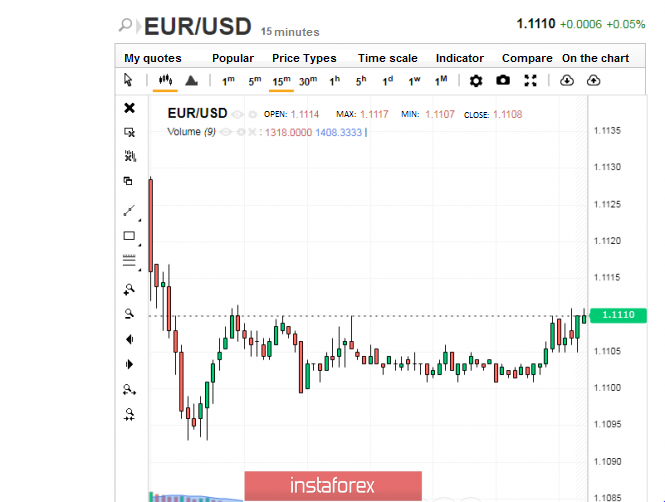
At the same time, experts draw attention to the importance of the 1.1210 indicator for the EUR / USD pair, where the 200-day moving average and key Fibonacci level are located. The recent rally of the euro has slightly weakened the downward trend, but the risk of collapse still remains. According to some analysts, the level near 1.1000 is a "pain threshold" for long positions in the euro. At the moment, the EUR / USD pair has risen to the range of 1.1120–1.1121, while experts admit its reversal to testing the bottom.
Therefore, experts find it difficult to answer whether the European currency can withstand the pressure of a number of traumatic external factors. At present, its dynamics inspire market participants. Nevertheless, they hope for the stability and internal strength of the "European currency", which will win the economic ring sooner or later.