 English
 Русский
 Bahasa Indonesia
 Bahasa Malay
 ไทย
ไทย Español
 Deutsch
 Български
 Français
 Tiếng Việt
 中文
中文 বাংলা
বাংলা हिन्दी
 Čeština
 Українська
 Română


 Some experts assume that the major world currencies may incur staggering losses due to the gloomy economic situation caused by the coronavirus. The euro is forecast to suffer the biggest losses as it continues to weaken against the greenback.
According to analysts at JPMorgan, by the end of 2020, the single currency will significantly lose ground against the US dollar. Analysts predict that by this time the EUR/USD pair is likely to decline from 1.0850–1.0870 to the level of 1.0600. On Monday, April 20, the EUR/USD pair is trying to rise, moving within the trading range of 1.0855–1.0857. Analysts believe that the euro may sharply drop amid a disproportionate debt crisis across the euro area. This problem is sure to have a huge impact on the future of the block's economy.
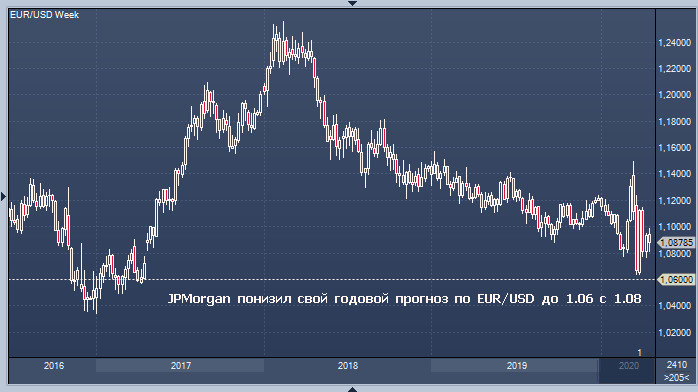
What is more, the euro is nosediving as the debt burden of the eurozone member states triggered by COVID-19 is growing rapidly. As a result, the single currency may well give in to the greenback and even test the bottom due to the shock from the economic downturn and the debt growth. Nevertheless, the euro could assert strength if the eurozone issues the so-called "corona bonds" as a step to protect the bloc's companies and governments from the economic fallout of the pandemic. Currently, the government is almost doing nothing to support the euro. Experts at JPMorgan point out that it may lead to depreciation of the European currency.
Additionally, the euro was weighed down by the IMF report published last week. According to the report, the global economy is expected to shed 3% this year. Christine Lagarde's statements on the eurozone economic outlook also delivered a hard blow to the euro. She warned about the uncertainty in the European economy. However, Lagarde believes that it is too early to predict a looming recession in the euro region. She also stresses that in the near future, the inflation in the eurozone will continue to remain negative.
Over last weekend, the euro managed to exceed the psychological level of 1.0850. The short-term rise was due to a number of fundamental factors. Experts note that the EUR gained momentum amid news on the development of a vaccine against COVID-19.
Nevertheless, the euro is likely to lose steam because of the gloomy economic statistics for the eurozone. On Tuesday, April 21, the euro area will unveil a batch of statistics, including the ZEW Indicator of Economic Sentiment for April. According to the preliminary forecast, the score is likely to fall to -62 compared to the previous value of -49.5. Experts at the ZEW Institute will also provide data on Germany Ifo Business Climate Index. The indicator is expected to total -42.8. The economic sentiment for the euro area is forecast to come in at -82.3. These indices reflect a significant deterioration in the business climate in the euro area. Analysts do not rule out a decline in other indicators by the end of this month and in May 2020.
Analysts also note that the Manufacturing PMI is likely to slump as well. It is sure to weaken the euro area economy as well as the single currency. The flash estimate is due on Thursday, April 23. Experts assume that the indicator may edge down to 39.6 from 45.4. Analysts also predict a noticeable decline in the German manufacturing sector. According to analysts ' observations, such weak indicators of business activity have not been recorded in the last 20 years, either in the German economy or in the European countries. They fear that the economic crisis caused by COVID-19 will be much stronger and more devastating than the previous ones.
Thus, the EUR is sure to bend under such a storm of negative factors. In case of the worse scenario, the euro will weaken in the long term. If so, it will take too long for the EUR/USD pair to recover to its previous levels