 English
 Русский
 Bahasa Indonesia
 Bahasa Malay
 ไทย
ไทย Español
 Deutsch
 Български
 Français
 Tiếng Việt
 中文
中文 বাংলা
বাংলা हिन्दी
 Čeština
 Українська
 Română


Over the past weekend, US President Donald Trump issued more aggressive threats to destroy Iranian power plants and to unleash "hell" on the country.
Iran has already rejected Trump's latest ultimatum to reopen the Strait of Hormuz, stating that it will fully resume operations only after receiving compensation for war-related damage. Tehran, meanwhile, continued strikes on energy facilities in neighboring Persian Gulf states, including the headquarters of Kuwait's national oil company.
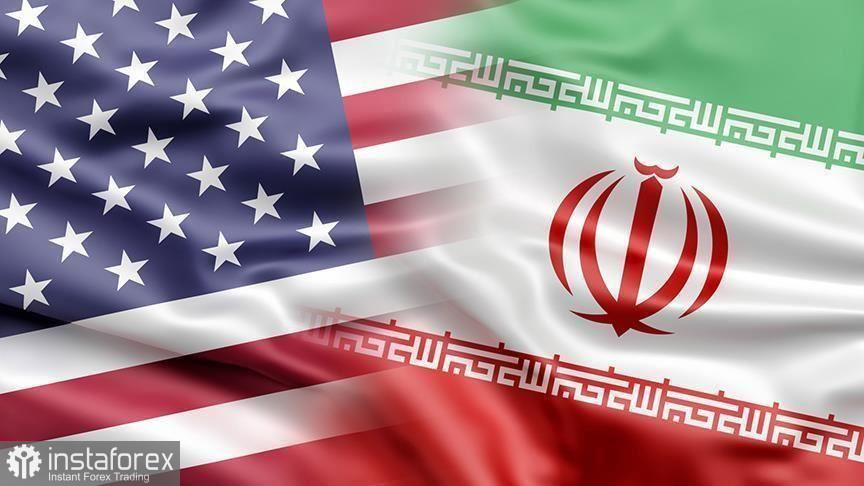
Another Trump's press conference is expected today, and the ultimatum deadline expires tomorrow at 03:00 Moscow time.
All of this indicates that tensions in the region have reached a critical point. The new rhetoric coming out of Washington is worrying international observers, who see signs of a possible intensification of the conflict in the Middle East, up to the commencement of a ground operation. Threats against civilian infrastructure, such as power plants, run counter to international norms and could lead to catastrophic humanitarian consequences.
Iran, for its part, demonstrates determination to defend its interests and to respond to external pressure. The statement that the Strait of Hormuz will be reopened only after compensation for war damage highlights deep grievances and a desire to secure recognition of losses on Tehran's terms. While this position sounds like an ultimatum, it reflects Iran's aim to restore what it sees as fairness and to stabilize the situation on its own conditions.
Strikes on energy infrastructure in neighboring countries, including Kuwait, are a clear signal of Iran's willingness to use asymmetric levers. Such actions against critical infrastructure may have far-reaching consequences for the entire regional economy and energy security. This complicates an already fragile balance of power and increases the risk of wider conflict contagion.
Yesterday, Axios reported that the US, Iran, and regional intermediaries are discussing terms for a possible 45-day ceasefire that could lead to an end to hostilities, which briefly eased pressure on risk assets. However, the chances of reaching an agreement within the next 48 hours are small.
Recall that on March 26 Trump gave Iran a 10-day deadline to reopen the Strait of Hormuz, which also expires tomorrow.
On the FX market, should the war in the Middle East worsen, the US dollar will most likely quickly resume gains against risk assets, including the euro and the pound.
As for the current technical picture of EUR/USD, buyers now need to consider how to take the 1.1540 level. Only this will allow targeting a test of 1.1590. From there, a climb to 1.1630 would be possible, but achieving that without support from major players will be quite difficult. The most distant target is the high at 1.1662. In case the instrument falls only to around 1.1510, I expect some serious action from large buyers. If there is no one there, it would be prudent to wait for a refresh of the low at 1.1485 or to open long positions from 1.1445.
Regarding the current technical picture for GBP/USD, pound buyers need to take the nearest resistance at 1.3230. Only this will allow targeting 1.3260, above which it will be rather difficult to break through. The most distant target is the 1.3300 area. In the event of a fall, bears will try to seize control of 1.3200. If they succeed, a break of the range will deal a serious blow to bulls' positions and push GBP/USD toward the low at 1.3160, with a prospect of reaching 1.3130.