 English
 Русский
 Bahasa Indonesia
 Bahasa Malay
 ไทย
ไทย Español
 Deutsch
 Български
 Français
 Tiếng Việt
 中文
中文 বাংলা
বাংলা हिन्दी
 Čeština
 Українська
 Română


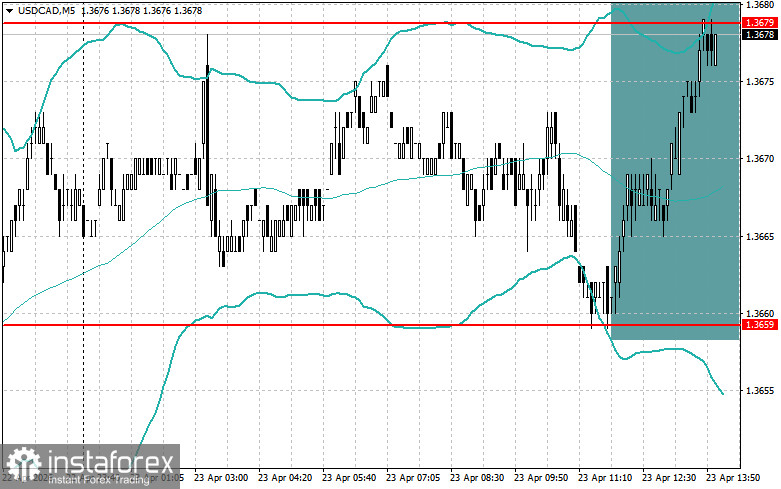
Strong data on manufacturing activity in the eurozone and the UK undoubtedly provided a ray of hope, given the economic challenges both regions are expected to face in the near future due to the energy crisis. Growth in the manufacturing sector, reflected in the PMI indices, suggests a potential recovery and strengthening of the industrial sector at the beginning of this spring. This may have been driven by various factors, including increased export demand, the restoration of supply chains, or the successful implementation of government support measures. However, it is unlikely that we can count on sustained strength in the manufacturing sector, as it has not yet fully felt the impact of the looming new energy crisis in the region.
Today, in the second half of the day, attention shifts to the U.S. economic calendar, where a number of key macroeconomic indicators are expected to be released, potentially having a significant impact on the currency market. The main focus will be on the U.S. manufacturing and services PMI indices.
The manufacturing PMI traditionally serves as a barometer of the health of the industrial sector, reflecting production volumes, new orders, employment, and other key parameters. Similarly, the services PMI—which represents the largest sector of the U.S. economy—will show trends in areas such as retail trade, transportation, hospitality, and professional services. Together, these indicators will help traders assess whether their current decisions to buy the U.S. dollar are justified.
In addition, weekly initial jobless claims data in the U.S. will be released. This report is considered one of the most timely indicators of labor market conditions. Significant changes in this figure may signal trends in employment, which in turn directly affect consumer spending, overall economic activity, and the U.S. dollar.
If the data is strong, I will rely on the Momentum strategy. If there is no market reaction to the data, I will continue using the Mean Reversion strategy.
Momentum Strategy (Breakout) for the Second Half of the Day
For EUR/USD
- Buying on a breakout above 1.1695 may lead to growth toward 1.1720 and 1.1750;
- Selling on a breakout below 1.1680 may lead to a decline toward 1.1650 and 1.1620.
For GBP/USD
- Buying on a breakout above 1.3515 may lead to growth toward 1.3551 and 1.3596;
- Selling on a breakout below 1.3475 may lead to a decline toward 1.3446 and 1.3416.
For USD/JPY
- Buying on a breakout above 159.83 may lead to growth toward 160.02 and 160.24;
- Selling on a breakout below 159.60 may lead to a decline toward 159.36 and 159.13.
Mean Reversion Strategy (Pullback) for the Second Half of the Day
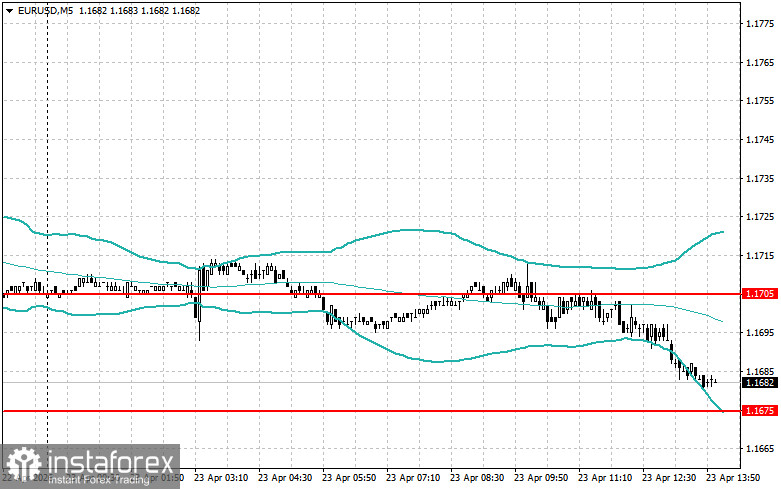
For EUR/USD
- I will look for selling opportunities after a failed breakout above 1.1705, on a return below this level;
- I will look for buying opportunities after a failed breakout below 1.1675, on a return to this level.
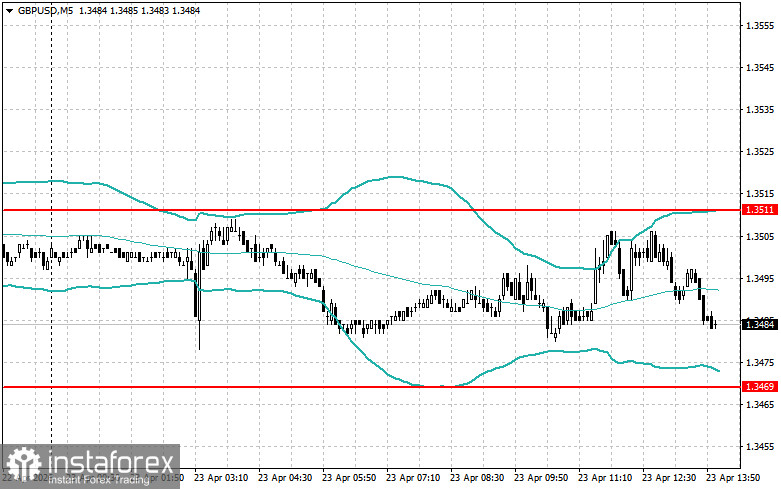
For GBP/USD
- I will look for selling opportunities after a failed breakout above 1.3511, on a return below this level;
- I will look for buying opportunities after a failed breakout below 1.3469, on a return to this level.
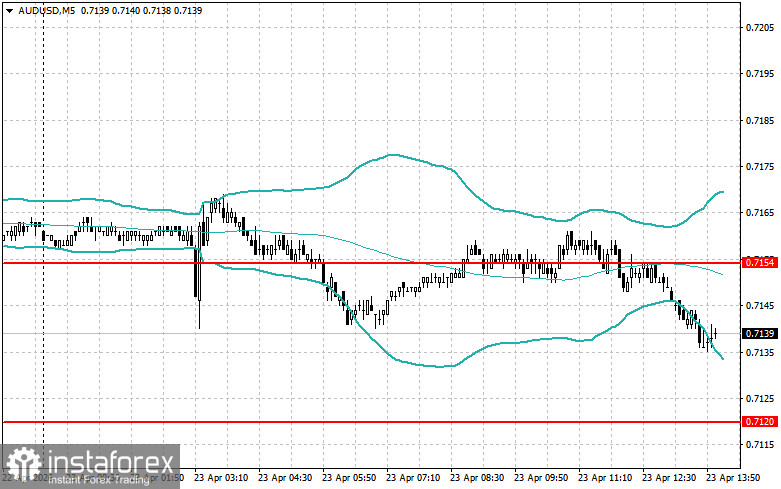
For AUD/USD
- I will look for selling opportunities after a failed breakout above 0.7154, on a return below this level;
- I will look for buying opportunities after a failed breakout below 0.7120, on a return to this level.
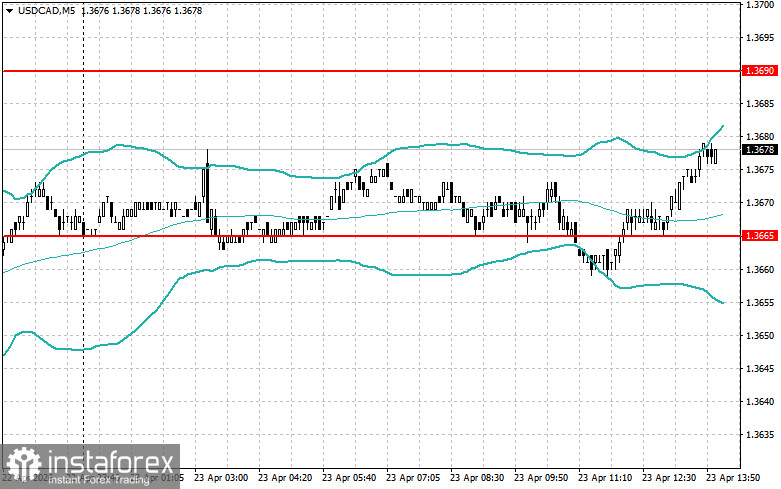
For USD/CAD
- I will look for selling opportunities after a failed breakout above 1.3690, on a return below this level;
- I will look for buying opportunities after a failed breakout below 1.3665, on a return to this level.