 English
 Русский
 Bahasa Indonesia
 Bahasa Malay
 ไทย
ไทย Español
 Deutsch
 Български
 Français
 Tiếng Việt
 中文
中文 বাংলা
বাংলা हिन्दी
 Čeština
 Українська
 Română


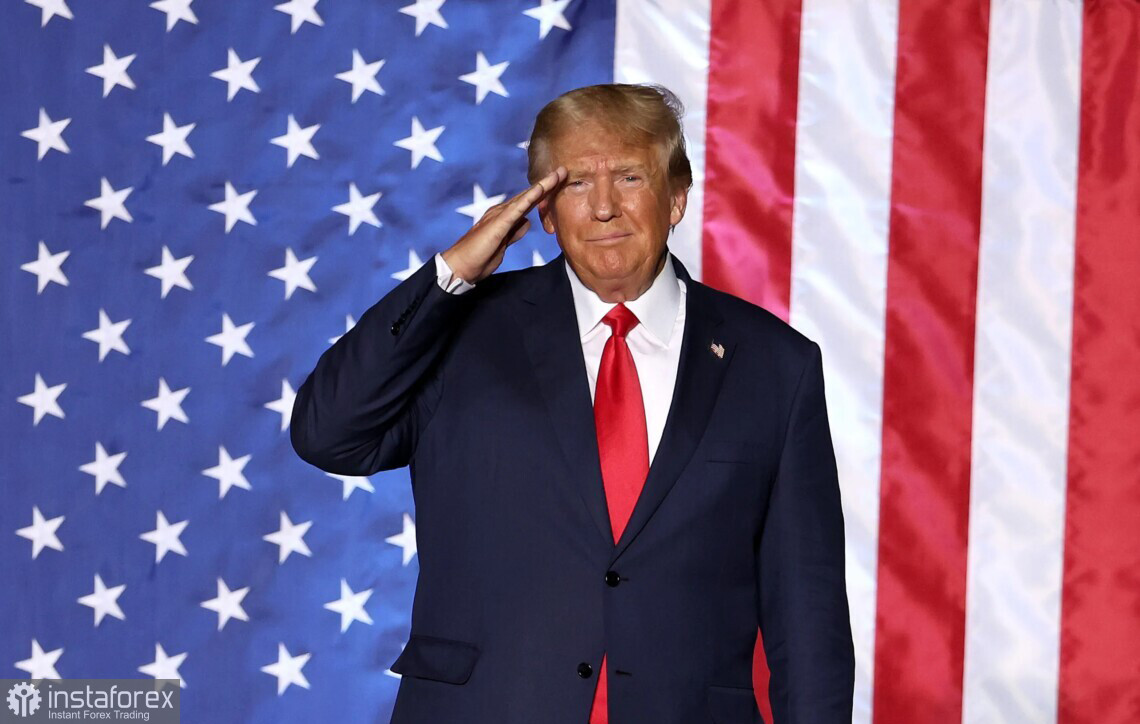
Time passes, days go by, and even weeks and months have passed, yet the deal between Iran and the U.S. still hasn't materialized. Analysts and market participants continue to believe an agreement is possible, but their hopes are not being fulfilled and lack concrete evidence. I have repeatedly stated in my reviews that there are simply no signs of progress in the negotiations. We only hear about progress from Donald Trump. However, here's the paradox — there is progress; the deal is reportedly agreed upon by 95%, with only minor issues remaining, yet time passes, and the deal is still absent. Therefore, I personally believe there is no actual progress in the negotiations, and Tehran regularly confirms this.
Recent statements from Iranian authorities and officials state:
- Iran will not give up uranium enrichment.
- Iran will not agree to export uranium to third countries.
- Discussion of nuclear issues will only be possible after a complete ceasefire, the lifting of the blockade of Iranian ports, unfreezing Iranian assets, and the removal of sanctions on Iranian oil.
- Regular violations of the ceasefire by the U.S. side only lead to an escalation of the conflict. And Iran is not afraid of escalation.
What kind of deal can we talk about when the delegations of Iran and the U.S. are no longer meeting in person, and the rhetoric from Washington and Tehran differs as much as the Moon from the Sun? Independent experts (not from Axios) note that since April 8, when a temporary ceasefire was reached, little has fundamentally changed. Both sides are holding to their initial positions, and no one is willing to concede. Economists and political analysts also note that this is not about the difficulty of the last step or the final concession to finalize the agreement. Neither side is ready to give even the slightest ground, and they remain thousands of kilometers apart, both literally and figuratively.
Iran perceives any concessions as capitulation to the U.S. America continues to exert pressure by all available means, from financial and oil blockades to regular missile strikes and threats. Tehran is prepared to continue resisting and is willing to find alternative ways to export oil rather than yield to Washington. Based on all of the above, the U.S. dollar remains in a strong position and may continue to gradually strengthen. I do not believe that a deal will be reached in the near future.
Wave Analysis of EUR/USD:
Based on the conducted analysis of EUR/USD, I conclude that the instrument remains within an upward segment of the trend (lower chart), while in the short term, it is within a corrective structure. The corrective wave set a-b-c appears complete. Consequently, the construction of wave 3 or c continues, which may be a part of wave C. The entire wave C (if the current wave count is correct) may complete its formation at a level well below the 14-figure mark. However, for this scenario to unfold, strong geopolitical support would be required. Otherwise, the bearish wave set may take the form of an a-b-c and will likely be completed around the 1.1578 level.
Wave Analysis of GBP/USD:
The wave structure of the GBP/USD instrument has become clearer over time. Now we see a distinct upward structure on the charts, which is complete. Therefore, I expect the construction of a downward wave set, which may take an impulsive form and coincide with the impulsive structure of the EUR/USD instrument. Consequently, after a 300-point decline, a corrective wave can be expected, followed by a new drop into the 30-31 figures. I warned in advance about the new decline of the pound, but I expected a correction. However, the harsh reality shows that this could be a full-fledged impulsive structure, considering the strength of its first wave.
Key Principles of My Analysis:
- Wave structures should be simple and clear. Complex structures are difficult to trade and often lead to changes.
- If there is no confidence in market movements, it is better not to enter.
- There is no 100% certainty in the direction of movement, and there never can be. Don't forget about protective Stop Loss orders.
- Wave analysis can be combined with other types of analysis and trading strategies.