 English
 Русский
 Bahasa Indonesia
 Bahasa Malay
 ไทย
ไทย Español
 Deutsch
 Български
 Français
 Tiếng Việt
 中文
中文 বাংলা
বাংলা हिन्दी
 Čeština
 Українська
 Română



Today, on Monday, gold (XAU/USD) continues to move in the established direction, attempting to hold the round level of $4,300, which marks its lowest point since March 23. Escalation of the conflict in the Persian Gulf is supporting higher oil prices, increasing inflation risks and reinforcing expectations of tighter monetary policy from central banks. Against this backdrop, demand for the non-yielding precious metal is declining. An additional confirmation of downward pressure came from Friday's break below an important technical level — the 200-day simple moving average (SMA), strengthening prospects for continued downside momentum that has persisted for nearly two months.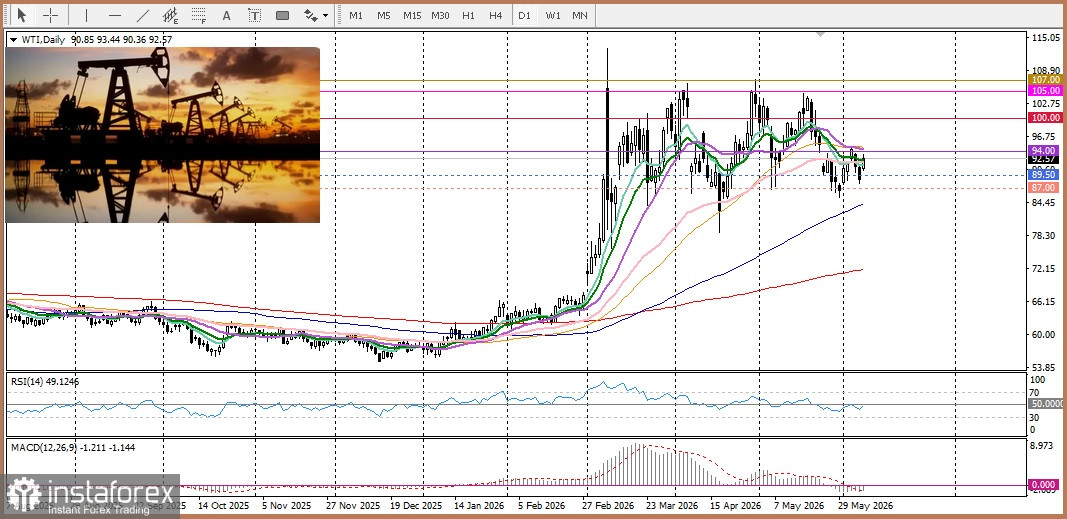 The conflict between Israel and Iran has entered a more tense phase, accompanied by mutual strikes across multiple fronts. Israel reported new attacks on military infrastructure in western and central Iran in response to ballistic missile launches targeting Ramat David Airbase on Sunday evening. The geographic scope of the confrontation is expanding: reports of Israeli strikes in southern Lebanon and Iranian activity in northern Iraq are increasing concerns about a broader regional escalation. This undermines an already fragile ceasefire and reduces the likelihood of a near-term resolution of the three-month-long confrontation, while simultaneously supporting the U.S. dollar as a safe-haven asset, which remains stable near two-month highs.
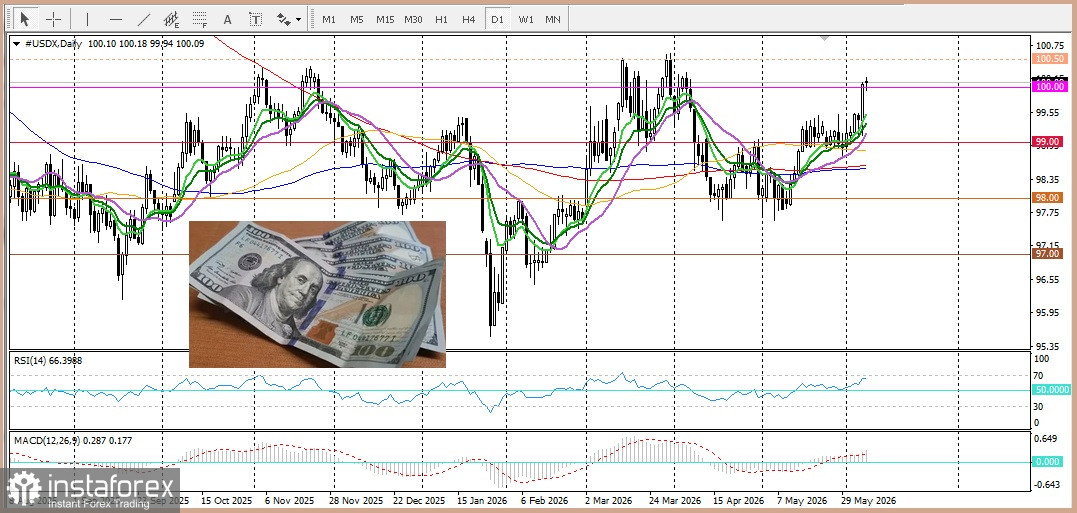 Additional support for the dollar came from strong U.S. labor market data released on Friday. The Nonfarm Payrolls (NFP) report reinforced expectations that the Federal Reserve will maintain higher interest rates for a longer period. In May, the U.S. economy added 172,000 jobs, significantly exceeding the forecast of 85,000, while the previous month's figure was revised upward to 179,000. The unemployment rate remained at 4.3%, in line with expectations, despite a slowdown in average hourly earnings growth to 3.4% year-on-year, down from 3.6% in April.
Market reaction was swift: participants are now pricing in more than a 70% probability of further monetary tightening by the Federal Reserve before the end of the year. This factor also supports the U.S. dollar and points to continued downward pressure on gold prices. On Monday, no significant macroeconomic data releases are expected in the United States, so the dynamics of the dollar and the XAU/USD pair will largely depend on geopolitical news flow.
Looking ahead, investor attention will shift to U.S. inflation data: the Consumer Price Index (CPI) and Producer Price Index (PPI), scheduled for release on Wednesday and Thursday respectively. In addition, interest rate decisions from the Bank of Canada and the European Central Bank meeting may further increase volatility in financial markets.
From a technical perspective, XAU/USD maintains a bearish bias, remaining below the 200-day SMA. Immediate support is located at 4,300, with further support at 4,260. A decisive break below this level would open the path to deeper losses.
Resistance is now formed by the 200-day EMA, the round level of 4,400, and the 200-day SMA. Oscillators remain negative, but the Relative Strength Index is approaching oversold territory, indicating a potential minor corrective rebound.