 English
 Русский
 Bahasa Indonesia
 Bahasa Malay
 ไทย
ไทย Español
 Deutsch
 Български
 Français
 Tiếng Việt
 中文
中文 বাংলা
বাংলা हिन्दी
 Čeština
 Українська
 Română


Analysis of Macroeconomic Reports:
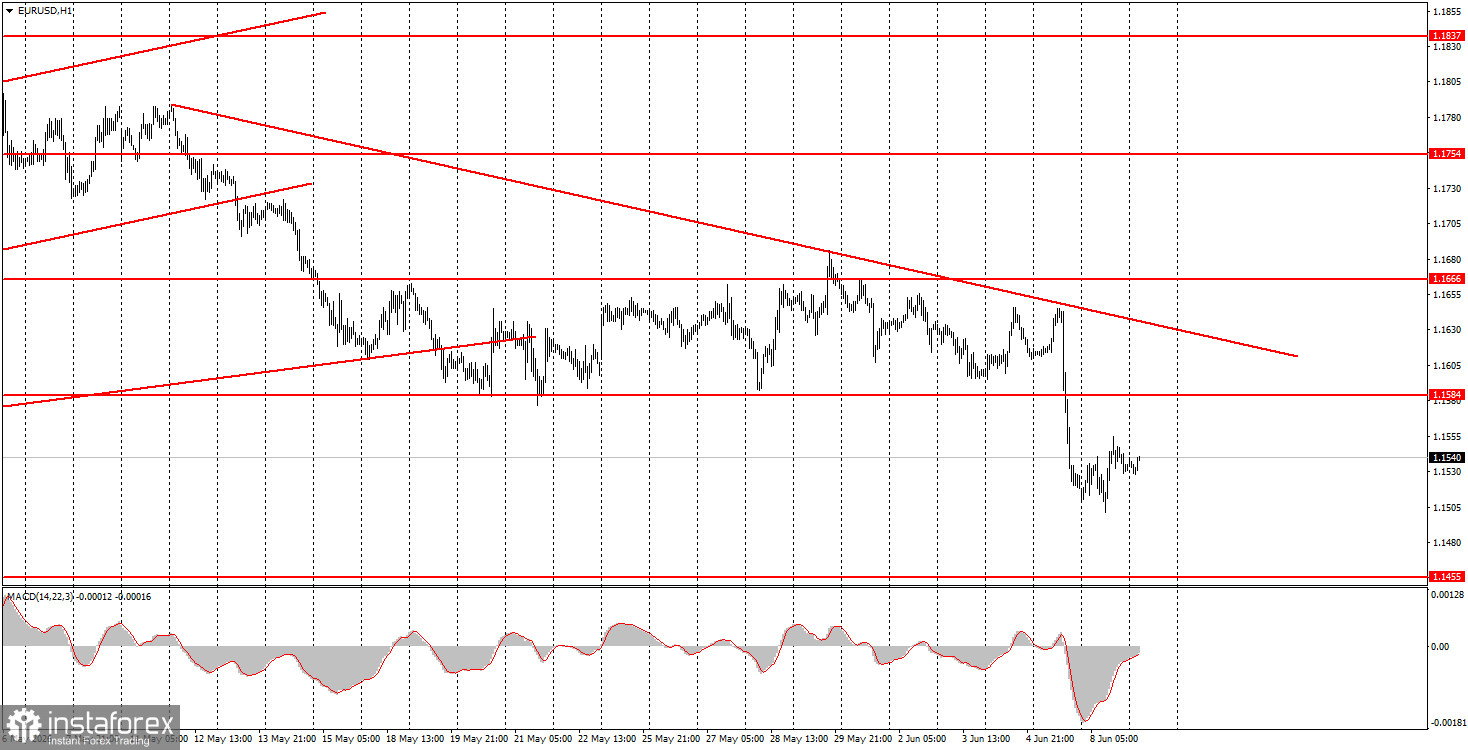
There are a few macroeconomic reports scheduled for Tuesday, and none are significant. In Germany, reports on industrial production and the trade balance will be released today, but they do not initially generate much interest. The market has been in a range for three weeks, practically ignoring all news and events. Only the important and high-profile NonFarm Payrolls report was able to provoke movement of more than 100 pips, which led to the end of the range for the EUR/USD pair. Thus, the German reports are unlikely to inspire the market. The same applies to the American reports. The weekly ADP report and existing home sales are clearly not the type of information traders are waiting for. The first important report this week will be published tomorrow: U.S. inflation.
Analysis of Fundamental Events:
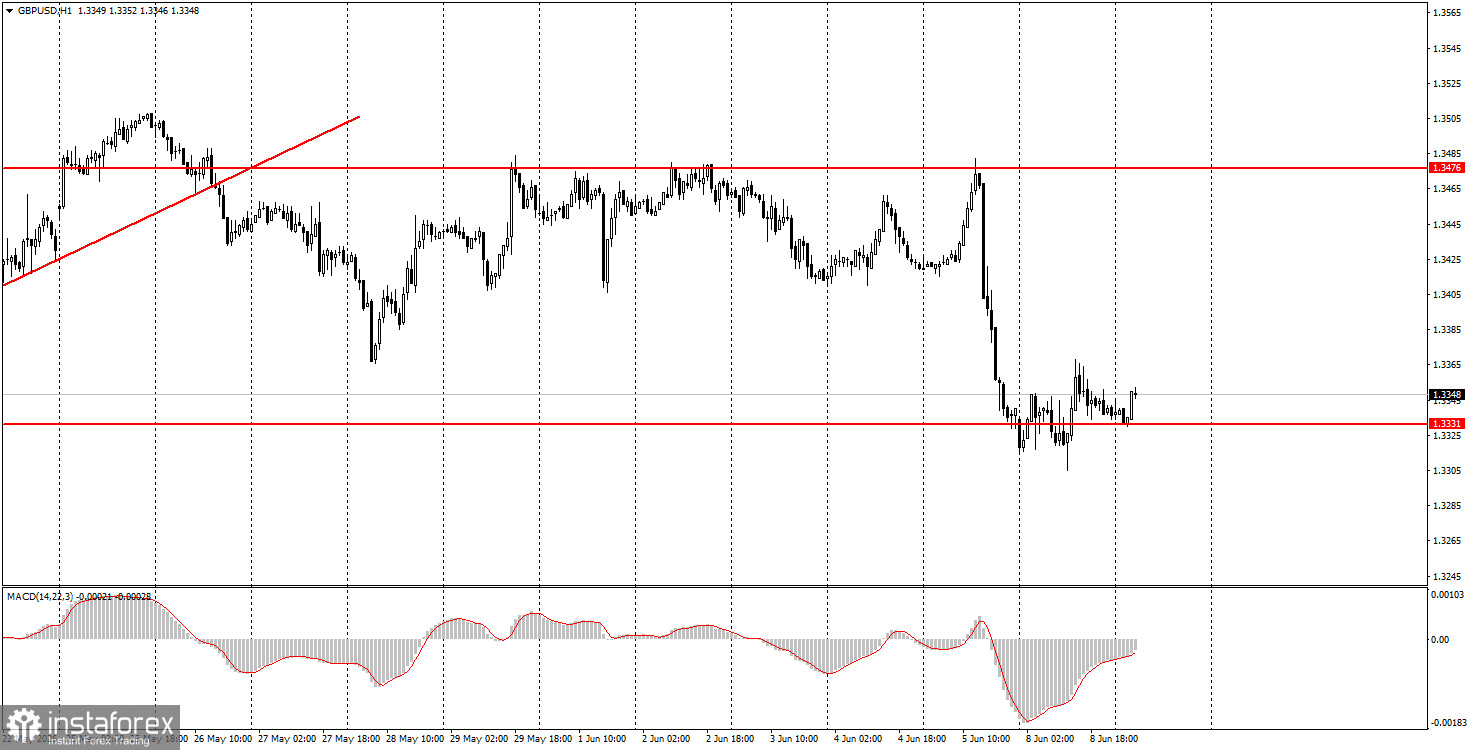
There is nothing of significance among the fundamental events on Tuesday either. The European Central Bank meeting will take place on Thursday, while the meetings of the Federal Reserve and the Bank of England are scheduled for next week. Therefore, representatives of the central banks cannot comment on monetary policy at this time. They have entered a "quiet period." The ECB is highly likely to raise rates this week, but the euro cannot currently benefit from it.
The geopolitical backdrop continues to be unsatisfactory, as Iran and the U.S. have once again moved closer to a resurgence of conflict and failure in negotiations. Talks between Washington and Tehran are ongoing, and according to the U.S. president, they are "very successful." However, there have been no confirmations from Iran regarding the success of diplomacy. Quite the opposite. The parties regularly violate the terms of the ceasefire. The new week has begun with mutual shelling in the Middle East.
General Conclusions:
On the second trading day of the week, both currency pairs may trade with low volatility, as no significant events are scheduled. The euro can be traded today from the area of 1.1527-1.1531, while the British pound can be traded from the area of 1.3319-1.3331. Geopolitics remains the key driver in the currency market, despite the strong market reaction on Friday to American data.
Basic Rules of the Trading System:
- The strength of a signal is evaluated based on the time it takes to form (bounce or breakout). The less time required, the stronger the signal.
- If two or more trades were opened at a particular level based on false signals, all subsequent signals from that level should be ignored.
- In a flat market, any pair may generate many false signals or none at all. Technical levels may be overlooked.
- On the hourly timeframe, trading signals from the MACD indicator should be executed only when volatility is good, and a trend is confirmed by a trend line or channel.
- If two levels are too close together (5 to 20 pips), they should be considered a support or resistance area.
- After moving 15 pips in the correct direction, a Stop Loss should be set at breakeven.
What's on the Charts:
Price levels (areas) of support and resistance are targets when opening long or short positions or sources of signals.
Red lines indicate channels or trend lines that display the current trend and indicate the preferred direction for trading.
The MACD indicator (14,22,3) – histogram and signal line – is a supplementary indicator that can also be used as a source of signals.
Important speeches and reports (contained in the news calendar) can significantly impact the movement of the currency pair. Therefore, during their release, trading should be conducted with maximum caution, or one should exit the market to avoid sharp reversals against preceding movements.
Beginners trading in the forex market should remember that not every trade can be profitable. Developing a clear strategy and practicing money management are keys to success in trading over the long term.