 English
 Русский
 Bahasa Indonesia
 Bahasa Malay
 ไทย
ไทย Español
 Deutsch
 Български
 Français
 Tiếng Việt
 中文
中文 বাংলা
বাংলা हिन्दी
 Čeština
 Українська
 Română


Trading the AI theme still attracts interest, but the margin for error has grown materially. Blockbuster Micron results did not prevent the S&P 500 from recording its fourth consecutive day of losses, its worst run since March. The proximate culprit was Apple, which hiked prices on products, citing an unprecedented memory-chip shortage driven by data-centter demand. The fact that one of the world's largest chip buyers cannot absorb higher input costs and is forced to pass them on raises serious questions about demand elasticity and the sustainability of memory-makers' margins — in short, the chip shortage that yesterday lifted Micron and SK Hynix now threatens end-market demand.
Dynamics of S&P 500, Micron, and other companies
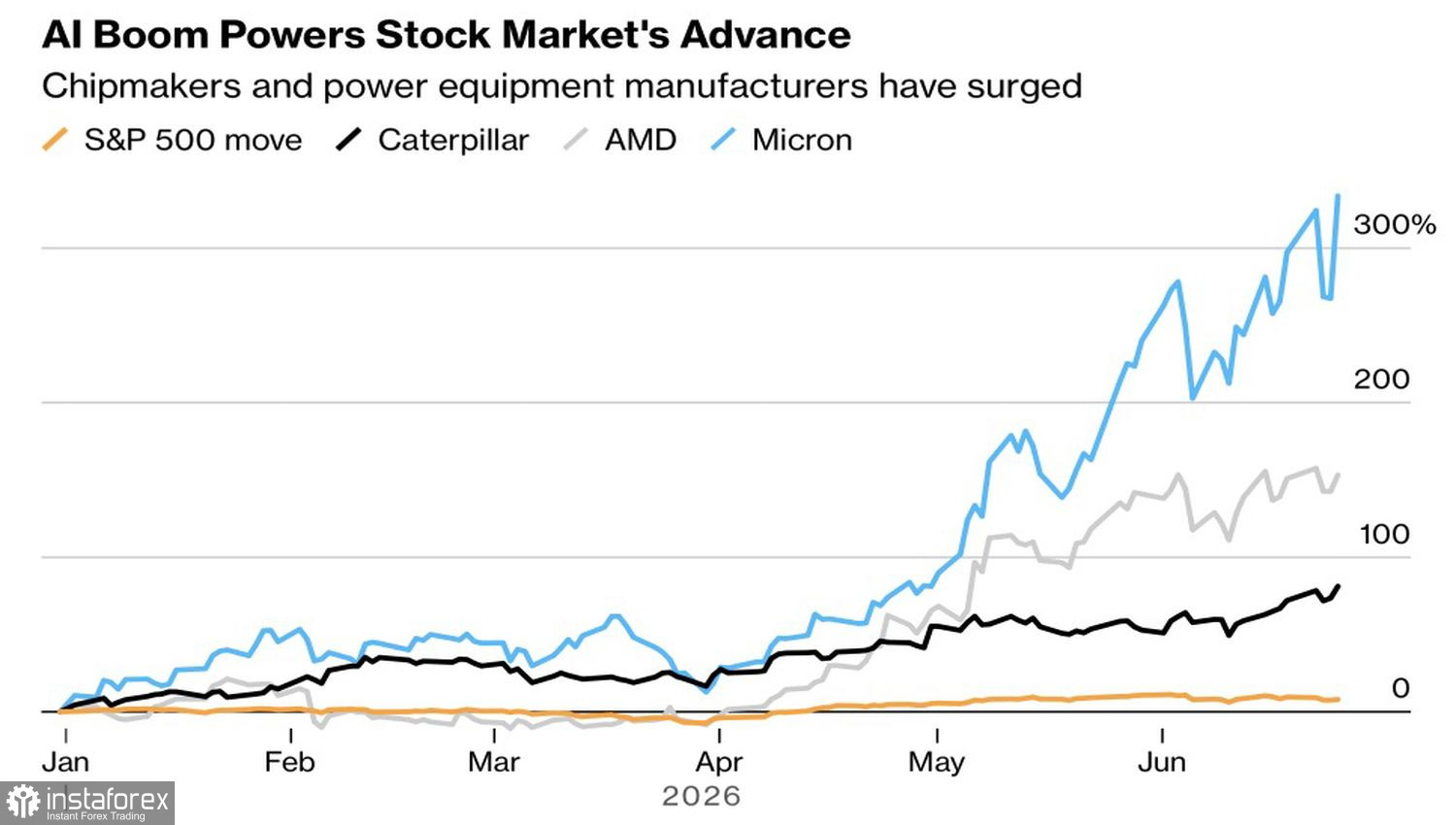
The entire Magnificent Seven, led by Apple, closed in the red, and markets were reminded again of concentration risk. For a long period, the equity rally was carried by a small group of companies. Their extreme valuations and stretched fundamentals amplify fears of a large-scale S&P 500 correction if something goes wrong.
A telling example is Bitcoin and gold, which plunged from record highs in a single session. These assets rose because they were bought — a self-reinforcing loop that has also characterised the shares of chipmakers and the broader US tech sector.
S&P 500 and cap-weighted index dynamics
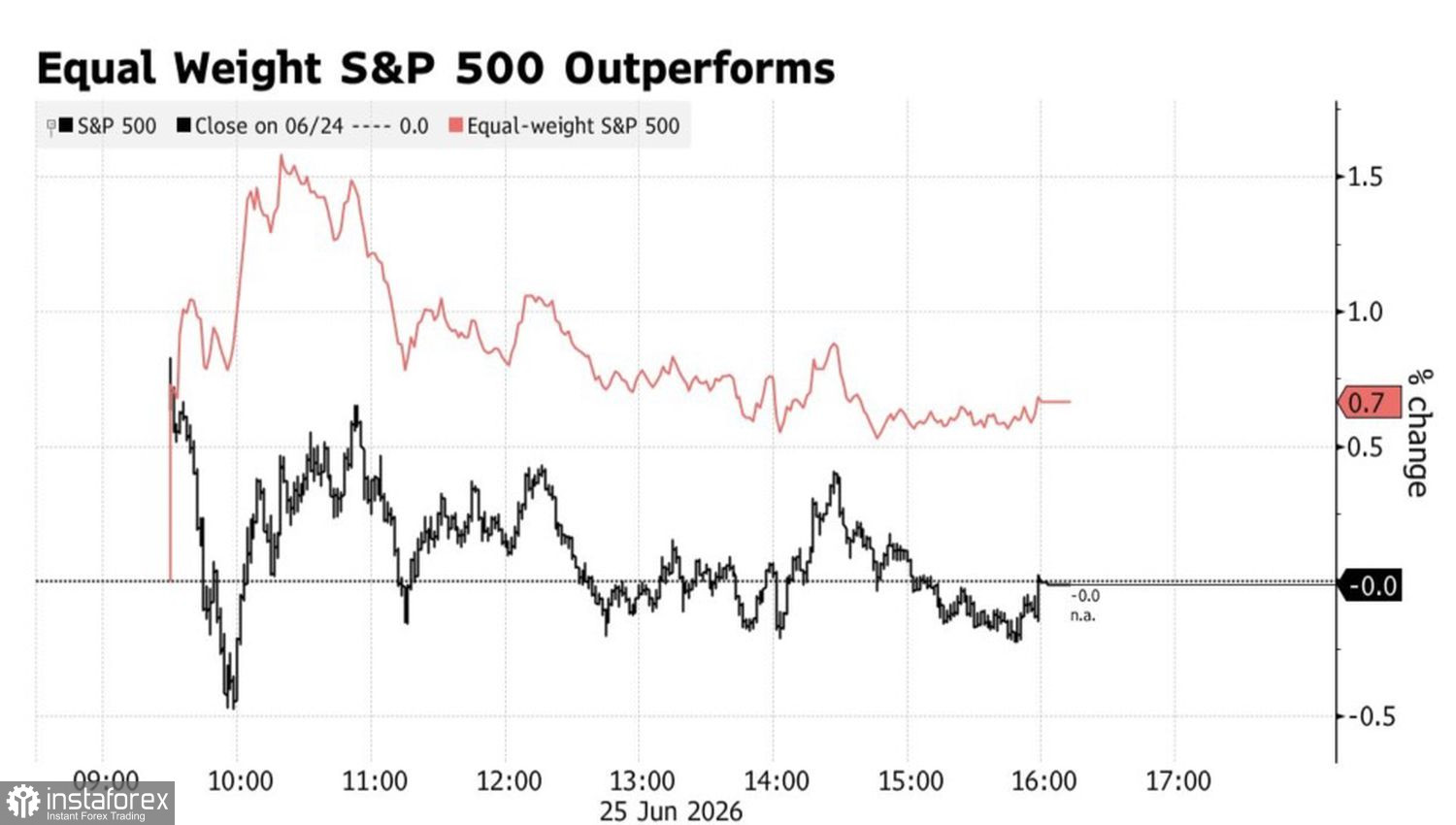
Concerns about excessive concentration and the fall-risk of tech giants now outweigh any positives from otherwise mixed macro releases. Durable goods orders fell by 4.5% m/m in May, consumer spending growth slowed in Q1, and the monthly core PCE price index missed the mark — all of which allowed futures markets to pare back the odds of Fed tightening.
The probability of a September fed-funds hike fell from 71% at the start of the last full week of June to 58%. The chance of two tightening moves dropped from 50% to 36%. That eased the dollar and pushed Treasury yields lower — a development normally supportive for equities.
Markets are gradually reassessing the June FOMC outcome and acknowledging they ran ahead of themselves. Bets on two Fed hikes in 2026 were excessive: only a minority of FOMC officials backed that scenario in the updated projections. Theoretically, that removes one reason for the S&P 500 pullback. Practically, after retreating from record highs, the broad index is paying more attention to company-specific risk than to overall US macro strength.
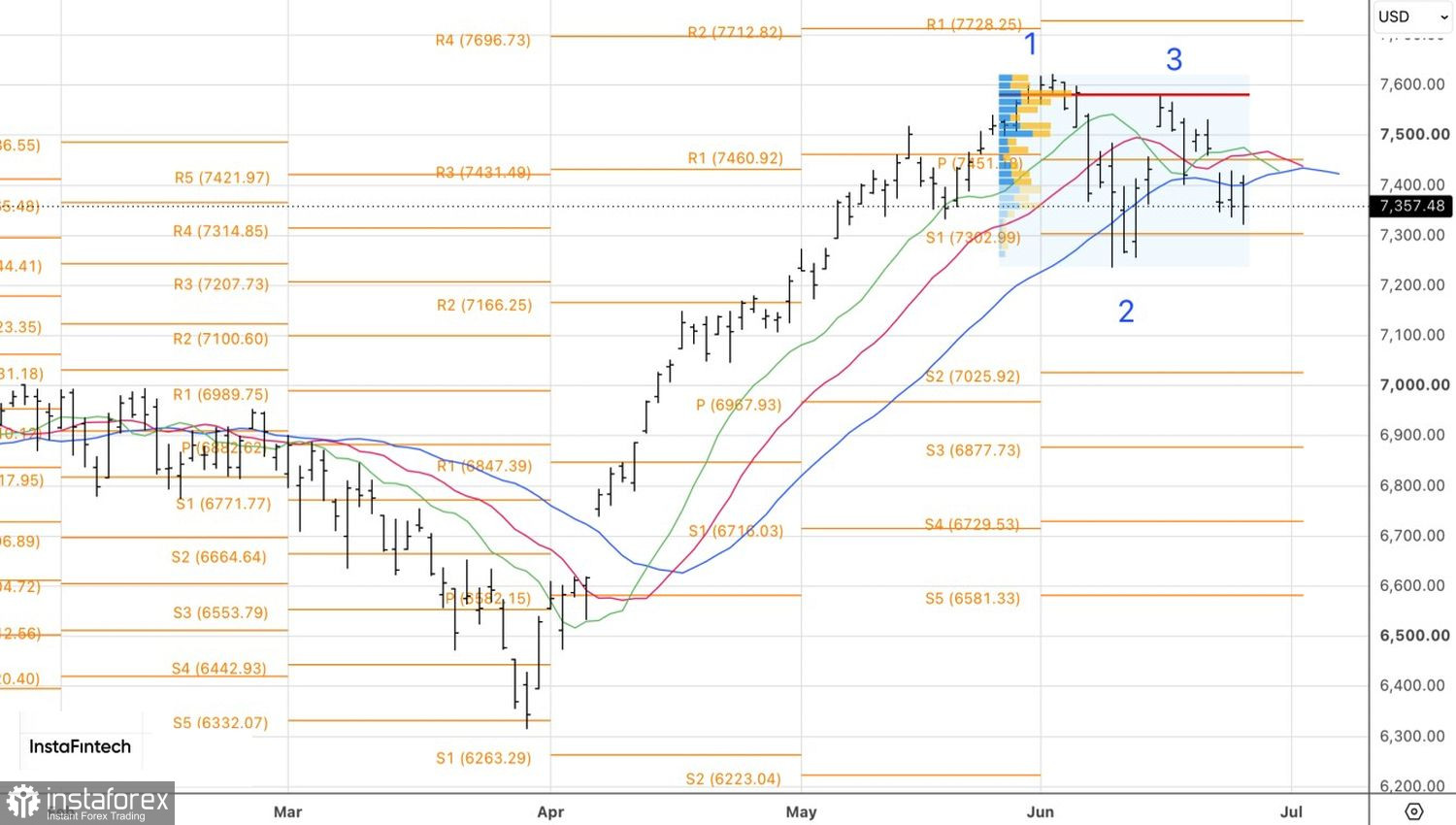
Technically, the daily chart shows that the S&P 500 is approaching a critical support level in the form of a pivot at 7,300. A break below that level would activate a 1-2-3 reversal pattern and allow traders to open new short positions or add to existing ones. Conversely, a bounce from this support level would provide a basis for a reversal back into buy positions.