 English
 Русский
 Bahasa Indonesia
 Bahasa Malay
 ไทย
ไทย Español
 Deutsch
 Български
 Français
 Tiếng Việt
 中文
中文 বাংলা
বাংলা हिन्दी
 Čeština
 Українська
 Română


On the hourly chart, GBP/USD consolidated above the 1.3268–1.3277 resistance level and advanced toward the next resistance level at 1.3349–1.3355 during the first half of Thursday's session. A rebound from the 1.3349–1.3355 level would favor the U.S. dollar and trigger a moderate decline toward 1.3268–1.3277. A consolidation above 1.3349–1.3355 would increase the likelihood of further gains toward the 50.0% Fibonacci retracement level at 1.3408.
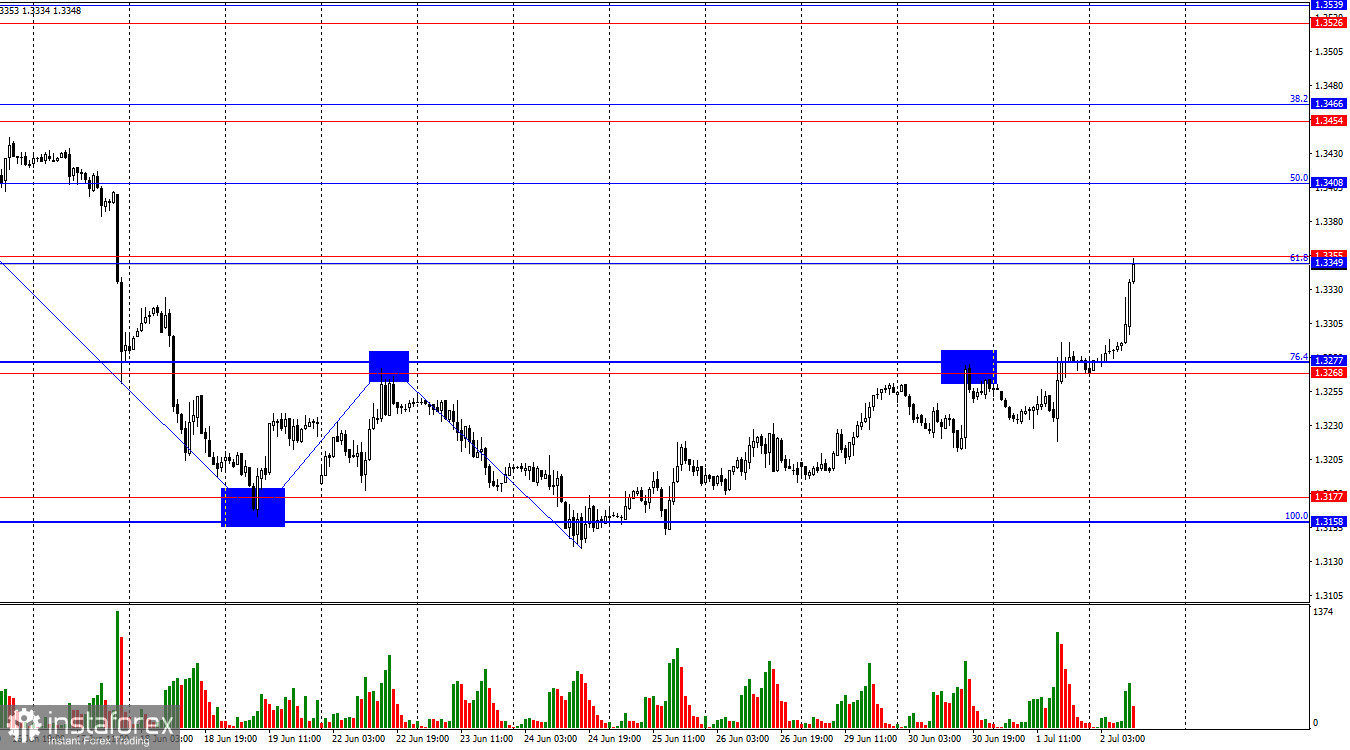
The wave structure has shifted to a bullish outlook over the past few hours. The latest completed downward wave broke below the previous low, while the new upward wave has exceeded the previous high and continues to develop. As a result, buyers have finally taken control, although I had expected this to happen approximately two to three weeks earlier. It is now important for them to maintain the current momentum. The British pound continues to strengthen at a solid pace.
As noted yesterday, Wednesday's news flow could be interpreted in different ways. Bank of England Governor Andrew Bailey stated that he expects inflation in the UK to slow next year and considers the recent inflation shock to be temporary. The situation in the Middle East is stabilizing, shipping through the Strait of Hormuz is resuming, and oil prices have already returned to their pre-conflict levels. Therefore, the Bank of England is unlikely to raise interest rates in 2026 unless circumstances require it.
At the same time, Federal Reserve official Kevin Warsh also highlighted easing inflation risks, which may be interpreted as a signal that the Fed could refrain from further monetary policy tightening in 2026. Inflation in the United States remains higher than in the UK, but it is worth remembering that Donald Trump has consistently called for lower interest rates. Kevin Warsh, having been appointed by Trump, is unofficially expected to support the White House's policy stance. Therefore, it can be assumed that the FOMC may also avoid rushing into further policy tightening. Sellers, who in recent weeks had been positioning for additional FOMC tightening, were forced to retreat. As a result, the British pound has rallied sharply.
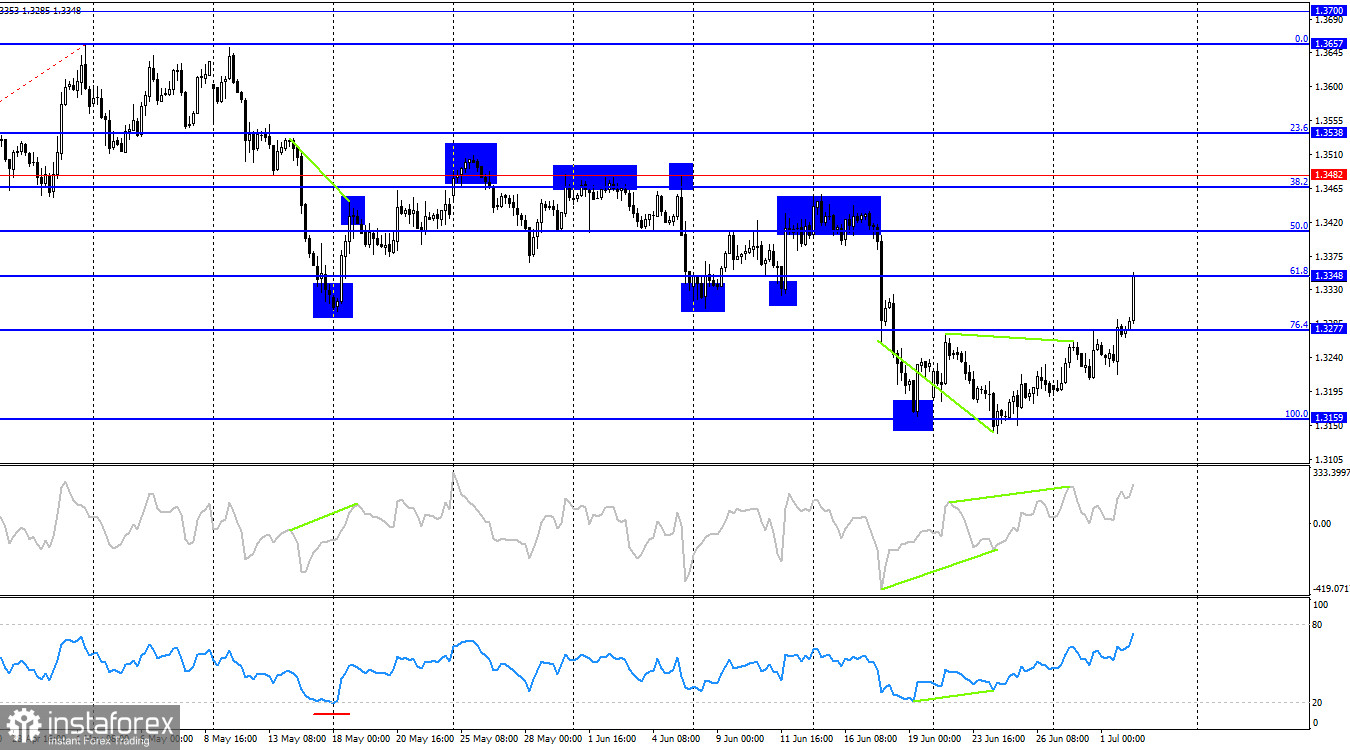
On the 4-hour chart, GBP/USD rebounded from the 100.0% Fibonacci retracement level at 1.3159, reversed in favor of the pound, and advanced toward the 61.8% Fibonacci retracement level at 1.3348. A consolidation above 1.3348 would allow traders to expect further gains toward the 50.0% Fibonacci retracement level at 1.3409. A rebound from 1.3348 would favor the U.S. dollar and signal a resumption of the bearish trend that has dominated in recent months. No emerging divergences are currently observed on any of the indicators.
Commitments of Traders (COT) Report:
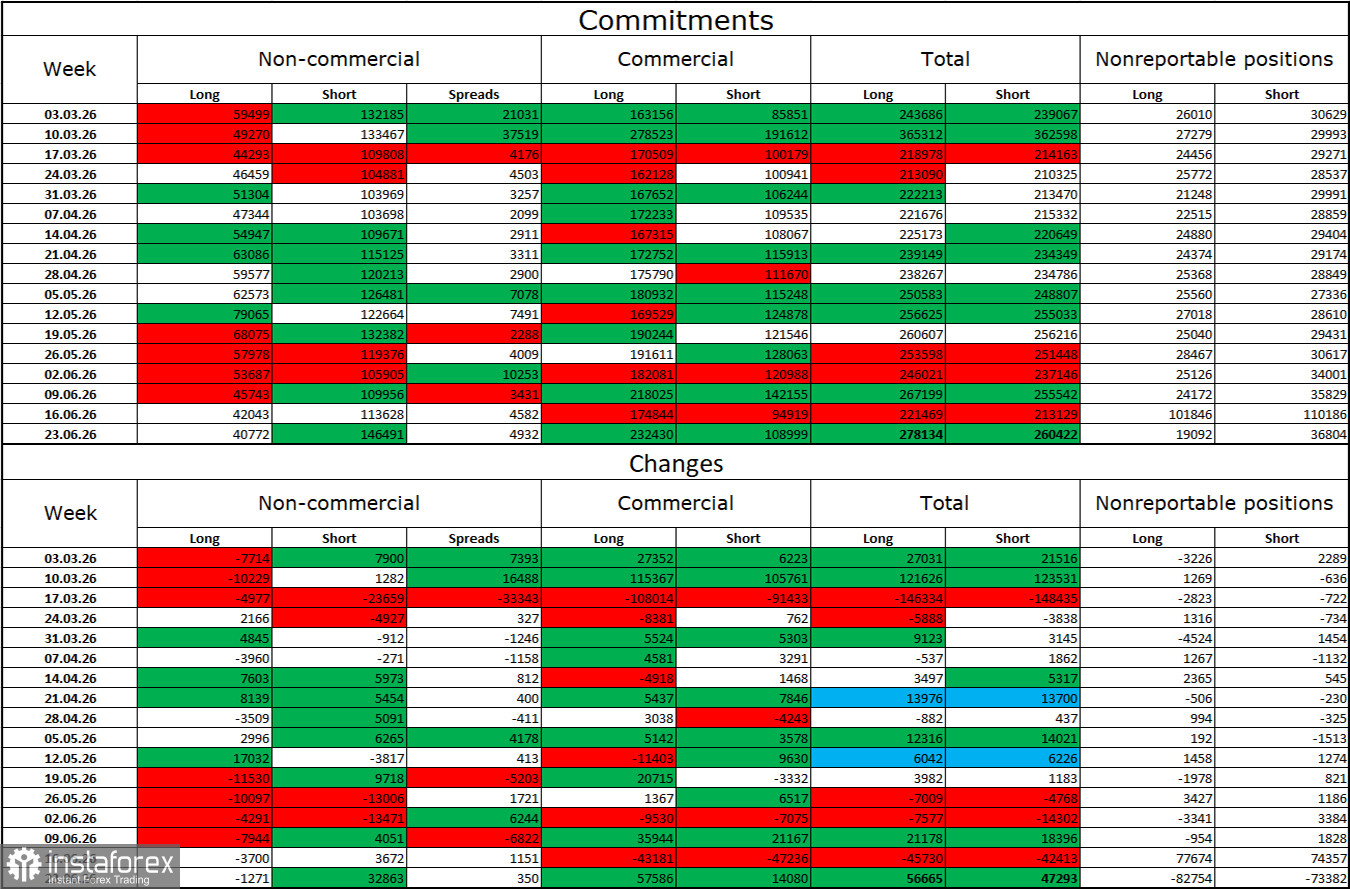
Sentiment among the Non-commercial group became more bearish during the latest reporting week. The number of Long positions held by speculative traders declined by 1,271, while Short positions increased by 32,863. The gap between Long and Short positions now stands at approximately 41,000 versus 147,000.
Bears have dominated positioning in recent months. However, while this dominance previously appeared justified, the significantly changed fundamental backdrop has made it less convincing. The advantage of bearish positions now exceeds a three-to-one ratio.
I still do not expect a sustained bearish trend for the British pound. In the near term, however, market direction will depend less on economic data, Trump's trade policy, or central bank monetary policy, and more on the duration, scale, and consequences of the conflict in the Middle East. In recent weeks, the market has shifted toward a more optimistic outlook regarding peace, but negotiations between Iran and the United States may prove lengthy and difficult. There is no guarantee that they will ultimately result in a nuclear agreement.
Economic Calendar for the United States and the United Kingdom:
- United States – Nonfarm Payrolls (12:30 UTC)
- United States – Unemployment Rate (12:30 UTC)
- United States – Average Hourly Earnings (12:30 UTC)
The economic calendar for July 2 contains three high-impact releases. As a result, macroeconomic data are expected to have a significant influence on market sentiment during the second half of Thursday's session.
GBP/USD Forecast and Trading Tips:
Short positions may be considered following a rebound from the 1.3349–1.3355 resistance level on the hourly chart, targeting 1.3268–1.3277. Long positions were appropriate following a rebound from the 1.3158–1.3177 support level or after a consolidation above 1.3268–1.3277, with a target at 1.3349–1.3355. This target has been reached. New long positions may be considered after a consolidation above 1.3349–1.3355, with upward targets at 1.3408 and 1.3454.
Fibonacci retracement grids are drawn from 1.3158 to 1.3655 on both the hourly and the 4-hour charts.