 English
 Русский
 Bahasa Indonesia
 Bahasa Malay
 ไทย
ไทย Español
 Deutsch
 Български
 Français
 Tiếng Việt
 中文
中文 বাংলা
বাংলা हिन्दी
 Čeština
 Українська
 Română


EM currency traders long funded carry trades with the US dollar, but are increasingly turning to the euro and other G10 currencies. The catch is the greenback's reluctance to simply yield to the winners.
Currency dynamics against the US dollar
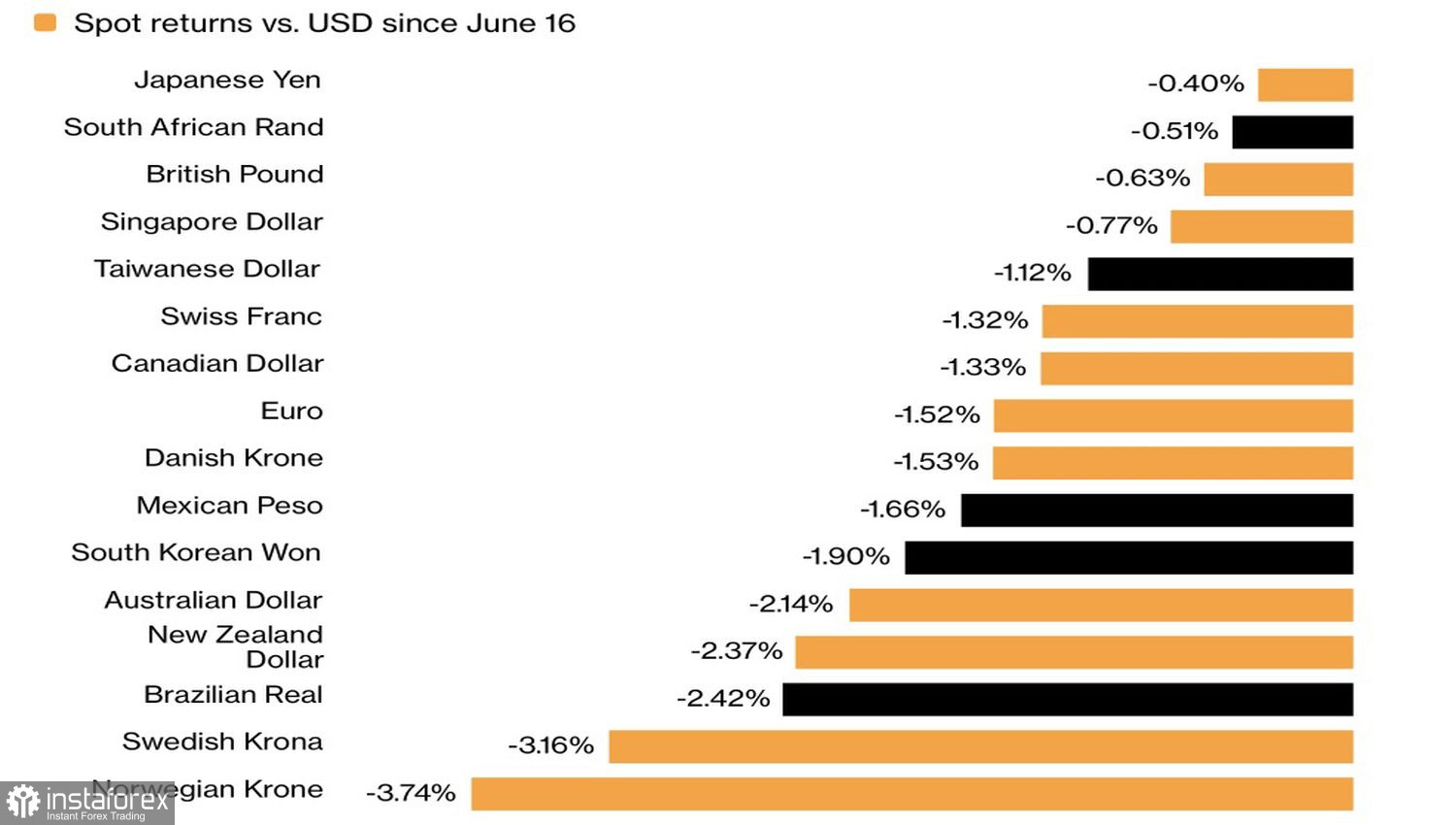
Invesco and AllianceBernstein acknowledge that dependence on the dollar as a funding currency is declining. Morgan Stanley advises clients to bet against an expanded basket that includes not only the dollar but also the euro and the yen. Citigroup recommends playing the strengthening of the Brazilian real versus the euro and the Australian dollar. Diversification is underway, and EUR/USD finds itself at the center of this process from several angles.
The first factor is monetary policy. Kevin Warsh's arrival at the Fed is being read by markets as a hawkish signal: restoring price stability has become a priority, and expectations of higher US interest rates are strengthening the dollar. At the same time, Bloomberg Economics sees the ECB as close to finishing its tightening cycle. The Governing Council still leans toward a 25 bp hike in September, but falling oil prices after the US-Iran deal and cooling inflation in the eurozone in June weaken the hawks' case. It is likely to be the last rate increase in the current cycle.
Central bank rate forecasts
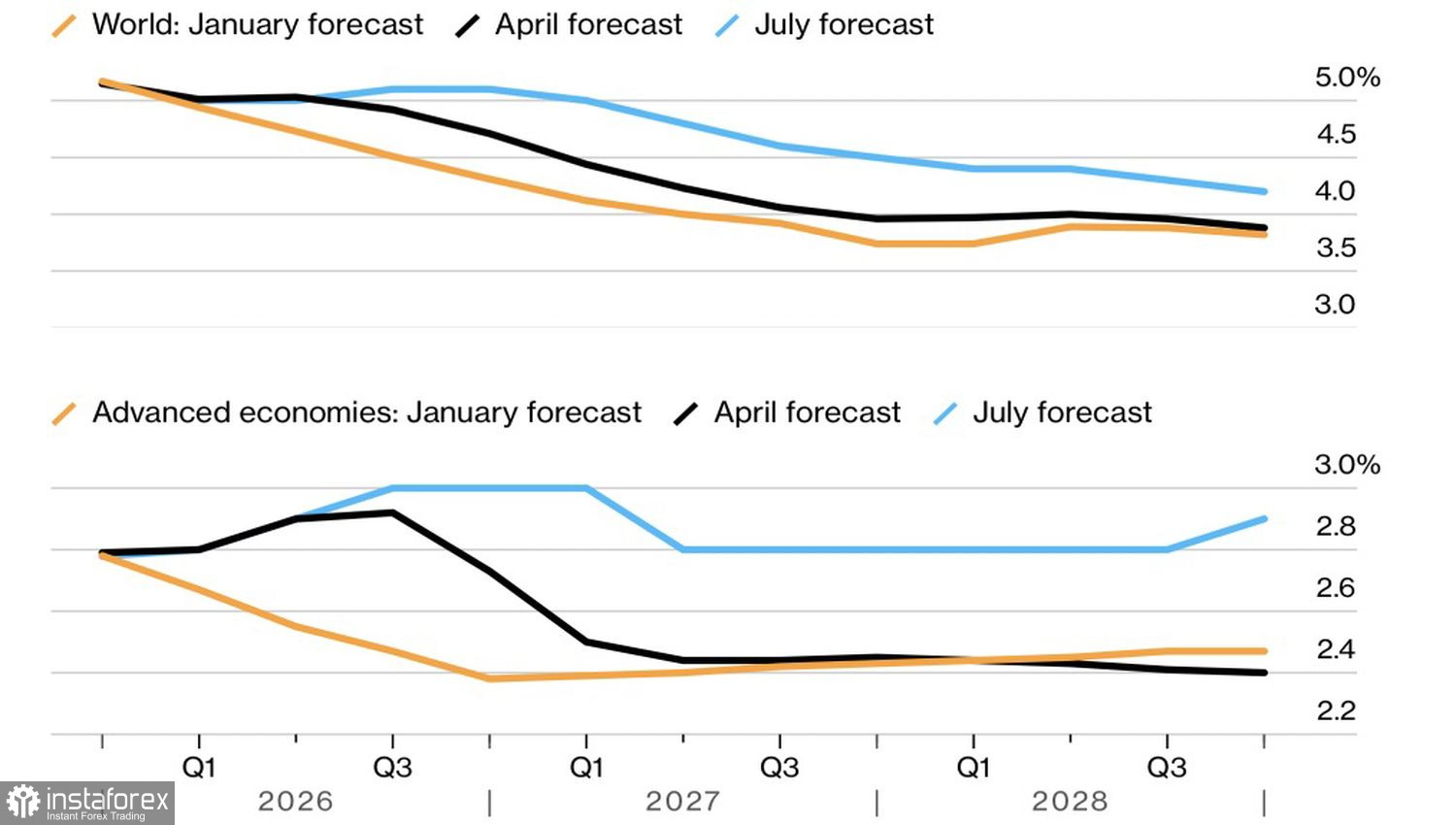
The second factor is geopolitics. A shaky truce between Washington and Tehran does not erase the long-term consequences of the war. Bloomberg Economics has pushed up projected global rate paths by half a percentage point and more by 2028, citing inflationary risks from an energy shock and a potential AI boom. For the eurozone, this implies more expensive credit for longer than expected, further undermining already weak growth.
The third factor is macro data. A weak US jobs report already knocked the spot dollar index down 0.7% in a single day. Volatility is returning, which is why large funds prefer to manage risks rather than bet on a sustained dollar crash.
Finally, the factor is the calendar of central banks' meetings. Six G10 regulators meet in July, and the Fed has higher odds of a rate hike than all but the Reserve Bank of New Zealand.
Thus, EUR/USD would like to rise, but investor interest in the US dollar is holding it back. The stance of the Fed and ECB favors the greenback because of the wide rate differential. Rising volatility and the risk of geopolitical flare-ups support demand for the US currency.
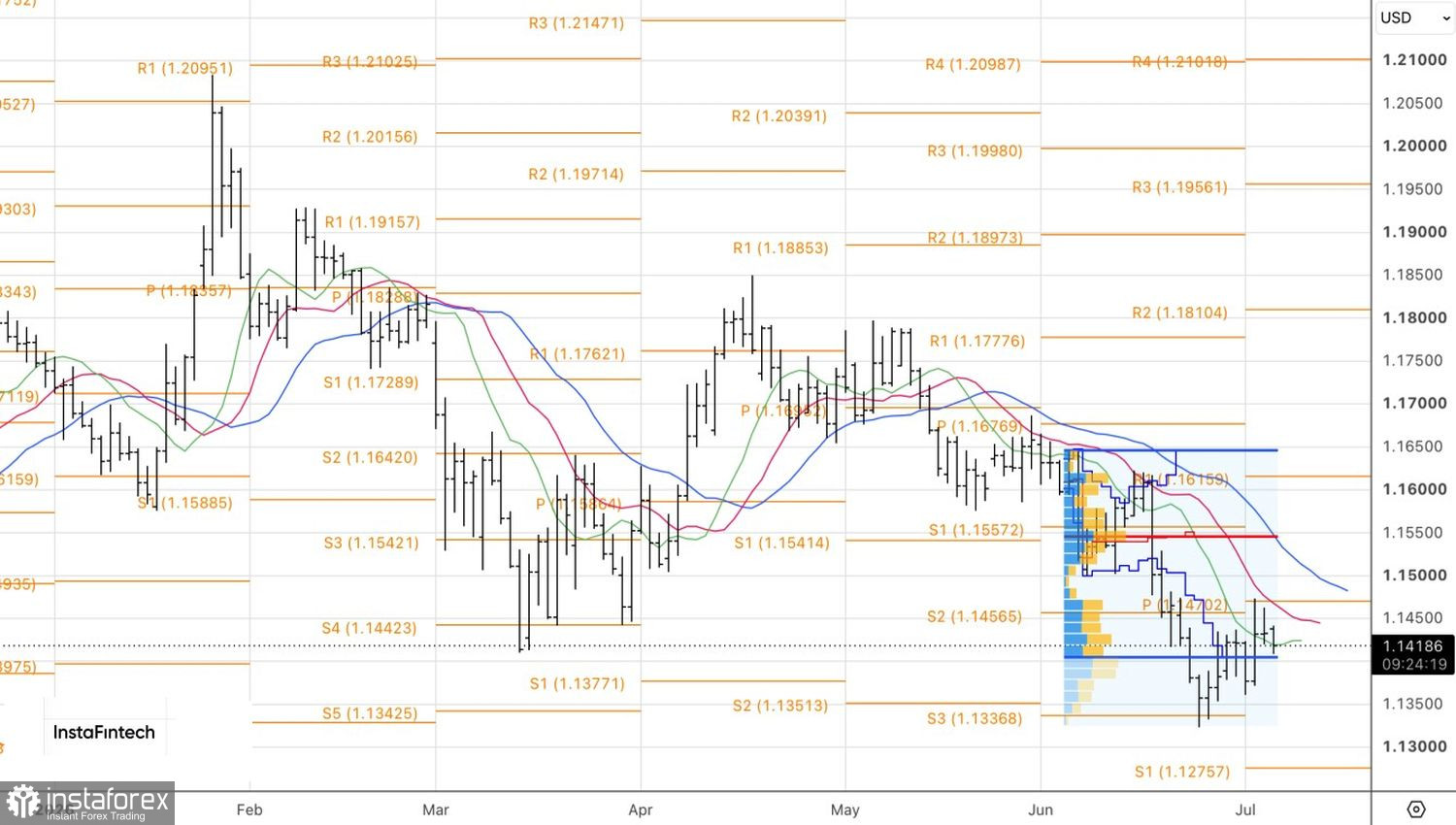
Technically, on the daily EUR/USD chart, the resolution of an inside bar provided an opportunity to enter shorts at its low of 1.1425. However, the bears' inability to hold below that level would be a sign of weakness and a reason to return to long positions.