English
 Русский
 Bahasa Indonesia
 Bahasa Malay
 ไทย
ไทย Español
 Deutsch
 Български
 Français
 Tiếng Việt
 中文
中文 বাংলা
বাংলা हिन्दी
 Čeština
 Українська
 Română



Today, on Friday, at the end of the Asian session and just before the start of the European session, the NZD/USD pair is attracting buyers, retreating from a one-and-a-half-week low around 0.5757 reached the day before. However, the spot prices are showing no further progress and remain below the key level of 0.5800 amid the overall bullish trend of the US dollar.
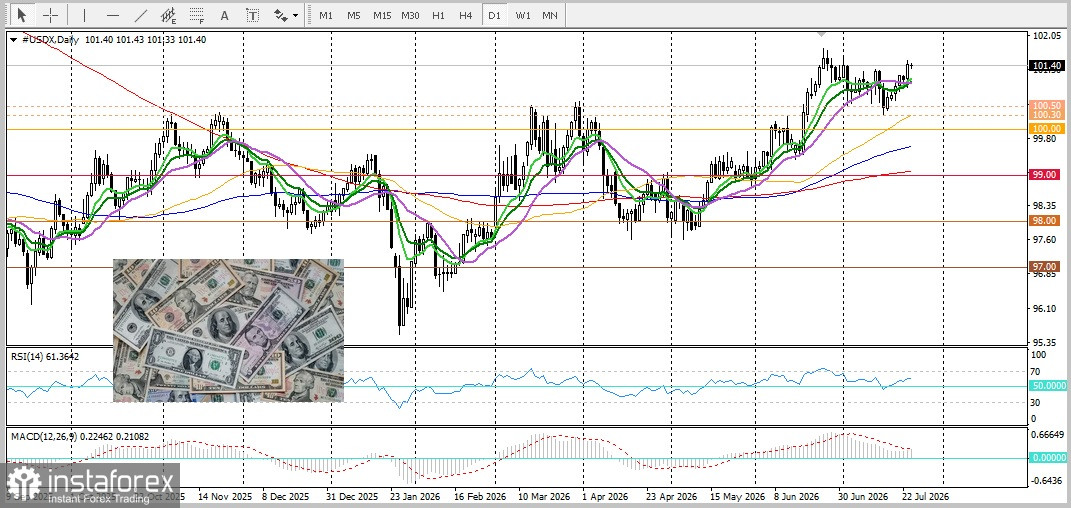
The US Dollar Index (DXY), reflecting the dollar's performance against a basket of other currencies, is near its highest level since June 26 due to escalating tensions between the US and Iran, as well as expectations that the Federal Reserve will take a hawkish stance. US military forces completed another round of airstrikes against Iran on Thursday, marking the 13th consecutive night of military operations. In response, Iran and its allies are striking US military facilities in Kuwait, Bahrain, and Jordan.
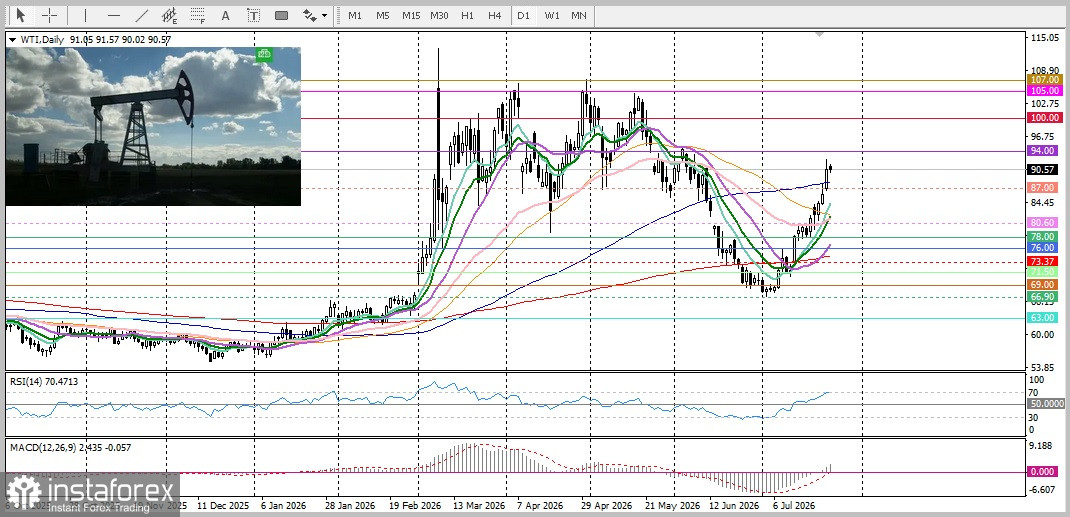
Additionally, Iranian-backed Houthis have attacked two Saudi oil tankers in the Red Sea, calling it part of a naval blockade of Saudi Arabia. The closure of the Strait of Hormuz also exacerbates concerns about supply disruptions, pushing oil prices to new monthly highs, triggering inflation worries, and increasing expectations for interest rate hikes from the US central bank by the end of the year. This supports the US dollar and limits the growth potential for the NZD/USD pair.
At the same time, President Donald Trump has imposed new tariffs ranging from 10% to 12.5% on goods from 60 key trading partners, covering 99.4% of US imports. This could lead to a renewal of the global trade war and further decrease investor interest in riskier assets, strengthening the dollar as a safe-haven asset. However, traders seem to be cautious and are not eager to open aggressive bullish positions on the dollar, preferring to stay on the sidelines ahead of the upcoming FOMC monetary policy meeting next week.
Meanwhile, higher-than-expected inflation data from New Zealand has reinforced assumptions that the Reserve Bank of New Zealand (RBNZ) may raise interest rates at its September meeting. This is supportive for the New Zealand dollar and the NZD/USD pair, as traders await momentum from preliminary US PMI index data. However, spot prices are on track for significant losses for the first time in four weeks, remaining under the influence of US dollar dynamics.
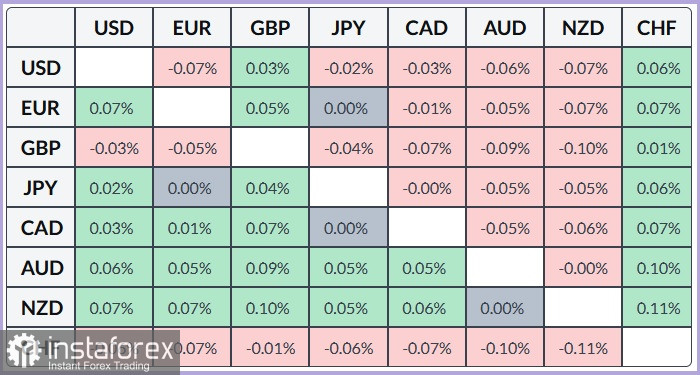
From a technical perspective, the pair shows resilience below the 20-day SMA, supporting the bulls. However, as long as the relative strength index remains in negative territory, it indicates weakness for the bulls. The nearest obstacle consists of the closely positioned 14-day and 9-day EMAs and the 50-day SMA. But the main resistance for the bulls, after which they can expect further growth, is the 200-day and 100-day SMAs. The table below shows the percentage change of the New Zealand dollar against major currencies for today, with the strongest appreciation observed against the Swiss franc.