 English
 Русский
 Bahasa Indonesia
 Bahasa Malay
 ไทย
ไทย Español
 Deutsch
 Български
 Français
 Tiếng Việt
 中文
中文 বাংলা
বাংলা हिन्दी
 Čeština
 Українська
 Română


The euro and the pound failed to deliver any meaningful moves today, although there were still some opportunities to trade using the Mean Reversion strategy. I did not take any Momentum trades.
The euro pulled back despite Germany's data appearing positive at first glance. According to the report, Germany's industrial orders surged by 3.1% month-over-month and 6.5% year-over-year in June. However, excluding large one-off orders, the indicator declined by 0.5%, while orders from within the eurozone plunged by 14%. Industrial orders serve as a leading indicator of future manufacturing activity, but because of these underlying details, the seemingly strong headline figures failed to convince the market, and the euro showed little reaction to the German data. Far more significant for the euro were the weaker-than-expected eurozone retail sales figures for June, which pushed the currency lower. Retail sales declined by 0.3% in June after increasing by 0.4% in May, with the weakness broad-based. Germany ranked among the three weakest performers on a monthly basis, posting a decline of 1.1%. Retail sales reflect consumer spending, and the decline undermined confidence in the resilience of domestic demand, weakening the case for a hawkish ECB stance and reducing support for the euro against the U.S. dollar.
During the second half of the day, the U.S. economic calendar will feature only the weekly Initial Jobless Claims report, so major surprises are unlikely. This weekly indicator measures the number of people filing for unemployment benefits for the first time and serves as a timely gauge of labor market conditions: rising claims signal a weakening labor market, while declining claims point to continued resilience. Although the data are important, their impact on market sentiment is likely to remain limited in the absence of other major economic releases. The U.S. dollar is therefore likely to extend its gains, supported by the existing bullish momentum. For the euro and the pound, this implies a risk of further declines, as a stronger U.S. dollar could weigh on both EUR/USD and GBP/USD. Only a significant increase in jobless claims would be likely to weaken the dollar and provide temporary relief for the two European currencies. Otherwise, if the data come in close to expectations, the U.S. dollar is likely to retain the upper hand through the end of the trading day.
If the data come in significantly stronger than expected, I will rely on the Momentum strategy. If the market shows little or no reaction to the release, I will continue using the Mean Reversion strategy.
Momentum Strategy (Breakout) for the Second Half of the Day
EUR/USD
- A breakout above 1.1557 could drive the euro higher toward 1.1592 and 1.1620.
- A breakout below 1.1528 could send the euro lower toward 1.1504 and 1.1482.
GBP/USD
- A breakout above 1.3475 could lift the pound toward 1.3503 and 1.3539.
- A breakout below 1.3444 could push the pound down toward 1.3419 and 1.3393.
USD/JPY
- A breakout above 157.93 could lift the U.S. dollar toward 158.28 and 158.57.
- A breakout below 157.69 could trigger a decline toward 157.40 and 157.05.
Mean Reversion Strategy for the Second Half of the Day
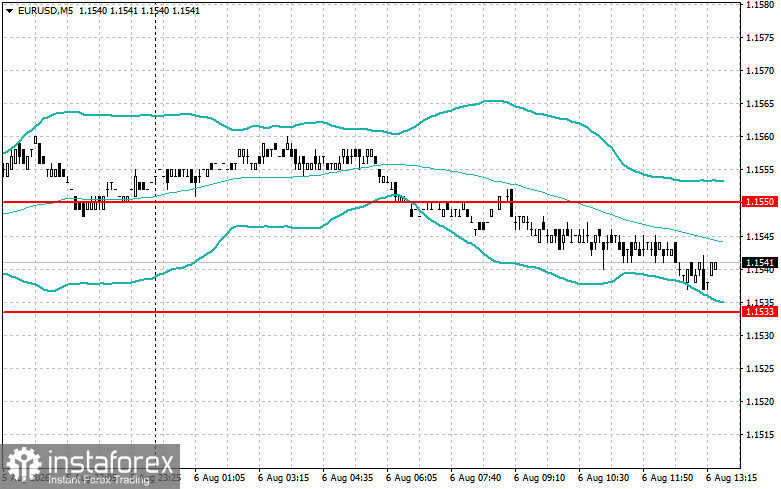
EUR/USD
- I will look for short positions if the price fails to hold above 1.1550 and returns below this level.
- I will look for long positions if the price fails to remain below 1.1533 and moves back above this level.
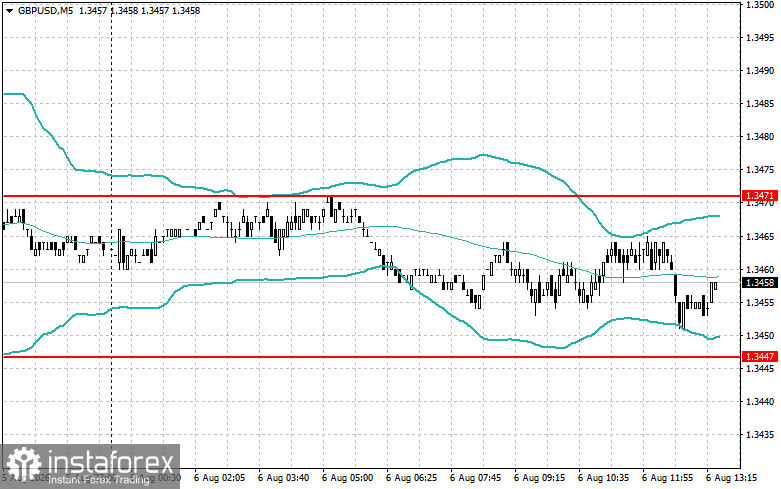
GBP/USD
- I will look for short positions if the price fails to hold above 1.3471 and returns below this level.
- I will look for long positions if the price fails to remain below 1.3447 and moves back above this level.
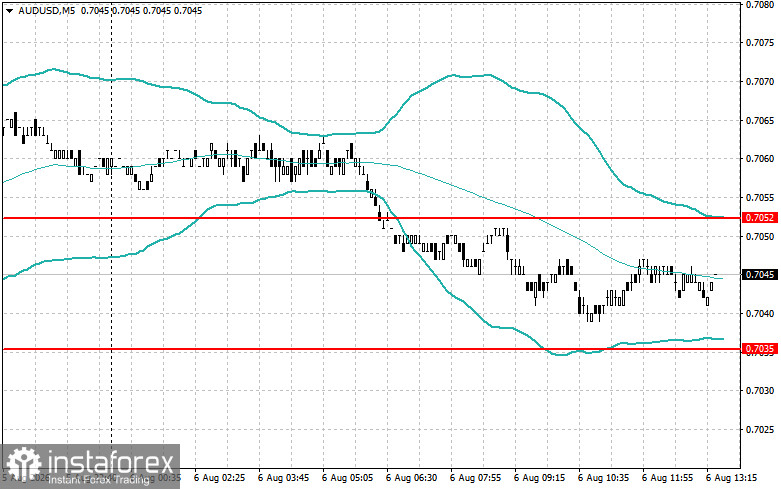
AUD/USD
- I will look for short positions if the price fails to hold above 0.7052 and returns below this level.
- I will look for long positions if the price fails to remain below 0.7035 and moves back above this level.
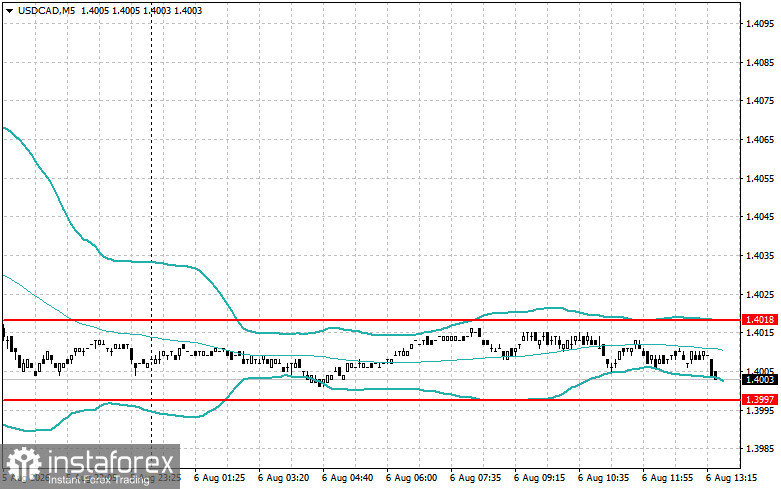
USD/CAD
- I will look for short positions if the price fails to hold above 1.4018 and returns below this level.
- I will look for long positions if the price fails to remain below 1.3997 and moves back above this level.