 English
 Русский
 Bahasa Indonesia
 Bahasa Malay
 ไทย
ไทย Español
 Deutsch
 Български
 Français
 Tiếng Việt
 中文
中文 বাংলা
বাংলা हिन्दी
 Čeština
 Українська
 Română


Trees don't grow to the sky — Wall Street recalls that bit of market wisdom whenever a rally starts to look endless. On Tuesday, the proverb proved literal: US stocks wobbled for a third straight session, dragging the tech sector down with them.
The Nasdaq-100 and S&P 500 slipped. Long-dated bond yields are trading near 19-year highs amid fiscal spending, persistent inflation and increased debt issuance. The 30-year US yield hit 5.34% before pulling back a bit. Brent pared early gains but is holding around $91/bbl, while tensions in the Middle East remain elevated.
Index performance
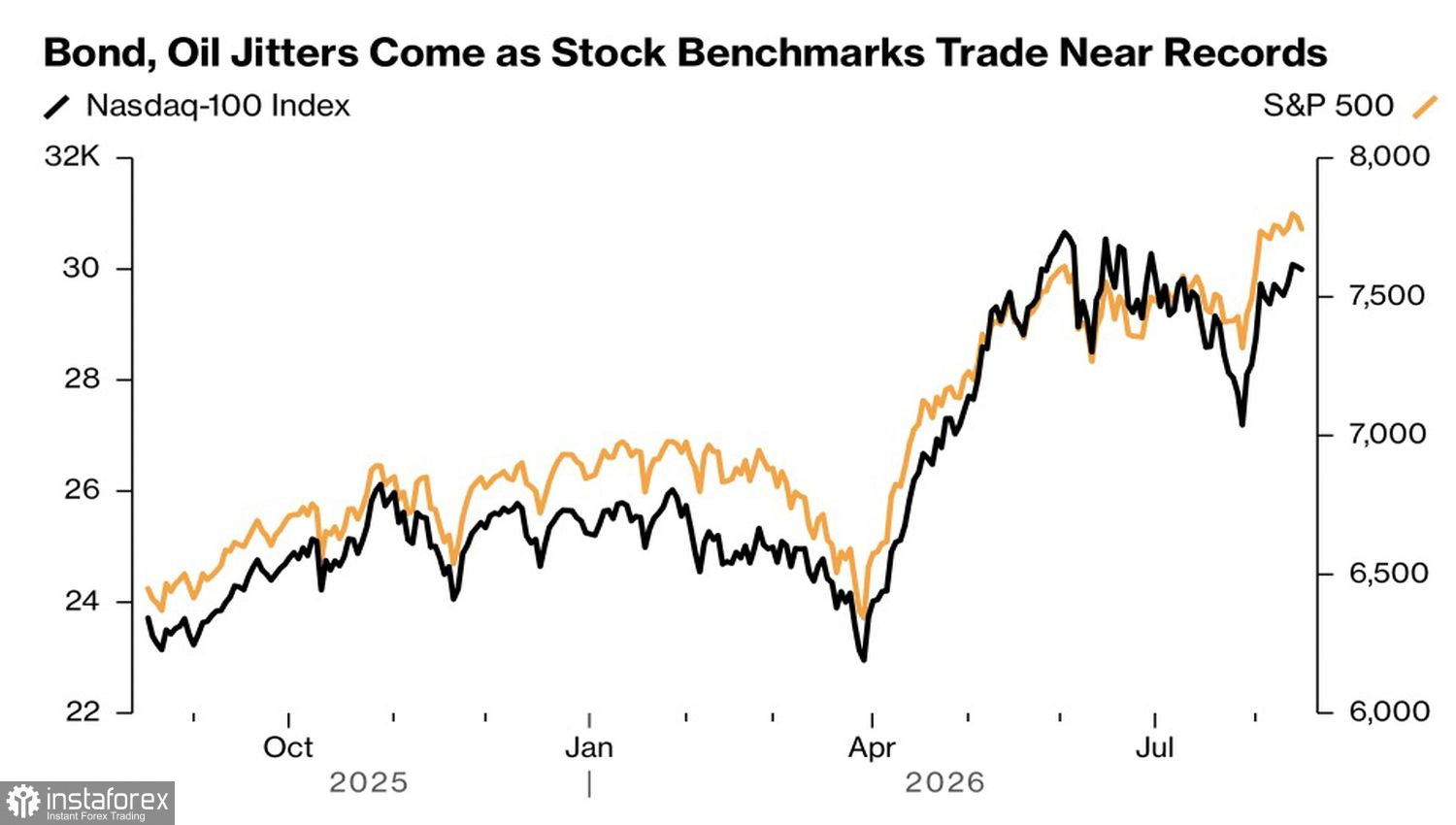
JPMorgan Chase strategists see the rise in yields as the result of energy prices, a deteriorating US fiscal picture and heavier debt issuance. Growth stocks are bearing the brunt of the move: higher rates compress the present value of companies' future cash flows and raise their borrowing costs.
That said, it's too early to panic. The S&P 500 is only about 1.5% below its record high and is up 12.4% year-to-date — even amid a protracted Middle East conflict. Corporate profits are rising, margins remain at record levels, and, as Wall Street admits, stocks still look attractive.
Meanwhile, expectations for a September Fed hike ticked up slightly — from 31% to 33%. The Fed minutes are due Wednesday. This scrutiny compensates, in part, for the fact that Kevin Warsh has noticeably cut back on public communications; the market is asking a simple question: what is the Fed's reaction function?
Optimism has not evaporated. Bank of America's fund?manager survey shows equity allocations at their highest since November 2021: a net 56% overweight equities, while cash holdings fell to a "super-low" 3.5%. The bank describes the consensus almost wryly: no hard landing, no Fed hikes, no AI capex squeeze — collective FOMO, a fear of missing out on the rally.
According to the survey, investors do not expect rate hikes before the November elections and do not believe a convincing Democratic victory that could derail the S&P 500 rally is likely. Notably, tax cuts under Trump raised the price investors are willing to pay for equities; a Democratic administration with a mandate to raise taxes would be bad news for the market.
Forecast of US economy trajectory
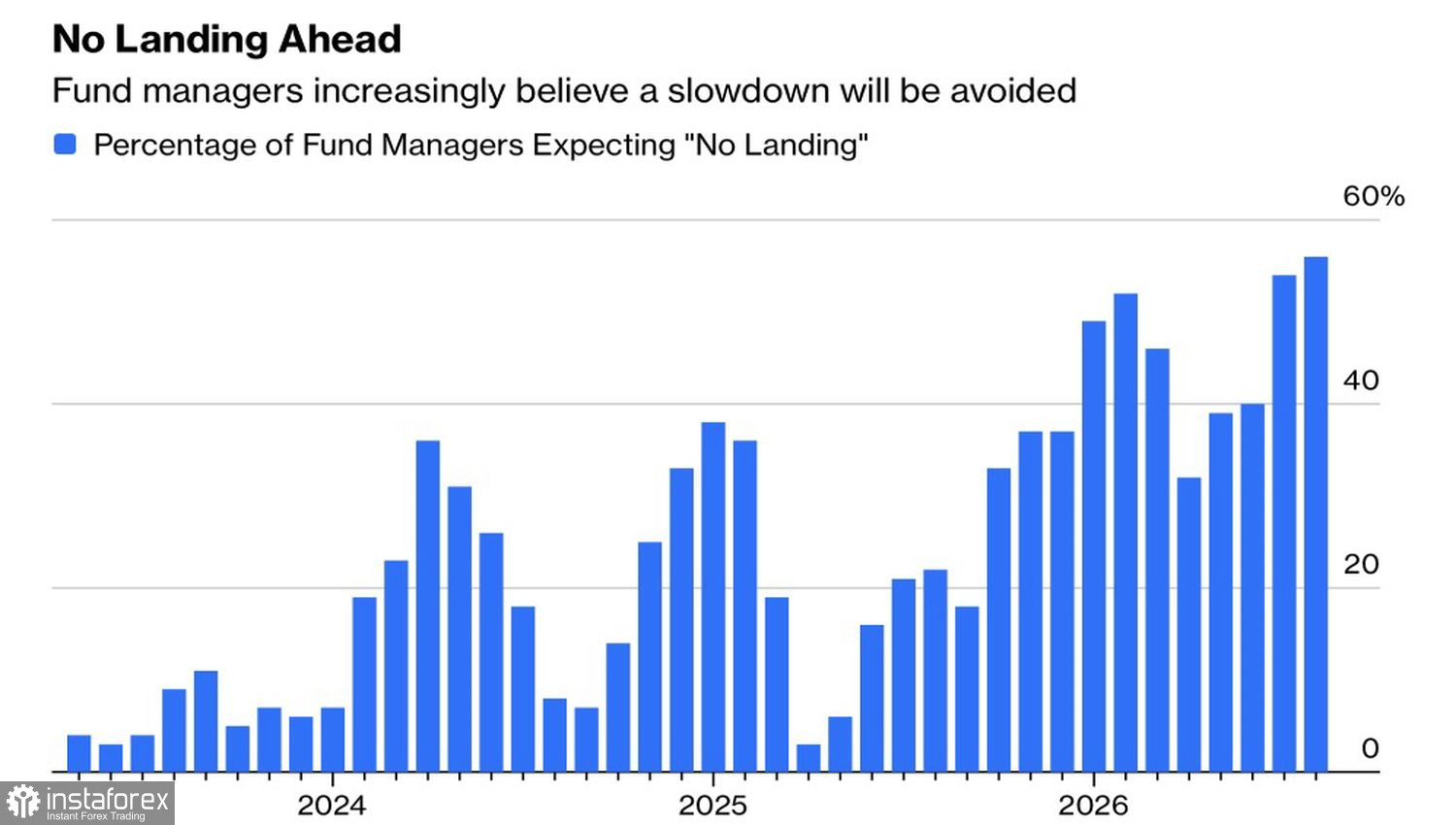
Who is buying the market at the end of this hot summer — and why? Fund managers are betting on a "no-landing" scenario, while corporate executives expect double-digit profit growth — the strongest outlook since 2021. I doubt that confidence will last if yields continue to make records.
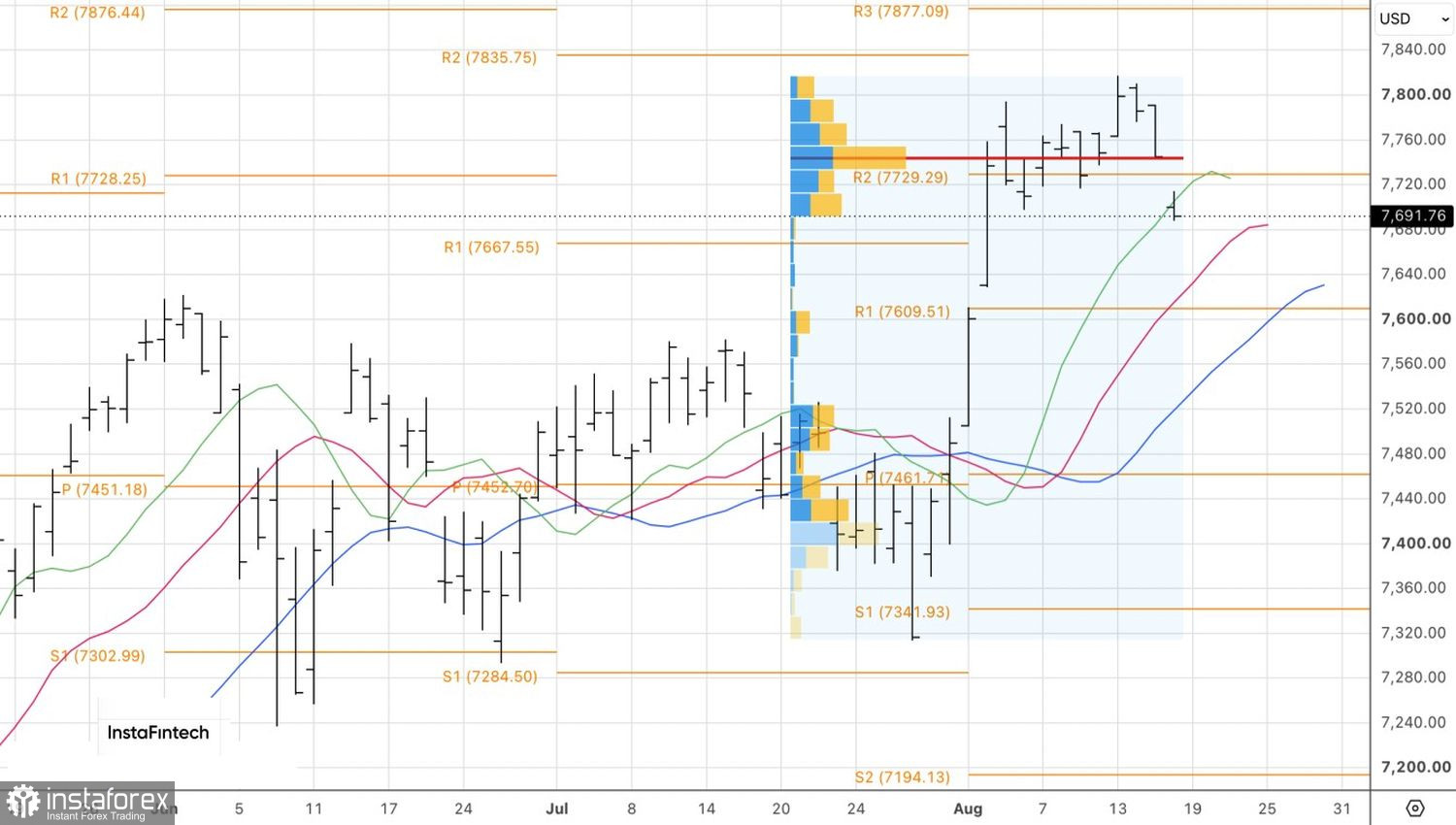
Technically, on the daily chart, the gap has yet to be closed, and bears remain in control. Adding short positions toward 7,665 and 7,610 is the tactical play.