 English
 Русский
 Bahasa Indonesia
 Bahasa Malay
 ไทย
ไทย Español
 Deutsch
 Български
 Français
 Tiếng Việt
 中文
中文 বাংলা
বাংলা हिन्दी
 Čeština
 Українська
 Română


Analysis of Monday's Trades:
1H Chart of the EUR/USD Pair
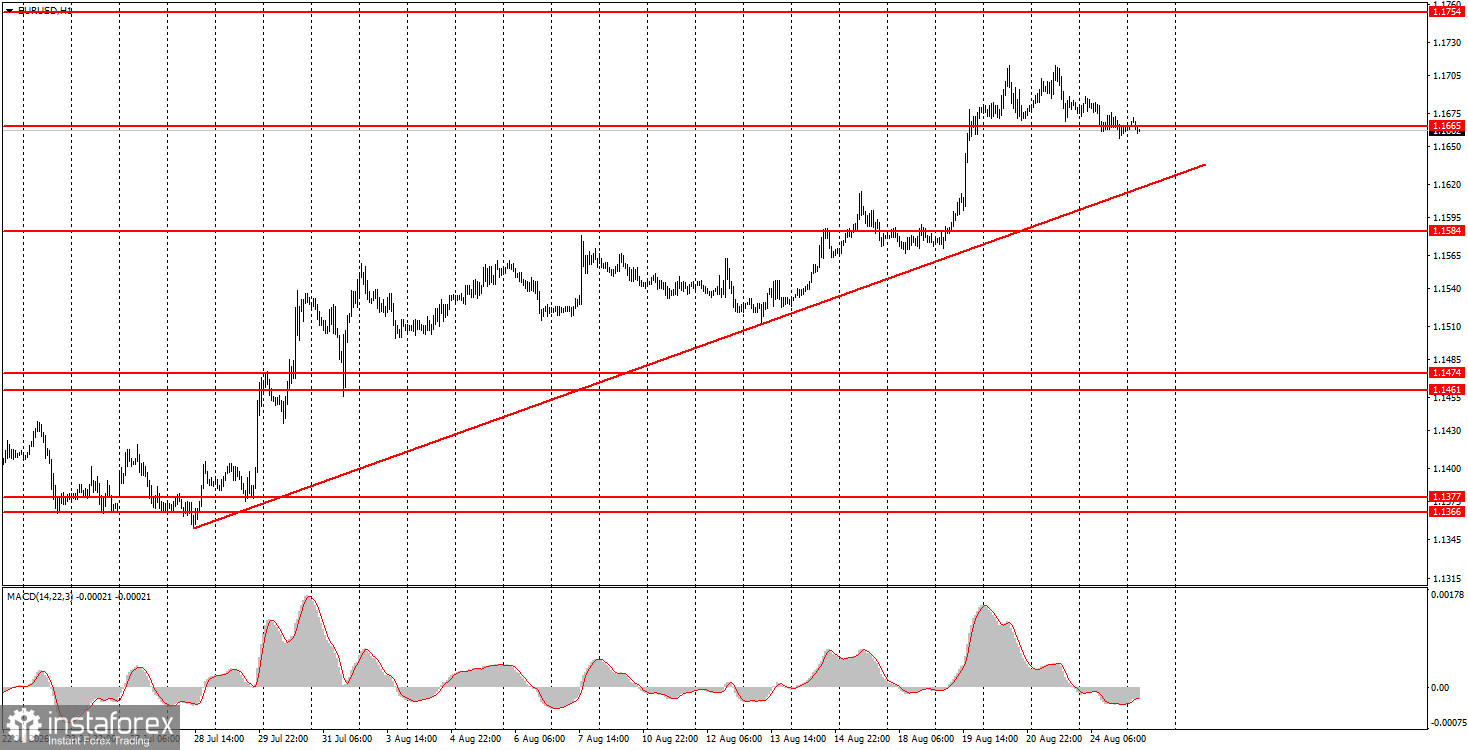
The EUR/USD currency pair moved almost entirely sideways throughout the trading day on Monday, with minimal volatility. It can be said that there were virtually no movements in the market that day, nor were there any macroeconomic or fundamental events. As we warned, the market had nothing to react to throughout the day. Consequently, we did not see any movements. Today, the situation may repeat itself, as no significant reports are scheduled for Tuesday either. The market has once again adopted a wait-and-see correction position. The price may continue to slide toward the trend line, and a resolution may come later in the week when Kevin Warsh speaks in the U.S., along with the release of the annual NonFarm Payrolls report. The NonFarm Payrolls may once again disappoint traders with its figures, leading to expectations that the dollar will resume its decline by the end of the week. Its medium-term prospects remain not just unclear, but murky.
5M Chart of the EUR/USD Pair
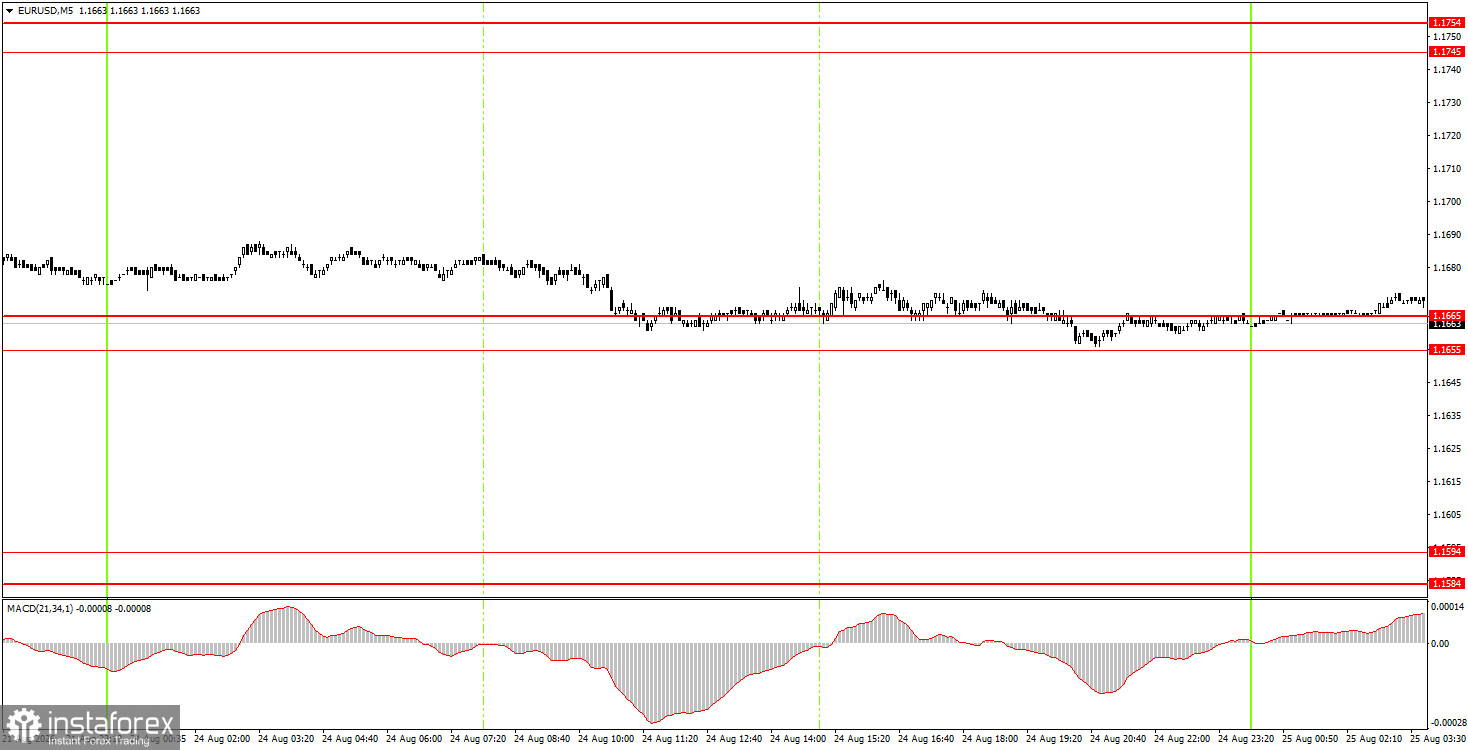
On the 5-minute timeframe, no trading signals were formed on Monday. During the European trading session, the price dropped into the 1.1655-1.1665 range and traded within or near it until the close of the day.
How to Trade on Tuesday:
On the hourly timeframe, the EUR/USD pair continues to form an upward trend. Considering all the events of recent months, we believe that the European currency should continue its confident growth even without local support. Currently, the U.S. dollar has no factors driving its growth, so we continue to expect upward movement.
On Tuesday, novice traders may consider short positions with targets of 1.1584-1.1594 if the price settles below the 1.1655-1.1665 area. Long positions can be opened on a bounce from the 1.1655-1.1665 area, targeting 1.1745-1.1754.
On the 5-minute timeframe, traders should consider the levels 1.1366-1.1377, 1.1461-1.1474, 1.1527-1.1531, 1.1584-1.1594, 1.1655-1.1665, 1.1745-1.1754, and 1.1830-1.1837. On Tuesday, there are no significant reports or events scheduled in Germany or the U.S., so we consider all these publications completely secondary and do not expect any market reaction to them. Volatility may be weak again today.
Main Rules of the Trading System:
- The strength of the signal is determined by the time it takes to form the signal (bounce or level breakthrough). The less time required, the stronger the signal.
- If two or more trades are opened around a level based on false signals, all subsequent signals from that level should be ignored.
- In a flat, any pair can generate a multitude of false signals or none at all. Technical levels may be disregarded.
- When trading based on MACD signals on the hourly timeframe, it is advisable to do so only when volatility is high and a trend line or channel supports the trend.
- If two levels are too close to each other (from 5 to 20 pips), they should be regarded as a support or resistance area.
- After a 15-pip move in the correct direction, a stop-loss should be set to break even.
What the Charts Show:
Support and resistance price levels (areas) are the targets when opening buy or sell orders or sources of signals.
Red lines denote channels or trend lines that reflect the current trend and indicate in which direction trading is currently favored.
The MACD indicator (14,22,3) – histogram and signal line – is a supporting indicator that can also be used as a source of signals.
Important speeches and reports (as listed in the news calendar) can significantly influence the movement of the currency pair. Therefore, during their release, trading should be approached with utmost caution, or one should exit the market to avoid sharp price reversals against the preceding movement.
Beginners in Forex trading should remember that not every trade can be profitable. Developing a clear strategy and proper money management are essential for long-term trading success.