 English
 Русский
 Bahasa Indonesia
 Bahasa Malay
 ไทย
ไทย Español
 Deutsch
 Български
 Français
 Tiếng Việt
 中文
中文 বাংলা
বাংলা हिन्दी
 Čeština
 Українська
 Română


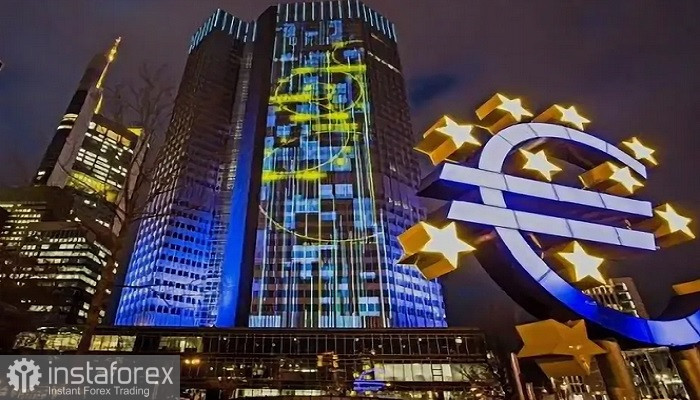
The European Central Bank (ECB) reports following the monetary policy meeting held on July 22-23 indicate that ECB members remain inclined towards further monetary policy tightening, despite the unanimous decision to keep current interest rates unchanged. Officials emphasized that another hike may be needed if inflation forecasts do not improve significantly, while avoiding any commitments regarding such a move at the September meeting.
The Governing Council concluded that unexpected economic data justified pausing the tightening cycle in July. Overall inflation in June fell to 2.8% from 3.2% in May, while core inflation decreased to 2.4% from 2.6%. Pressure on core prices also continued to ease, with more resilient components of inflation outperforming expectations.
Data on wage dynamics provided further arguments for maintaining rates at their current level. The pressure on labor costs is easing, and improved labor market conditions reduce the likelihood of significant secondary effects from the energy shock. Officials noted that these effects have not yet been reflected in internal prices and wages, while long-term inflation expectations remain generally within the ECB's target level of 2%.
However, a cautious stance persists in the reports. Some Council members have expressed support for a possible rate hike in July, arguing that the likelihood of the next hike being excessive is very low. They warned that waiting too long could delay the return of inflation to the target level and potentially require more aggressive measures in the future.
The ECB's attention continues to focus on energy prices. Regulating officials caution that the full inflationary impact of the recent shock has yet to manifest. The longer energy prices remain high, the greater the risk of broader indirect and secondary effects. High natural gas prices and seasonally low gas inventories in Europe are significant factors contributing to inflation, alongside geopolitical disruptions to supply chains.
Thus, the Governing Council continues to view inflationary risks as primarily upward. Although current wage, yield, and inflation expectation data remain relatively favorable, projected inflation exceeding the target value confirms the need for close monitoring of both the duration and intensity of the energy shock.
Market participants should now focus on the September meeting, where new economic forecasts and updated inflation data are expected to provide clarity, especially following the rise in consumer prices in July. The ECB continues to follow its data-driven, meeting-based approach, clearly indicating that the July pause does not mark the end of the tightening cycle but does not guarantee a rate hike in September either.
Markets maintain expectations for further monetary tightening, with the probability of a 25-basis-point rate hike in September assessed at 96% according to the ECB Watch tool.
The euro barely reacted to the published data, and at the time of writing, the EUR/USD pair was under moderate bearish pressure, hovering around 1.1650, representing a 0.09% decline for the day. However, with the prospect of further growth, it has shown resilience below the 200-day SMA. This indicates that traders are exercising caution ahead of Federal Reserve Chair Kevin Warsh's speech at the Jackson Hole symposium on Friday. Meanwhile, oscillators remain positive, confirming bullish dominance in the market.