 English
 Русский
 Bahasa Indonesia
 Bahasa Malay
 ไทย
ไทย Español
 Deutsch
 Български
 Français
 Tiếng Việt
 中文
中文 বাংলা
বাংলা हिन्दी
 Čeština
 Українська
 Română


Trust, but verify. This principle is more relevant than ever in Forex. Investors have been dissecting Fed Chair Kevin Warsh's speech in Jackson Hole for three days, trying to understand what was a position and what was rhetoric. The result is that the EUR/USD pair has remained frozen around the 1.16 mark, unable to fall or rise.
Monthly dynamics of the US dollar
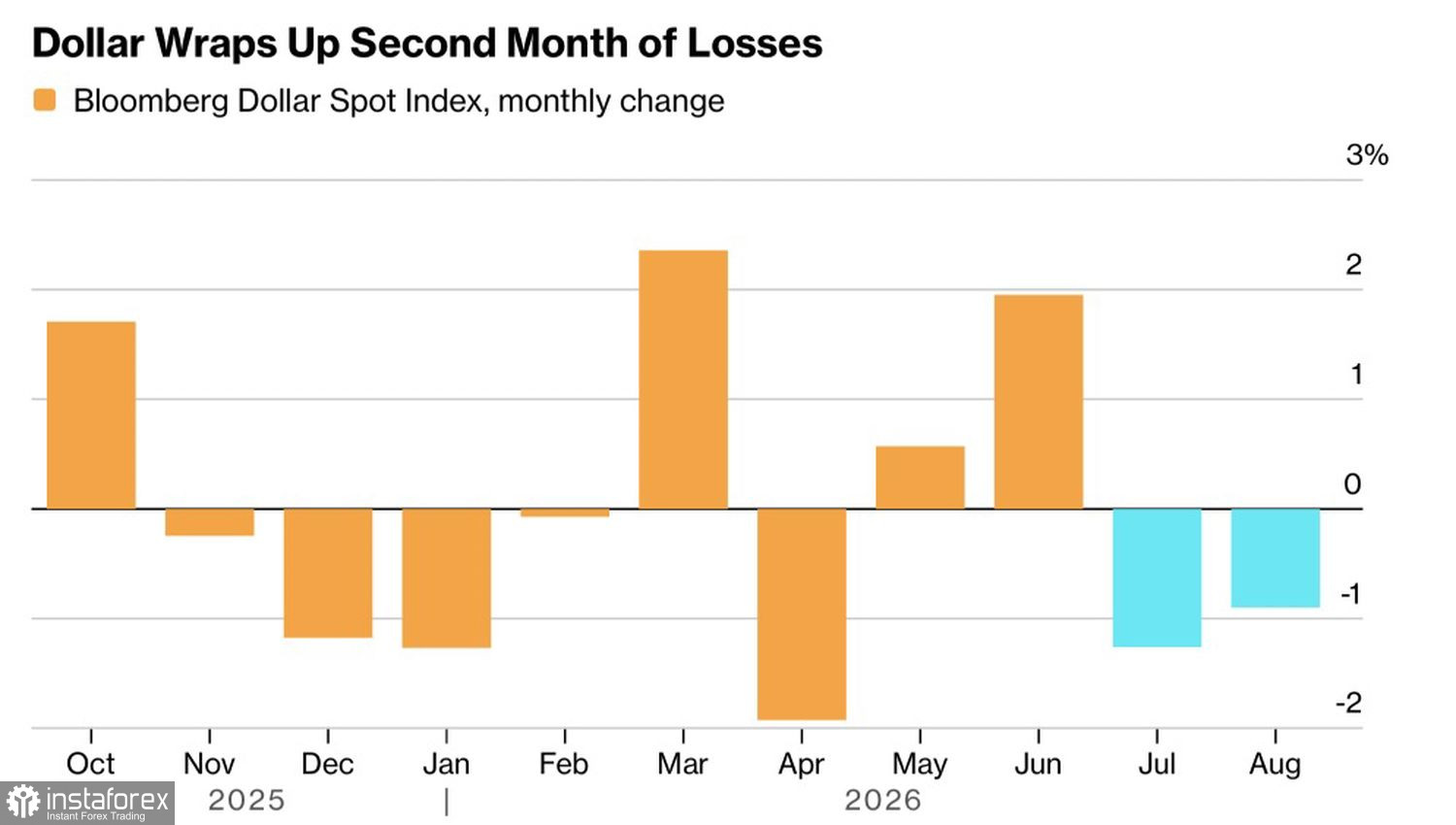
The US dollar has received support from three fronts. Firstly, due to the escalation of the conflict in the Middle East. US troops struck an island in the Strait of Hormuz, and Iran responded with attacks on the UAE and Jordan. For the first time in a month, the parties exchanged direct strikes. Secondly, the related spike in oil prices is fueling inflationary expectations. Thirdly, due to rising political risks in Germany. The AfD's slogan "Let's make history together" is resonating at rallies in Saxony-Anhalt, where on September 6, the country risks getting its first far-right government since the war.
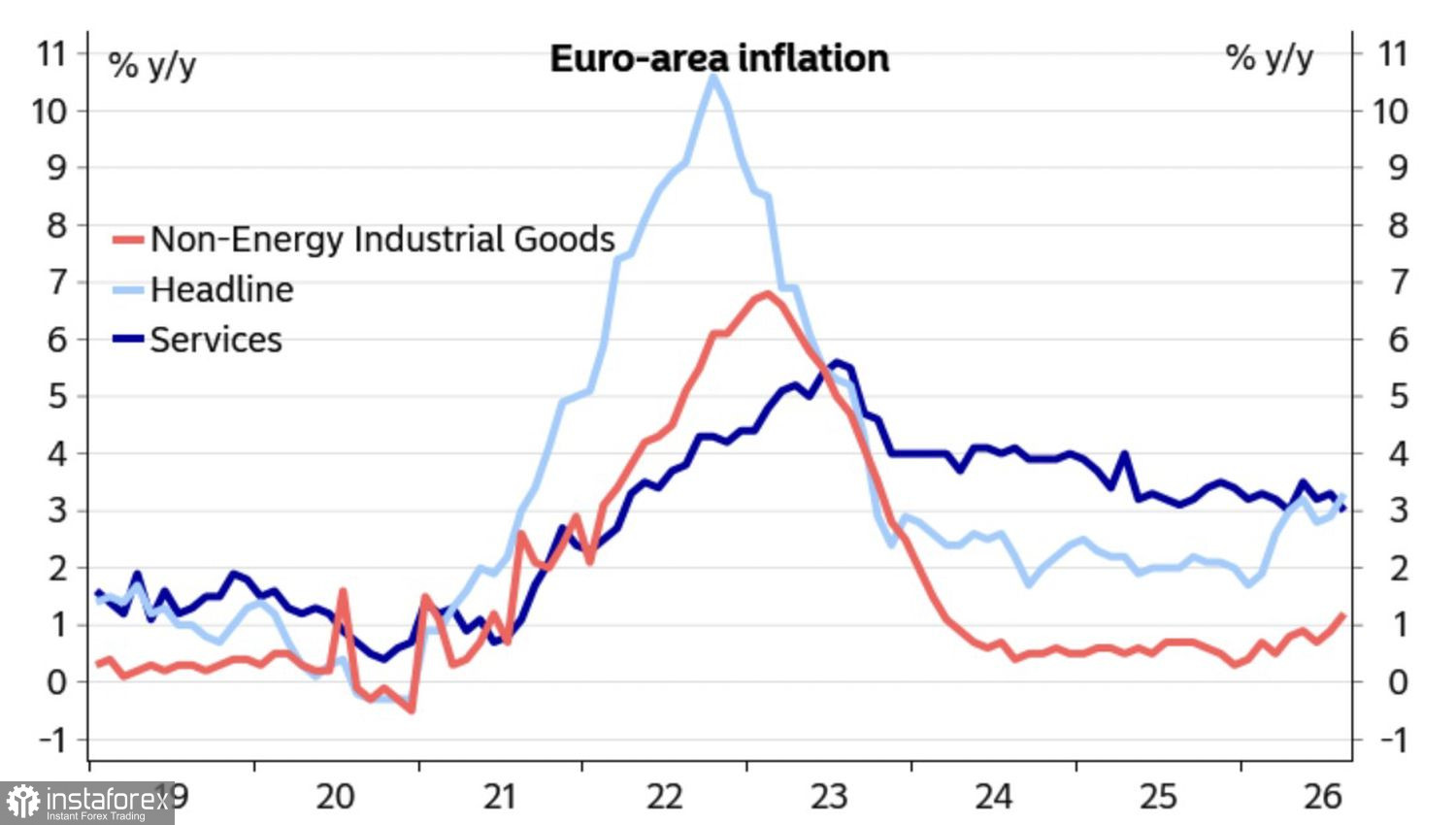
However, the euro has its own trump card. Inflation in the Eurozone accelerated from 2.9% to 3.3% year-on-year in August. This is a new cyclical high, primarily due to energy prices. Core inflation, in contrast, eased from 2.5% to 2.4%, while service inflation slowed from 3.3% to 3.0%. According to Bloomberg experts, the ECB will continue to raise rates quarterly, with the next move potentially coming at the September meeting.
European inflation dynamics
Meanwhile, the Fed is in no rush. Morgan Stanley believes that the data before the September FOMC meeting will confirm the movement of core inflation towards the target of 2%. This means there will be no increase in the federal funds rate. Goldman Sachs explains the difficult summer for the US dollar as a result of political unpredictability: targeted interventions in the yen and Treasury bond markets showed the Fed's willingness to sacrifice the strength of the greenback in support of other assets, and the lack of transparency in the regulator's reaction function has only added pressure.
Thus, the US dollar and euro are being pulled in different directions by several conflicting factors, and none of them is currently achieving a clear victory. In fact, the pair remains balanced between geopolitical issues and macro statistics until both sides receive clearer signals from their regulators.
Who will give up their positions first? The US dollar under the weight of its own uncertainty or the euro under the burden of oil prices and German politics? There is no definitive answer yet.
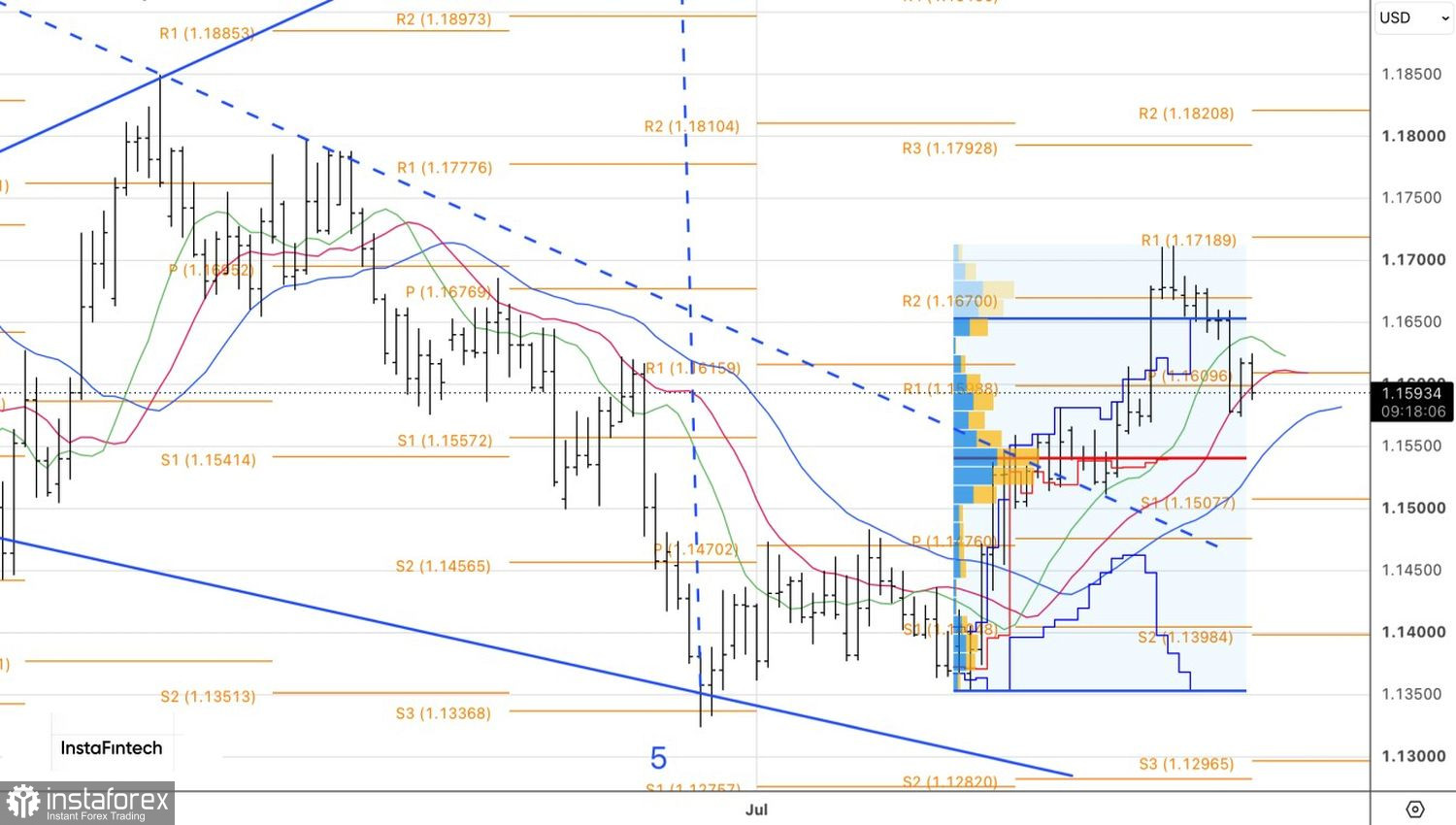
Technically, on the daily chart, the EUR/USD pair shows a retracement from the 20-80 bar, followed by the completion of the bulls' attack and a return of initiative to the bears. The euro's inability to hold on to resistance levels at the pivot points of 1.161 and 1.1595 is a sign of weakness for the regional currency and a basis for selling it. Target levels are set at 1.154 and 1.147.