 English
 Русский
 Bahasa Indonesia
 Bahasa Malay
 ไทย
ไทย Español
 Deutsch
 Български
 Français
 Tiếng Việt
 中文
中文 বাংলা
বাংলা हिन्दी
 Čeština
 Українська
 Română


Australia's Q2 GDP came in better than expected — +0.4% q/q and +2.1% y/y against forecasts of +0.3% and +1.8% respectively. Growth was supported by a 0.4% rise in consumer spending and by exports, which for the first time since 2023 made a positive contribution to GDP.
However, the quality of that growth raises questions. The improvement in the trade balance occurred against a 1.6% deterioration in terms of trade due to a sharp rise in imported oil prices. That means Australia is paying more for imports, which eats into the benefits from export revenues.
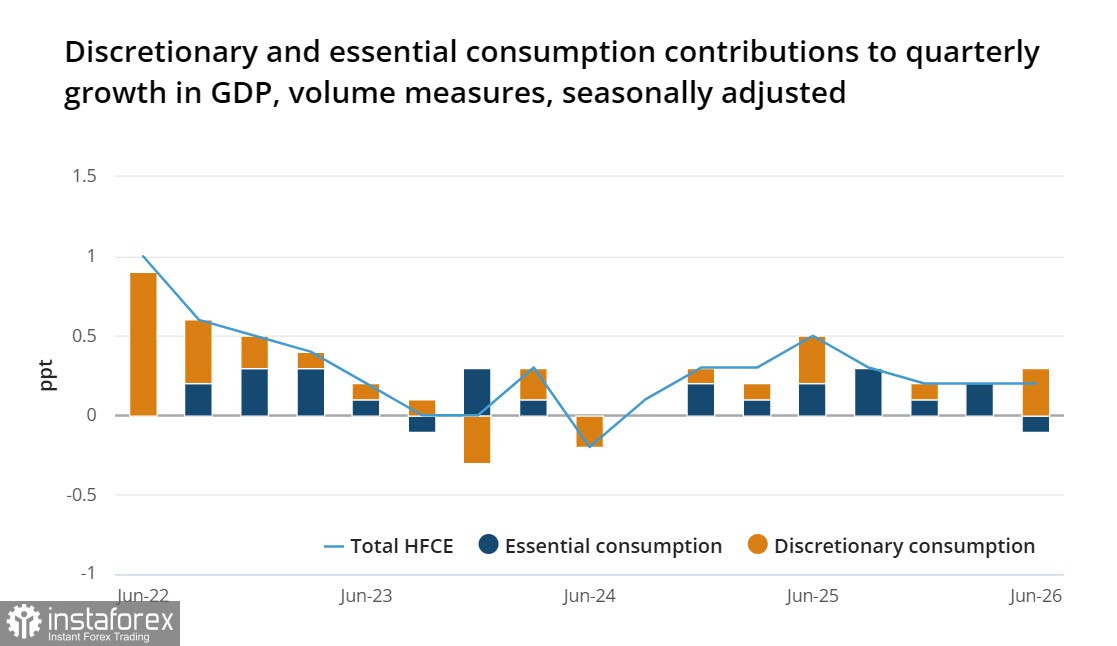
Business activity in August continued to expand for the third consecutive month (composite PMI at 52.5), but growth momentum has slowed. Producer spending is rising, and input?cost inflation has accelerated, especially in manufacturing. Despite higher costs, companies are reluctant to pass them on to consumers — the output?price index rose at the slowest pace since the start of the year. This points to margin compression and weak demand confidence.
The labor market is holding up for now. Employment has risen in 19 of the past 20 months, although hiring pace is the weakest in three months. The Reserve Bank of Australia forecasts unemployment will gradually rise toward 4.5–4.8%.
The RBA's response to the current situation is a "hawkish pause." In August, the cash rate was left at 4.35%, with the Bank acknowledging that the current rate is already restraining the economy and that further slowing may be acceptable. Inflation risks remain skewed to the upside, and that nuance prevents markets from fully ruling out another hike. All these forecasts assume the Middle East conflict will be resolved and energy prices will normalize; if that does not happen, inflation could be higher and more persistent.
The net short position on AUD/USD decreased by $0.43bn over the reporting week to -$2.7bn; the implied price remains above the long?term average.
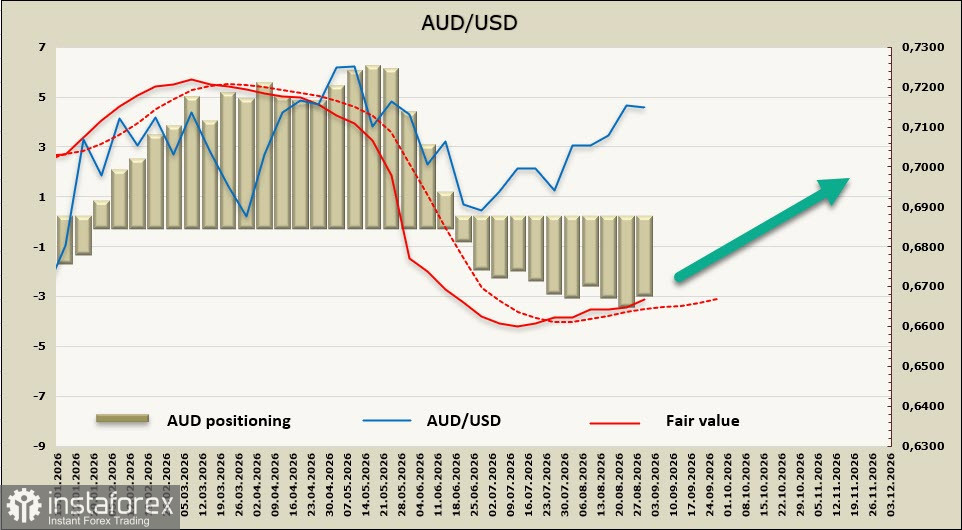
Despite everything, the Aussie continues to climb, indicating internal strength even after Warsh's hawkish comments or another escalation in the Persian Gulf. If tensions persist, consolidation may begin. If US inflation prints come in softer than expected, weakening the dollar, AUD could test 0.7200 and even 0.7277 (this year's high).
If geopolitical tensions rise further and the Federal Reserve continues to send hawkish signals, a retracement toward the psychological 0.7000 level could form — but for now the trend remains bullish.