 English
 Русский
 Bahasa Indonesia
 Bahasa Malay
 ไทย
ไทย Español
 Deutsch
 Български
 Français
 Tiếng Việt
 中文
中文 বাংলা
বাংলা हिन्दी
 Čeština
 Українська
 Română



Gold (XAU/USD) is once again attracting buyers at the same levels, as prices failed to consolidate above $4,200 on Thursday.
Despite US inflation data released on Wednesday coming in below expectations, demand for the US dollar remains strong. This is confirmed by US Treasury yields, which continue to reach multi-year highs. This is a key factor limiting interest in gold, which does not generate interest income.
According to the US Bureau of Economic Analysis (BEA), the Personal Consumption Expenditures (PCE) Price Index rose 3.4% year over year in August. The figure remained unchanged from the downwardly revised reading for the previous month and came in below forecasts, which had expected growth of 3.7%. The core PCE Price Index, which excludes the volatile food and energy components, also remained at 3%, falling short of market expectations. The data were released against the backdrop of dovish comments from Federal Reserve Bank of New York President John Williams and reduced market expectations for an interest-rate hike in October, which could have supported gold.
Jan Groen of Societe Generale notes that the August inflation data send mixed signals to the central bank. Although "core PCE came in below expectations," he warns that "the details are less encouraging": "slower inflation in the core goods sector" actually masks "faster price growth in services," indicating that underlying price pressures remain strong.
Regarding monetary policy, Groen argues that "the inflation data revisions were moderately positive," but that the upward revision to economic growth is more significant. In his view, the economy entered the second half of 2026 with a higher growth rate than expected, but underlying inflation remains too high for the Federal Reserve to be confident. Under these conditions, Societe Generale believes that "a pause in October is still possible, but a rate hike remains on the table pending the September Consumer Price Index (CPI) and Producer Price Index (PPI) data."
The market's initial reaction was short-lived following an upward revision to the estimate of US GDP growth in the second quarter of 2026, from 1.5% to 2.2% year over year. In addition, inflation risks associated with higher oil prices support expectations of further Federal Reserve policy tightening, keeping US Treasury yields elevated and contributing to dollar strength. According to CME Group's FedWatch Tool, traders now price in a more than 85% probability of a US central bank rate hike by the end of the year. Moreover, the confrontation between the United States and Iran is pushing the dollar, a safe-haven asset, toward the highs recorded in June, limiting the potential for a significant rise in precious-metal prices.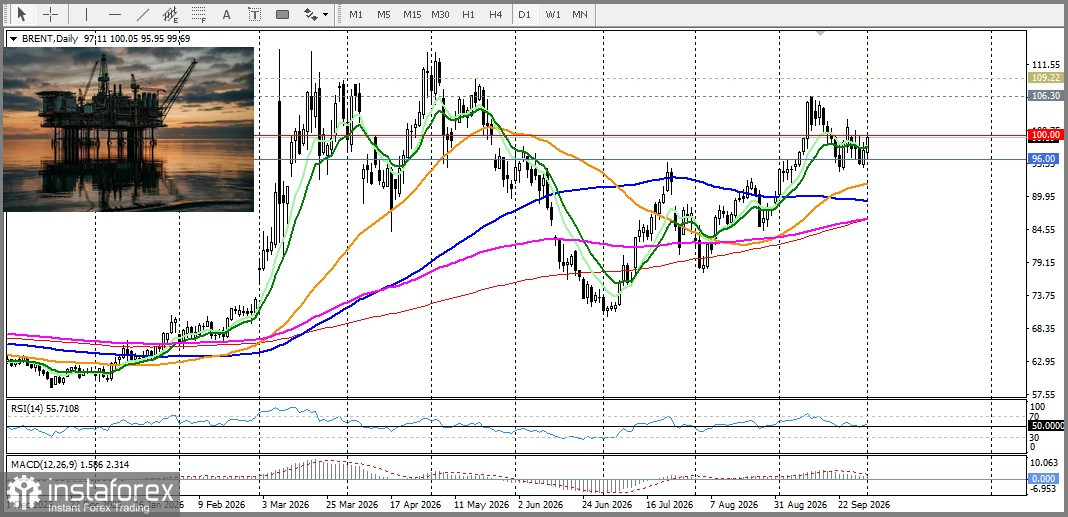 Hopes for a diplomatic resolution to the conflict between the United States and Iran faded after President Donald Trump rejected Iran's proposal for a seven-day ceasefire to resolve the military confrontation and unblock international shipping through the Strait of Hormuz. Trump also told his aides that he expected large-scale hostilities to resume after the November midterm elections. Against this backdrop, US Secretary of State Marco Rubio urged the Iranian delegation to leave the country immediately as peace talks came to an end. This keeps the geopolitical risk premium elevated, supporting the dollar and indicating that gold prices are likely to continue declining.
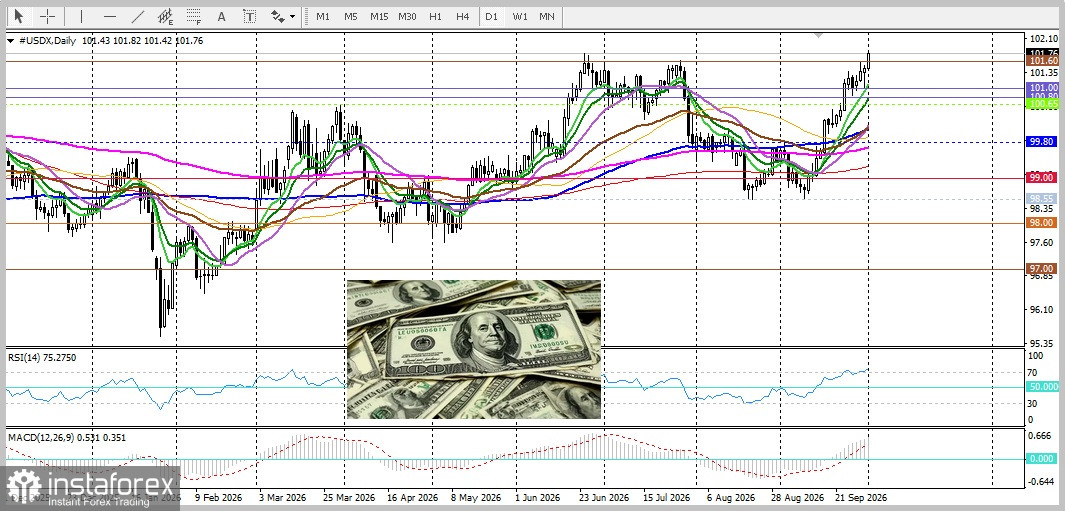 Today, for the best trading opportunities, attention should be paid to US economic data releases, including the weekly report on initial jobless claims and the ISM Manufacturing PMI. Speeches by influential members of the Federal Open Market Committee (FOMC) will also be important. However, the main focus should be on Friday's US Nonfarm Payrolls (NFP) report, which will provide additional clues about the future course of Federal Reserve monetary policy. In addition, incoming geopolitical developments could trigger greater volatility in financial markets, creating new trading opportunities in gold.
From a technical perspective, gold has shown resilience below $4,100, while the 9-day EMA is acting as resistance. Nevertheless, gold remains under pressure as long as it trades below the key moving averages. At the same time, the oscillators remain negative, confirming the bears' advantage.