 English
 Русский
 Bahasa Indonesia
 Bahasa Malay
 ไทย
ไทย Español
 Deutsch
 Български
 Français
 Tiếng Việt
 中文
中文 বাংলা
বাংলা हिन्दी
 Čeština
 Українська
 Română



Gold (XAU/USD) is struggling to gain upward momentum and remains below the key psychological level of $4,200. The US dollar is retreating from its October high amid profit-taking, providing support for the precious metal.
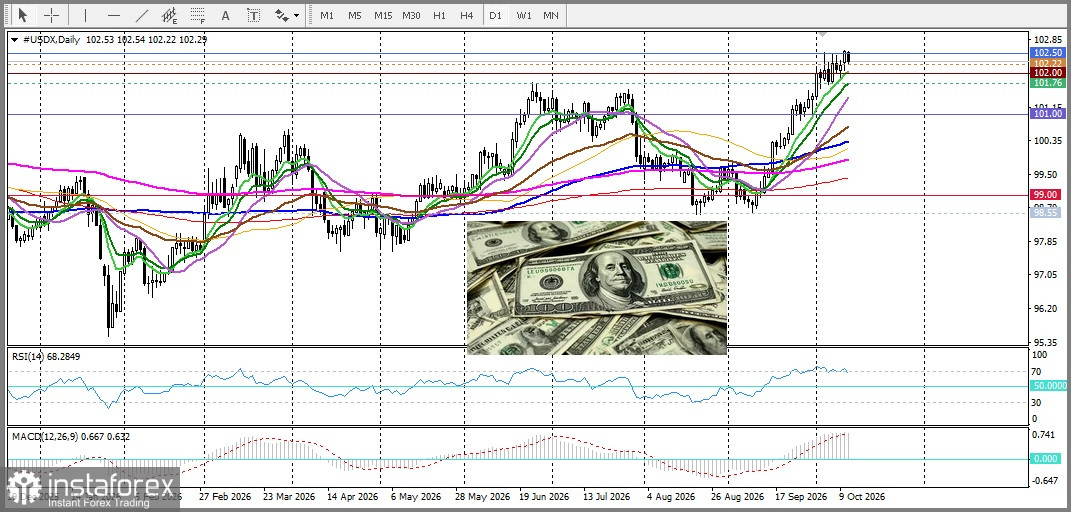
Nevertheless, the Federal Reserve's hawkish stance and escalating conflicts in the Middle East could limit further dollar weakness and keep gold within its current trading range.
The minutes of the Federal Open Market Committee (FOMC) meeting held on September 15–16 and published last week showed that policymakers remained open to another 25-basis-point rate hike before the end of 2026, as inflation remains above the 2% target.
In addition, comments made by Cleveland Fed President Beth Hammack on Monday reinforce market expectations that the US central bank will raise borrowing costs before the end of the year.
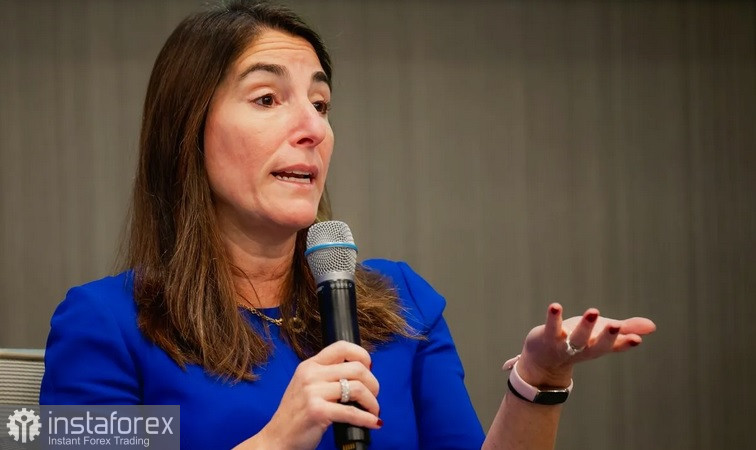
Inflation risks associated with energy prices are also strengthening expectations of further Fed monetary policy tightening and keeping US Treasury yields near multi-year highs.
Beth Hammack's speech was distinctly hawkish, receiving a score of 8.4 out of 10.0 on the FXS Speechtracker scale. This is well above the historical average of 7.5 out of 10.0, indicating a stronger-than-usual emphasis on monetary policy tightening.
Her focus on the need for higher interest rates and a firmly hawkish monetary policy stance to bring inflation back to 2%, together with concerns about inflation expectations becoming entrenched amid neutral financial conditions and demand-driven price increases, including those associated with artificial intelligence, suggests a preference for rapid but moderate rate adjustments. Such an approach generally supports the US dollar.
Hammack's comments explaining the Fed's approach and warning that companies plan to raise prices by more than the increase in their costs underscore that inflation in the 2.5%–3% range remains well above the central bank's target. This requires policymakers to remain vigilant and maintain a hawkish stance.
The FXS Fed Sentiment Index rose by 0.59 points to 138.92, reinforcing the Fed's hawkish momentum and aligning with the elevated readings of the FXS Speechtracker index. The index's rise above the neutral level of 100 confirms that recent remarks by Fed officials, particularly Hammack, point to expectations of tighter monetary policy—a factor that supports the dollar against other currencies.
The situation is further complicated by the escalation of the conflict in the Middle East, where the Iran-backed Houthi movement intensified its attacks on Saudi Arabia, launching additional missiles on Monday. These developments come amid threats by Saudi Arabia to take decisive action in response to strikes on King Khalid International Airport in Riyadh. Furthermore, US President Donald Trump did not rule out participating in strikes against Houthi positions and resuming attacks on Iran. Geopolitical risks are increasing demand for the US dollar as a safe-haven asset, limiting the potential for a substantial rise in gold prices.
Traders may also wait for further signals regarding the future direction of Fed monetary policy. In this regard, particular attention should be paid to the latest US inflation data: the Consumer Price Index (CPI) and the Producer Price Index (PPI), scheduled for release on Wednesday and Thursday, respectively.
A speech by Fed Governor Kevin, scheduled for Friday during the annual meetings of the International Monetary Fund (IMF) and the World Bank in Bangkok, could also influence the market. Nevertheless, fundamental factors suggest that any subsequent rise in gold prices will likely encounter selling pressure and remain limited.
From a technical perspective, bearish pressure is likely to ease only if buyers push the price above the 20-day simple moving average (SMA). However, as long as the oscillators remain in negative territory, sellers retain the advantage.