 English

 Русский
 Bahasa Indonesia
 Bahasa Malay
 ไทย
 Español
 Deutsch
 Български
 Français
 Tiếng Việt
 中文
 বাংলা
 हिन्दी
 Čeština
 Українська
 Română



For a long time, expectations of strong corporate earnings helped the S&P 500 withstand significant headwinds such as geopolitics, Fed monetary tightening, and the rally in Treasury yields. No small thing—Wall Street expects a 30% profit increase in the third quarter! However, a deeper look reveals a less rosy picture for stocks.
Some 34% of the S&P 500's expected aggregate earnings are tied to just two companies—NVIDIA and Micron. Only ten issuers, including Broadcom and Meta Platforms, account for two-thirds of forecasted profits. A substantial share is linked to oil and gas giants that will benefit from higher energy prices caused by the Middle East conflict. Such high concentration can trigger a domino effect: when one tile falls, the whole market can suffer.
Stock index dynamics
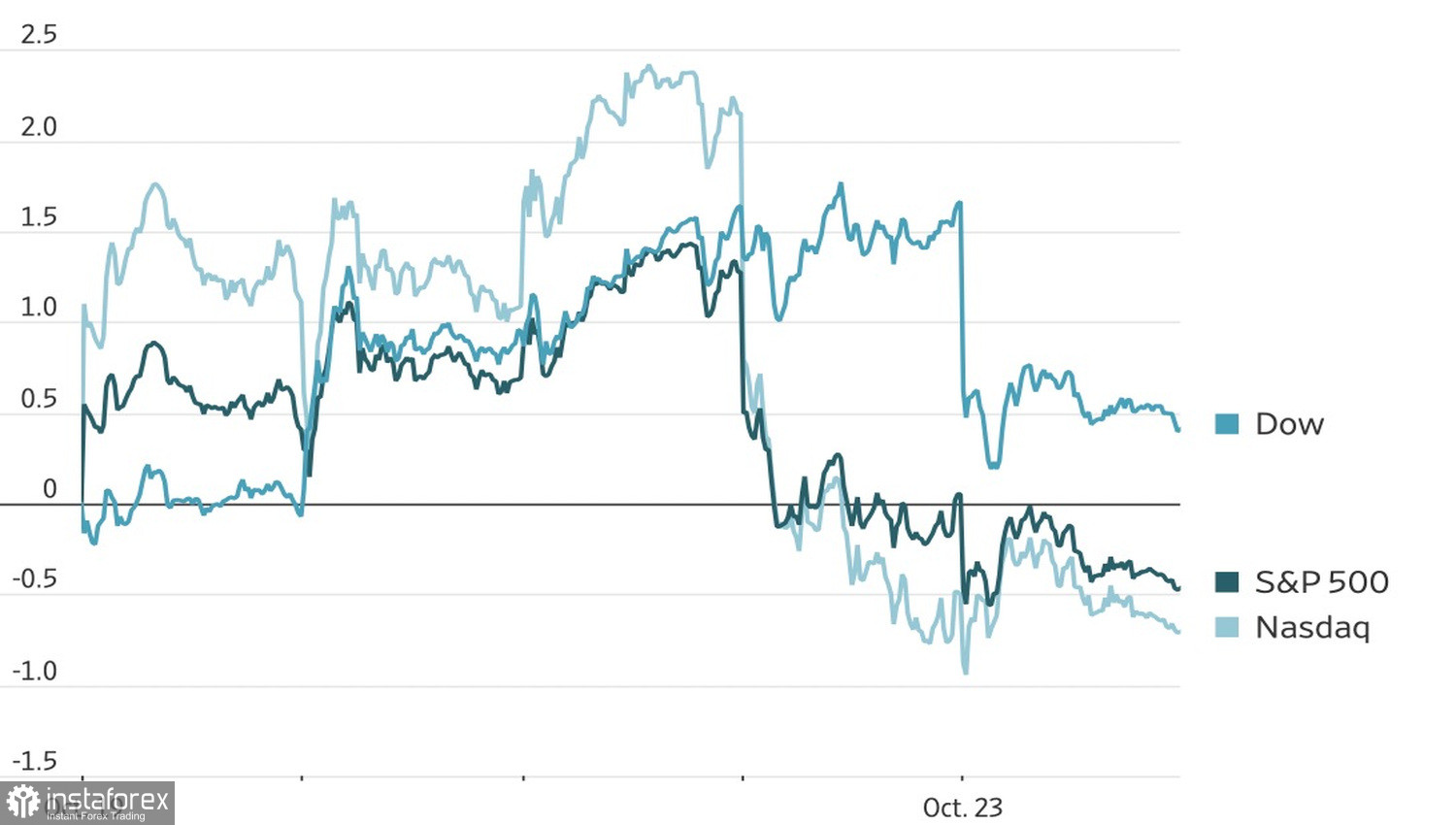
Investors are worried that AI infrastructure spending is increasingly financed with borrowed money. With the rally in Treasury and corporate yields, companies' costs are snowballing. It is becoming harder for them to generate profits sufficient to justify these expenses. If they fail to meet expectations, there is a significant risk of continued declines in the S&P 500.
Asset managers are diversifying portfolios toward other sectors. That has produced a prolonged losing streak for the Philadelphia Semiconductor Index, further straining the market.
Philadelphia semiconductor index dynamics
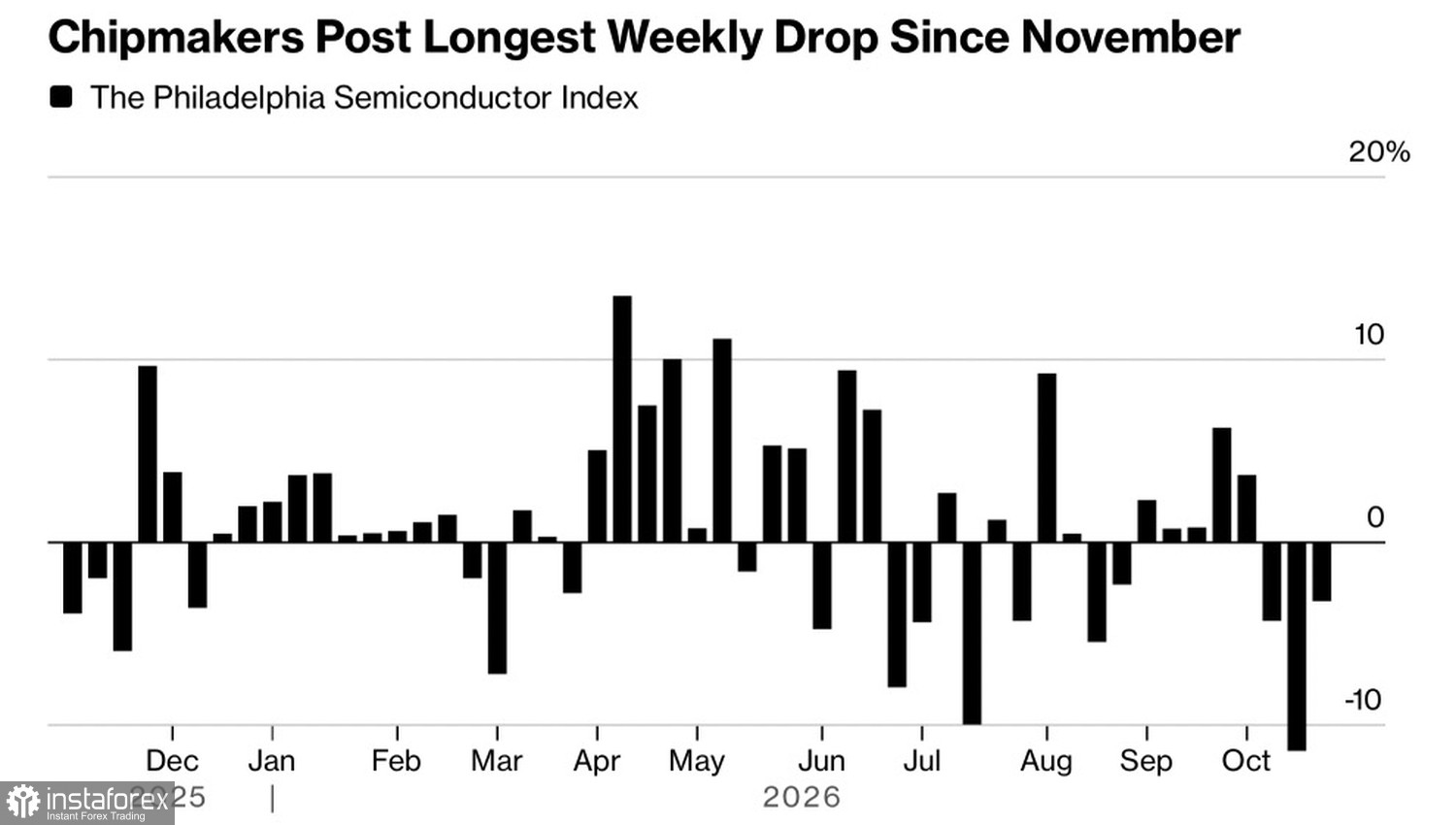
Thus, the current earnings season is seen not as a buying opportunity based on a brighter future, but as a reason to verify that S&P 500 issuers are sound. In reality, there is little genuinely positive corporate news. What matters to investors is how companies assess their own prospects, and the smallest worrying signals become triggers for selling—especially when they concern giants like Microsoft, Alphabet, and Amazon. Their Q3 reports, together with numerous central bank meetings, point to another tense and eventful week for the broad stock index.
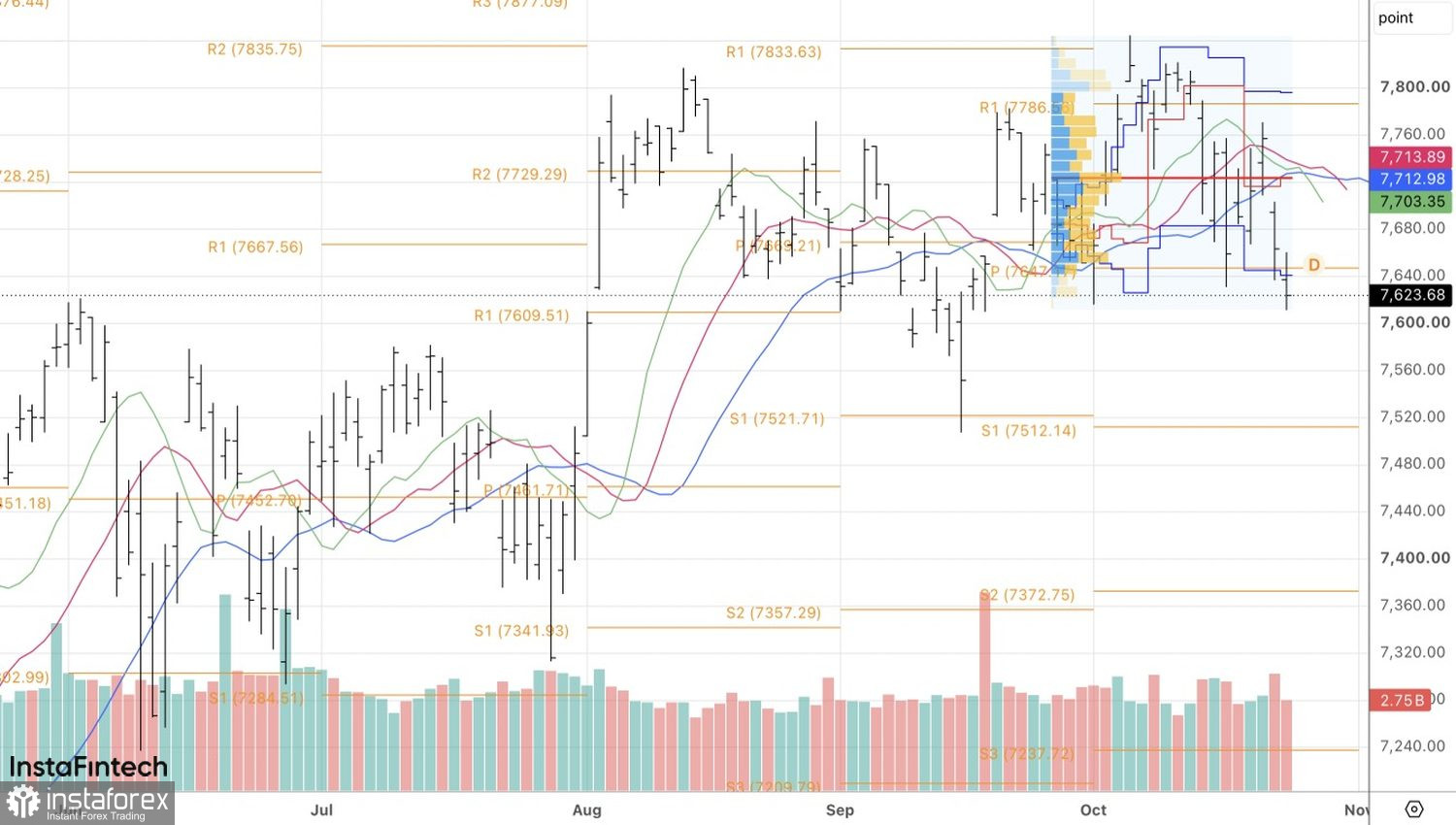
If the safety cushion of big-tech hopes no longer works as effectively as before, the S&P 500 becomes extremely vulnerable to hawkish Fed rhetoric. The futures market does not expect a Fed rate hike at the end of October, but hints at a continuation of the cycle in December could knock the broad index down. Bank of America expects low risk appetite to persist through December, partly due to how markets are pricing primary-election outcomes.
Technically, the S&P 500 is continuing a correction within a downtrend on the daily chart. A sell strategy while prices remain below fair value has allowed shorts to be increased. A break of support at 7,610 would provide grounds to ramp up selling.