 English

 Русский
 Bahasa Indonesia
 Bahasa Malay
 ไทย
 Español
 Deutsch
 Български
 Français
 Tiếng Việt
 中文
 বাংলা
 हिन्दी
 Čeština
 Українська
 Română



This week, financial and tech markets came under heavy pressure: from cryptocurrencies to chipmaker Nvidia, investors were hit by a wave of negative headlines centered on a political shift in the United States and a string of major scandals.
The midterm elections strengthened the Democrats' position in Congress, which increased fears of tighter crypto regulation and cast doubt over the fate of the key CLARITY Act. At the same time, markets were shaken by the fallout from the largest theft in Binance's history and sharp sell-offs in Solana.
A crisis of confidence also spread through the tech sector: the investigation into Nvidia's CEO and a reassessment of large?scale data?center buildout plans dented risk appetite and triggered sizable outflows from related assets.
These events set the context for our review, in which we will examine the causes, scale, and potential consequences of the current turbulence.
Democrats in charge: crypto market falls again

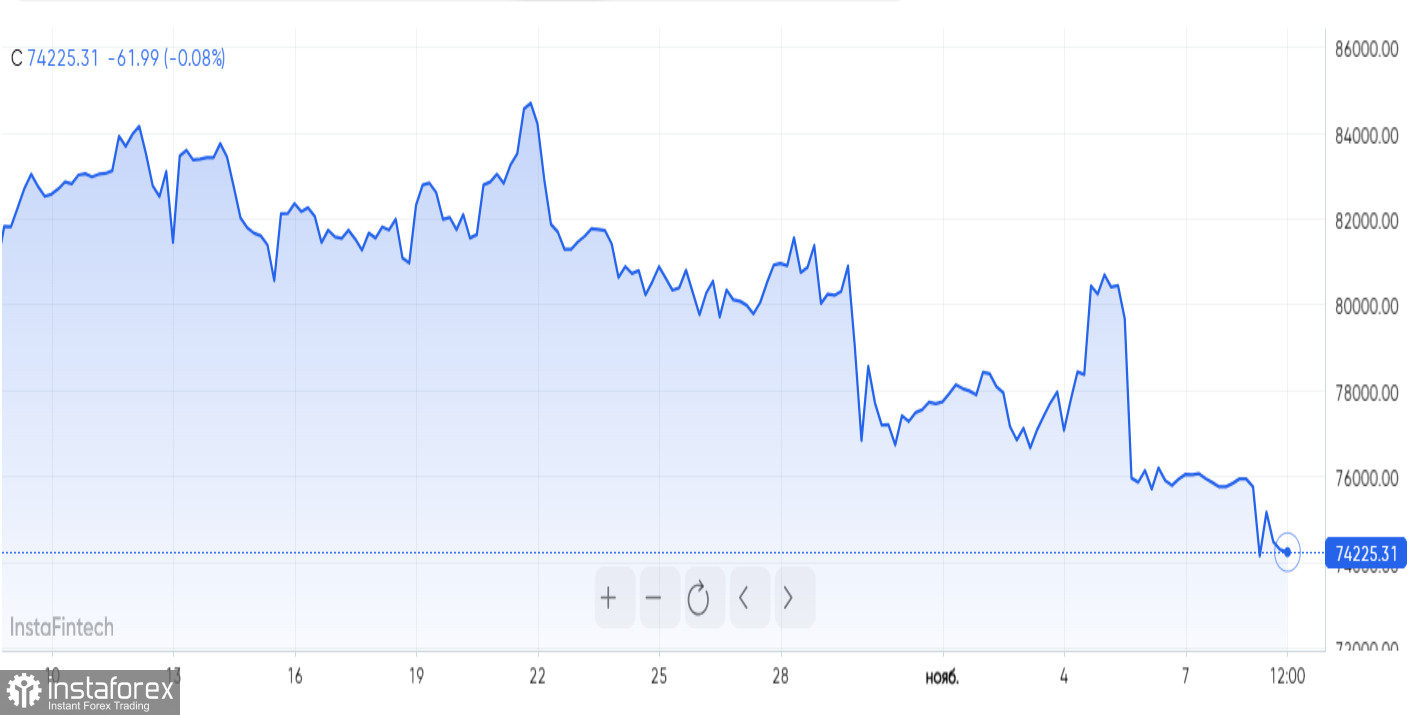
Sunday's crash: November 8 was a painful day for crypto. Bitcoin plunged by more than 2%, and Ether fell by roughly 5% — both slipped to their lowest levels since August. Two factors drove the move: the political turnaround in Washington and the continuing shock from the $6.3 billion theft at crypto exchange Binance, the largest in history.
The political backdrop changed after the November 3 midterms: according to Associated Press projections, Democrats gained control of both the House and the Senate. For the crypto industry, this raises the risk of stricter regulation. The sector's flagship bill, the CLARITY Act, is intended to allocate oversight among federal regulators and provide legal clarity to the market.
The bill passed the House in July 2025 but stalled in the Senate: on September 15, a procedural vote failed — 49 in favor versus 50 against, short of the 60 required. If the bill is not enacted before the current Congress dissolves on January 3, 2027, it would have to be started from scratch.
Some experts say the new balance of power in Congress may not accelerate industry?friendly outcomes. CNBC quotes analysts who believe Congress will devote significant attention to investigating the president's personal crypto transactions rather than drafting a comprehensive legal framework for digital assets in the near term.
Influential Senator Sherrod Brown is returning to the Senate, and Senator Elizabeth Warren continues to shape financial policy — both are known for tough stances on large financial platforms. Mike Townsend of Charles Schwab predicts Democrats "will push a much tougher version of the bill on crypto firms."
Political money is also at work: crypto?focused political funds spent about $170.5 million on the elections. Analyst Mati Greenspan even called Democrats' victories in both chambers potentially "the final nail in the CLARITY Act's coffin," suggesting the bill could effectively lose its chances in its current form.
As a result, investors are digesting not only news of high?profile thefts and leaks at major exchanges but also a new political landscape that clearly points to tougher regulation and greater uncertainty for crypto. That combination of factors explains the sharp price drop earlier in the week.
For users who plan to trade the instruments discussed, remember: cryptocurrencies and other assets are available for trading on the InstaForex platform. If you intend to trade these markets, open an account with InstaForex and download the company's mobile app for convenient access and timely reaction to market moves.
Solana under pressure: token breaks 30?day low

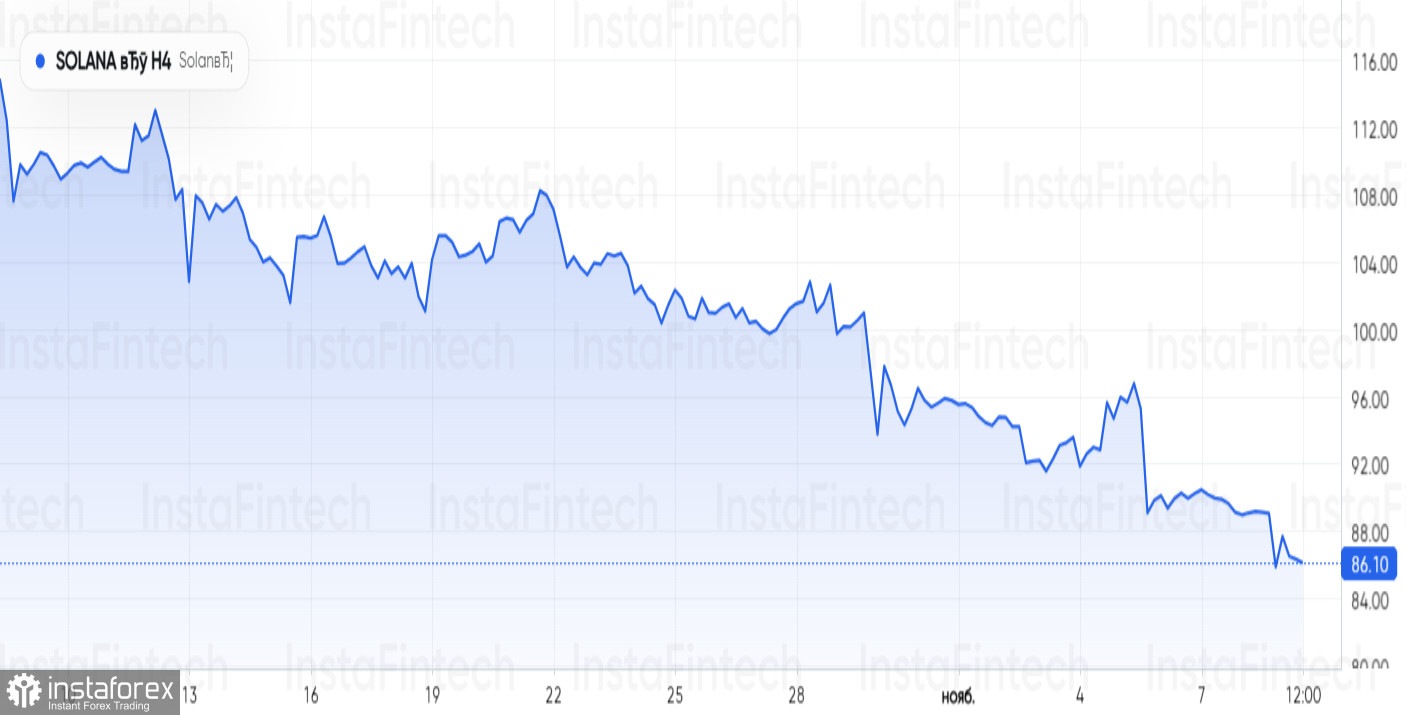
It was a nervy week for Solana. The coin fell to a 30?day low, breaching a key technical level, the 200?day moving average around $89. Intensifying sell?offs peaked on Sunday, November 8, when mass closures of margin long positions accelerated the drop, which continued despite a recent major consensus?protocol upgrade.
According to 24/7 Wall St., SOL closed at $89 on November 5 (the lowest close of the month) and spent most of the weekend trading around that level. The token lost 6.1% on the week and nearly 19% (?18.7%) on the month. Late on Sunday, prices weakened further: SOL slid by 3.2% to about $86 in one hour in the Binance spot market.
The move was painful for leveraged traders: during that hour, aggregate long liquidations across Binance, Bybit, and OKX reached $24.85 million, while short liquidations were only about $10,000, TokenPost reports.
Pressure is also coming from outflows in institutional products. On Friday, November 6, US spot Solana ETFs saw $25.1 million of redemptions, continuing a weekly trend: November 5 outflows were $1.2 million, and total net assets fell from $1.73 billion (as of October 9) to $1.31 billion.
SoSoValue data shows total weekly outflows of $26.2 million — the fifth consecutive week of withdrawals — and more than $163 million removed over the full period.
Largest single?fund outflows included $14 million from Bitwise, $5.4 million from GSOL (Grayscale), and $4.3 million from MSOL (Morgan Stanley). At the same time, the share of staked coins declined from roughly 70% a month ago to about 68% now, reducing the cushion that can support the price.
Panic around Solana has fed into the broader crypto sell?off: spot Bitcoin ETFs lost more than $411 million on Friday, and Ethereum funds shed by roughly $93 million.
The report links the retracement to political and macro factors: Democrats' wins in both chambers of Congress at the midterms lower the odds of the CLARITY Act clearing the Senate quickly. Markets are also pricing in a higher probability of tighter monetary policy and a Fed interest rate hike in December.
What it means for investors: technical indicators point to growing seller pressure, while institutional outflows and a shifting fundamental backdrop add uncertainty.
That said, network upgrades and ongoing staking remain supportive long?term factors for the project — the key question is how much of those positives are already priced in.
Scandal around Nvidia's CEO: what we know and why it matters
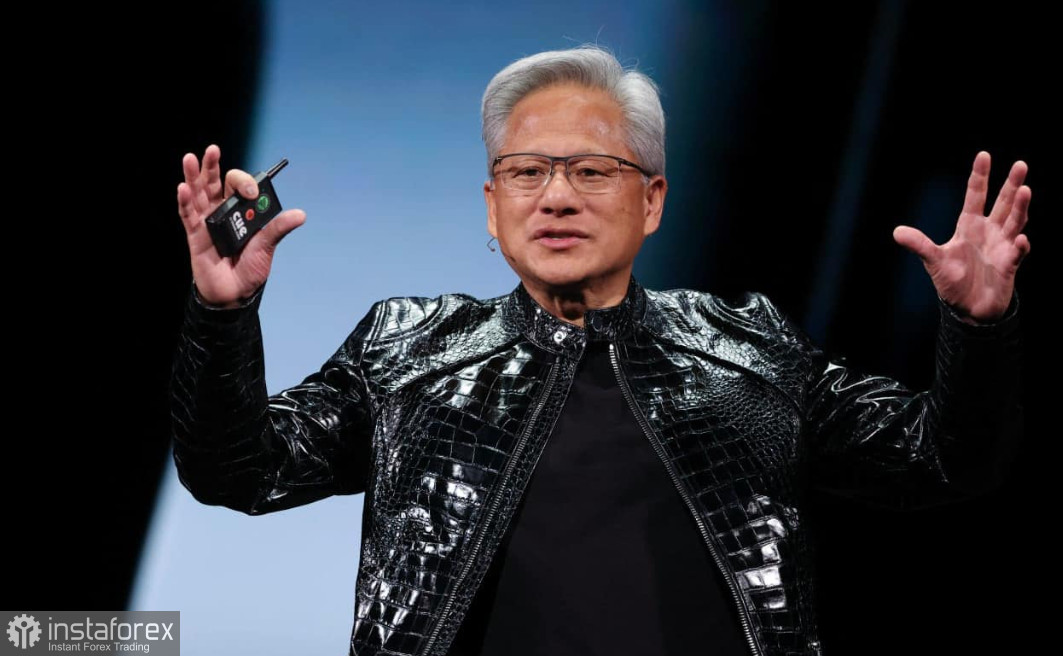
Nvidia's board on Sunday, November 8, announced the start of an independent investigation after reports alleged that the company's founder and CEO, Jensen Huang, may have been targeted by a foreign intelligence service. At the same time, Huang admitted to employees that he had an extramarital affair — an admission that was published by the media.
The company's statement says the inquiry will be conducted by the board's independent directors committee with assistance from outside counsel. The board stresses that it currently "has no reason to believe that either national security or Nvidia secrets were compromised," but that "the Board's inquiry will examine all available information" during the probe.
Huang will remain in charge while the investigation is ongoing. According to the board, Huang "fully supports the review and has committed to cooperating with it," and the company's leadership has expressed confidence in him and his team.
The CEO's admission relates to a personal relationship with Alice Huang (also known as Huang Le). In a draft employee letter obtained by Axios, Jensen Huang wrote, "I owe my family and all of you an apology. I was unfaithful to my wife. My actions hurt her and our children. There is no excuse for what I did."
He accepts "full responsibility" in the letter and reaffirms his commitment to the company. Nvidia spokesperson John Riccitiello said today's news will not slow NVIDIA's business, and that Huang will continue to perform his duties "without interruption."
A brief background on the woman at the center of law?enforcement and press interest: Alice Huang is not related to the CEO. She previously worked as a reporter for Chinese television and later took an executive role at Singapore?based Megaspeed, a data?center company.
The New York Times reports Megaspeed purchased roughly $4.8 billion worth of Nvidia chips over the past two years. Megaspeed has said its communications with Alice Huang were "ordinary business interactions."
Details that prompted heightened government and media scrutiny: on October 29, The Times reported that US agencies had been conducting electronic surveillance on Alice Huang for at least a year. On November 6, the paper published a memo circulated among officials this spring alleging that Huang may have been recruited by China's Ministry of State Security.
The memo reportedly claimed she was tasked with collecting information on US AI chips and possibly exerting influence to help Nvidia obtain approvals to sell advanced chips to China.
According to The Times, the memo's preparation was overseen by Senator Marco Rubio. A Chinese embassy spokesperson called the reports "baseless accussations" and "malicious smear campaigns" targeting China, The Business Times reports.
Why this matters: Nvidia is a central supplier of chips for artificial intelligence. Any question about national security exposure, commercial influence, or foreign state involvement immediately draws the attention of regulators, investors, and customers. Reputation and operational continuity are critical for the company: board decisions and the investigation's findings will affect supply chains, partner relationships, and global market trust.
What's next: the independent review led by the independent directors' committee with outside counsel should clarify facts and the scale of any risks. For now, management is backing Huang as CEO and the company emphasizes business continuity.
AI bet falters: investors reassess data-center prospects
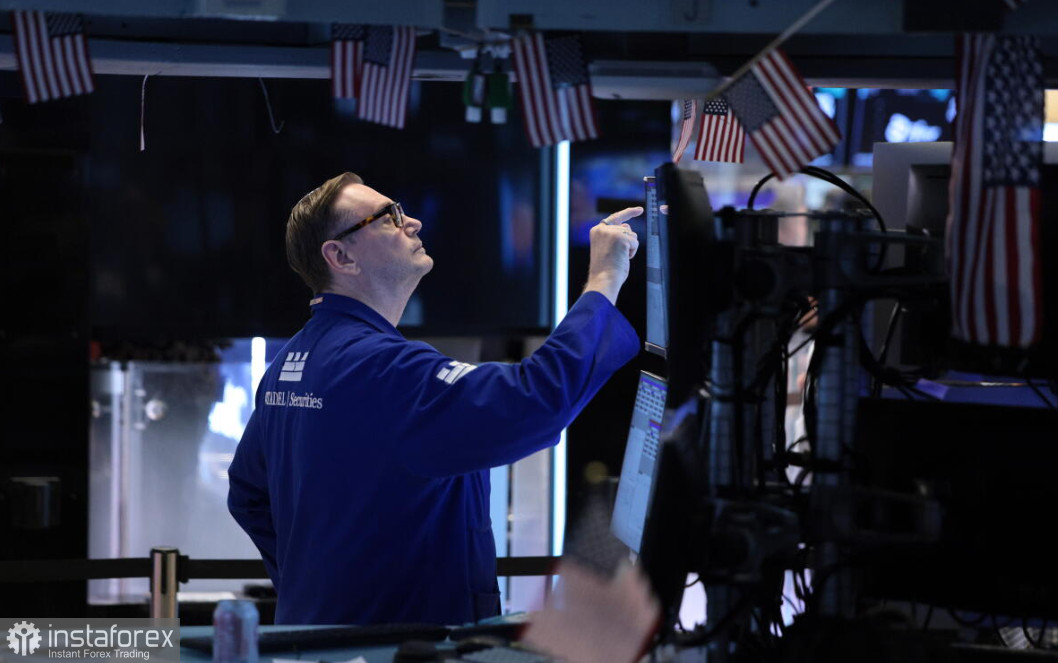
This week, the market made it clear: the love for stocks tied to artificial intelligence is waning. Investors are pulling money out of the sector en masse, betting on political changes that could materially slow data?center construction — the infrastructure underpinning the current AI boom.
The Washington Post notes that Democrats picked up meaningful political momentum in the recent elections: they strengthened positions in Washington and in several key state capitals. At the same time, public support for projects is starting to shrink — a combination that could hurt growth drivers of the US economy and pressure affected stocks.
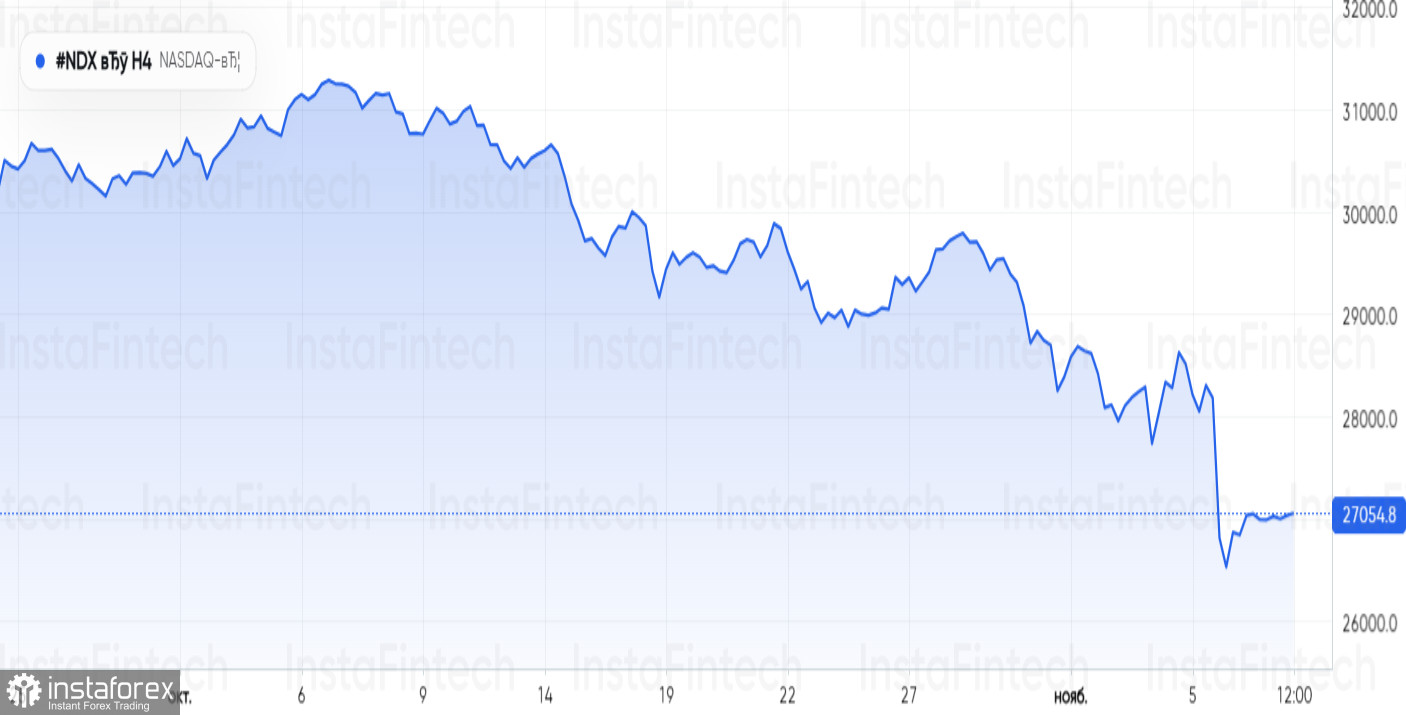
The tech market felt the shock. On Thursday, November 5, the Nasdaq Composite plunged by 5.56%, the largest drop in 19 months. Reuters reports Democrats reclaimed seven Senate seats, won at least 39 House seats, and captured five gubernatorial races.
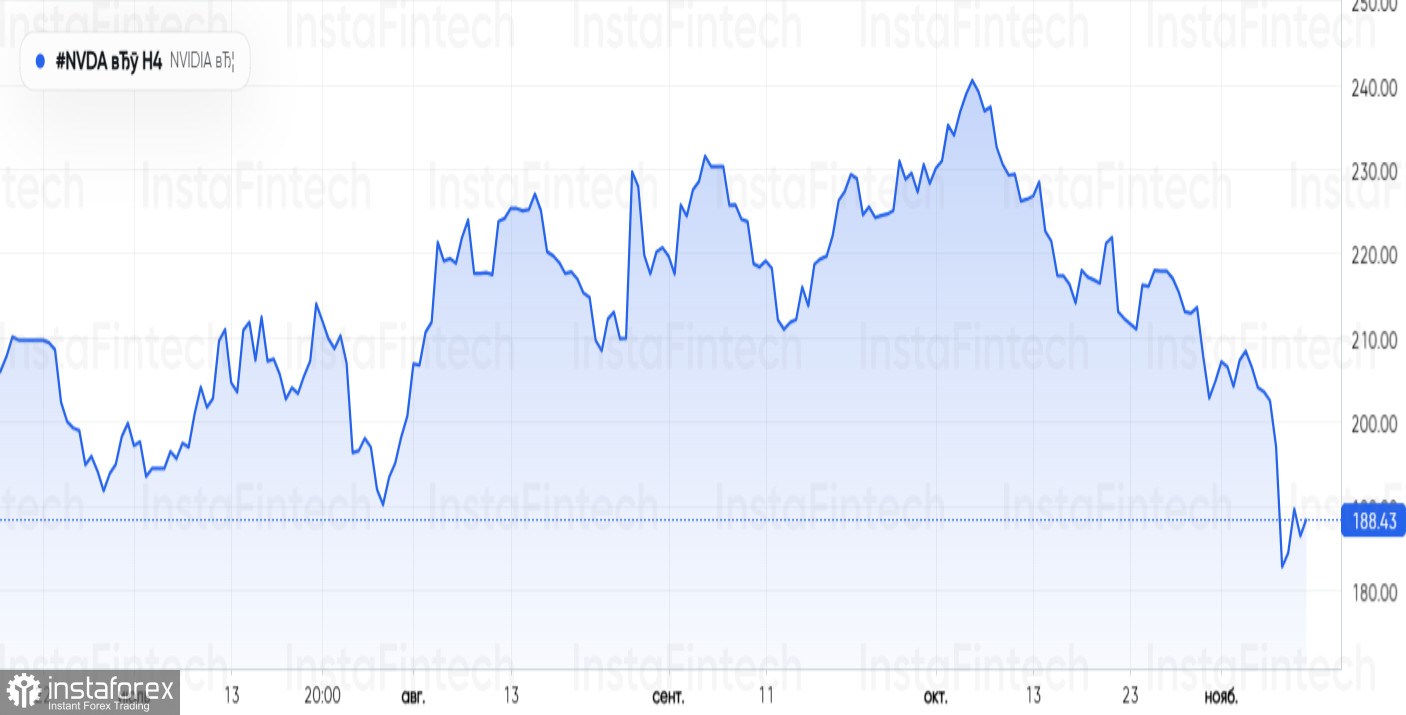
Semiconductor makers suffered the biggest losses: Nvidia shares fell by 9.3%, AMD lost 17.3%, Micron shed by 17.5%, CNBC reports. Cloud providers with large data?center footprints, such as CoreWeave, also came under pressure. The sector partially retraced those losses on Friday.
Investors' fears have a clear basis. Goldman Sachs warns that Democratic wins in states like Texas, Michigan, and Georgia could put roughly 45% of planned US data?center capacity at risk, Reuters writes. Newly elected Texas governor Gina Hinojosa campaigned, among other things, for a moratorium on approvals for new facilities of this type.
In addition, starting in January, Democrats will control Congress and are already drafting bills: they aim to protect consumers from higher electricity costs related to data centers, require independent testing of advanced AI systems, and to clearly define circumstances under which AI creators are liable for harm caused by their products.
International economic institutions are sounding the alarm as well. On Friday, IMF Managing Director Kristalina Georgieva warned that central banks will need to factor in a potential slowdown of AI?driven growth. "Should there be a slowdown in the AI-driven growth impulse, it would need to be factored in ?as central banks assess the necessary steps in the fight against stubborn inflation," Business Times quoted her.
In the IMF's pessimistic October scenario, a sharp pullback in AI investment could leave global GDP about 1.1% below baseline by 2028, and US output about 1.8% lower.
The takeaway is simple: political decisions and regulatory initiatives can quickly upend market expectations. The tech boom supported by data centers and AI investment remains powerful, but it is no longer perceived as indispensable — and investors have taken note.
Note that the instruments discussed are available for trading on the InstaForex platform. If you plan to participate, open an InstaForex trading account and install the company's mobile app for quick market access and real?time sector tracking.