 English

 Русский
 Bahasa Indonesia
 Bahasa Malay
 ไทย
 Español
 Deutsch
 Български
 Français
 Tiếng Việt
 中文
 বাংলা
 हिन्दी
 Čeština
 Українська
 Română



Today the dollar holds yesterday's jump. The dollar index gained about 0.5% yesterday—the best day since September 23—and the two-year Treasury yield rose 17 bps, the largest intraday jump in 19 months.
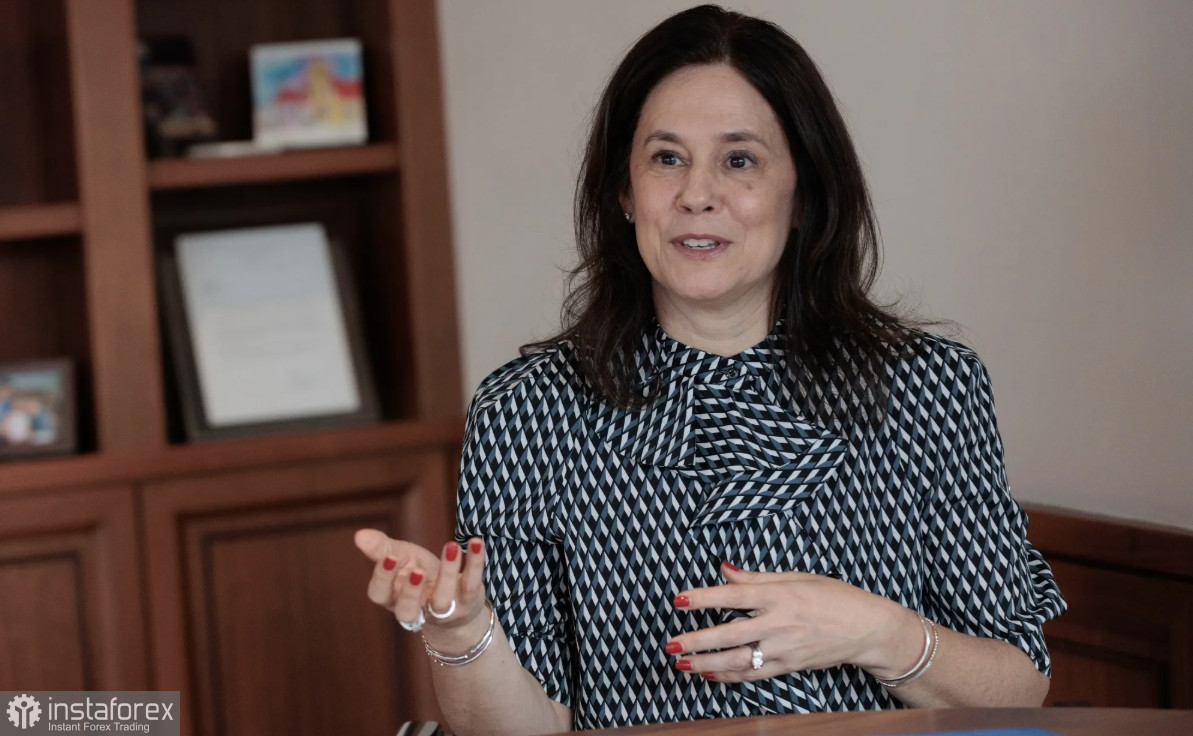
October's CPI provided the impetus, but Fed officials cemented the move. In one day, Anna Paulson, Austan Goolsbee, and Christopher Waller—and then Lorie Logan—signaled that the debate is no longer about whether to hike but about the speed of further tightening.
The data reinforced concern. Headline CPI rose 0.4% month-on-month versus a 0.3% forecast (and 0.6% in September); core CPI printed 0.3% versus a 0.2% forecast—the third month in a row above expectations. On October 28 the Fed left rates at 3.75–4.00% in a 10–2 vote: Cook and Hammock (Hammack) had then called for a hike, and now the case for them has visibly strengthened.
The most telling remarks came from Anna Paulson because her position is viewed as among the softest of this year's voters. The Philadelphia Fed president acknowledged that further gradual tightening is appropriate now, and she immediately clarified that the work is not finished. "Skipping a meeting is about pace, not direction," Paulson said. She is willing to speed up if inflation expectations rise, wage pressures intensify, or core inflation accelerates—though she does not currently see that. In her view, core readings are stuck between 2.5% and 3%, and the drivers are no longer limited to fading tariffs: energy (because of the Iran war) and data center construction now matter. Recall that on November 5 Barkin supported the same gradual pace, Hammack preferred more frequent small steps, and as of October 14 Williams contemplated one hike in 2026 and none in 2027. Now even the moderate wing says there is likely much work left.
Goolsbee, who is not voting this year, spoke tougher. "This is another worrying report, on the edge of being alarming," Austan Goolsbee, president of the Chicago Fed, said. He had expected tariffs and energy to be largely priced out, yet service sector inflation remains stubbornly high, and he called that the most worrying element. Asked about a larger move, he did not rule anything out, leaving all options on the table. It is striking how his rhetoric has changed: on September 21 he thought a single 25-bp step would be insufficient for demand-driven inflation. In October, he allowed both a hike and a pause. On November 9, he compared AI-driven data-center construction with overheated demand that central banks usually focus on. He moved from "either/or" to concluding inflation is moving in the wrong direction.
Waller spoke before the data, but his words set the tone for the day. In London he said he would support a 25-bp hike in December even if inflation improved, and if there were no improvement, he permitted 50 bps. Core CPI landed at 0.3%—precisely the threshold he had cited as relevant for such conversations. On September 3 he was willing to hold rates if progress persisted; the shift from wait-and-see to pre-emptive tightening is now evident. After the release Logan spoke of at least two 25-bp raises and of a pace faster than the autumn's; on October 30 she had allowed for two gradual steps.
I believe Fed officials no longer occupy a dovish posture; they argue about pace, not direction, and proponents of a pause are simply unheard in this chorus. The market took the signal literally: the probability of a December hike rose to 96% after Waller's remarks and to 100% after the report.
Losers in this scenario are the euro and the pound, trading near 1.1153 and 1.3331, respectively, which receive little support from the ECB, where the deposit rate is 2.50%, and a move to 2.75% on December 17 will not close the gap with the Fed. Gold, long bonds, and rate-sensitive risk assets also suffer.
I expect the Fed to hike by 25 bps on December 9; the case for 50 bps will depend on upcoming data, with PPI on Friday the first test. I do not exclude that another hot report could make the majority favor a faster step, leaving Paulson's moderate wing in the minority. Until then, the dollar will retain support.
Technical picture for EUR/USD
On the hourly chart, buyers should consider taking 1.1170. Only that would allow a test of 1.1200. From there a move to 1.1220 is possible, but achieving that without support from major players will be difficult. On a decline I expect meaningful buying only near 1.1140. If no one appears there, it would be prudent to wait for a fresh low at 1.1110 or to open longs from 1.1080.
Technical picture for GBP/USD
Pound buyers need to take the nearest resistance at 1.3355. Only then would a move to 1.3377 be feasible; above that further progress will be difficult. The farther target would be 1.3305. On a drop, bears will try to seize control at 1.3325. If they succeed, a range break would inflict serious damage on bulls and push GBP/USD to 1.3300 with a prospect of extending to 1.3270.