 English

 Русский
 Bahasa Indonesia
 Bahasa Malay
 ไทย
 Español
 Deutsch
 Български
 Français
 Tiếng Việt
 中文
 বাংলা
 हिन्दी
 Čeština
 Українська
 Română




This review analyzes four interlinked financial trends shaping the global market landscape.
- First, the euro is under pressure from lower oil prices and forecasts of tighter Fed monetary policy.
- Second, Asian equity markets are showing signs of recovery, supported by positive earnings from CoreWeave.
- Third, Microsoft's shares are entering a period of uncertainty as competing office solutions from Anthropic hit the market.
- Fourth, large strategic investments from leading tech companies, including AMD, into Anthropic's capital are underway ahead of its anticipated record IPO.
Taken together, these events show how commodity drivers, inflation data, and rapid AI developments are simultaneously creating new risks and opening new opportunities for investors around the world.
Euro between oil and the Fed: markets price in the chance of further tightening
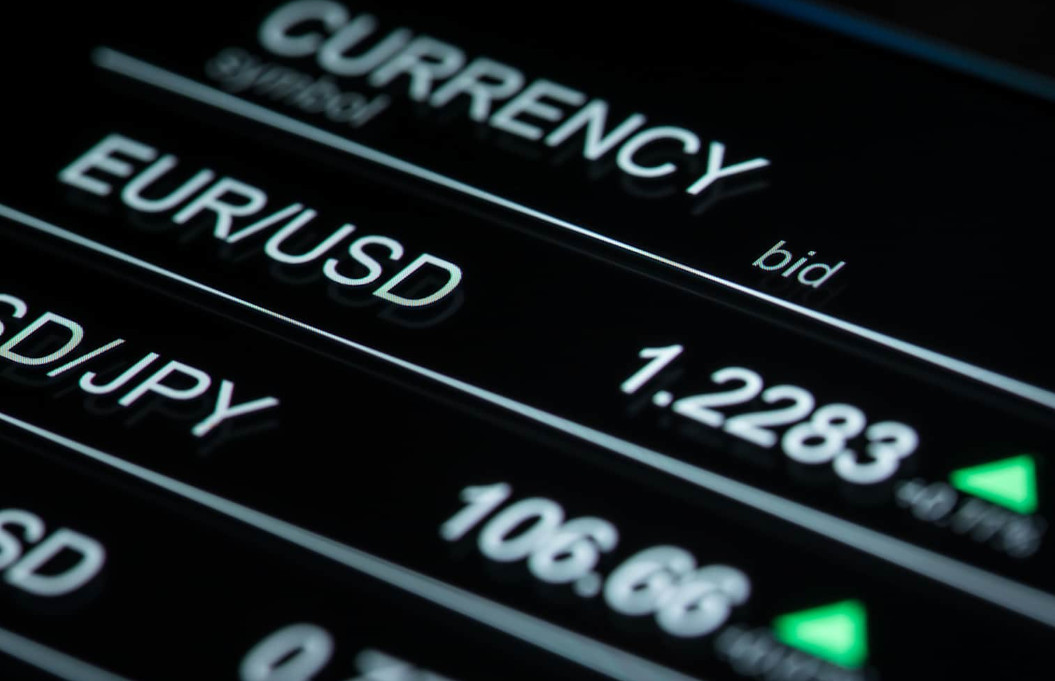
The euro opened trading on Tuesday, November 10, holding some ground after a sharp rebound against the dollar on Monday. A parade of factors came to the fore: a steep drop in oil prices reignited risk appetite, but stronger-than-expected US inflation restored the dollar's confidence and pushed Treasury yields higher.
As a result, the EUR/USD pair found itself caught between two opposing forces — cheaper energy, which benefits Europe as a large net importer, and hawkish US monetary policy.
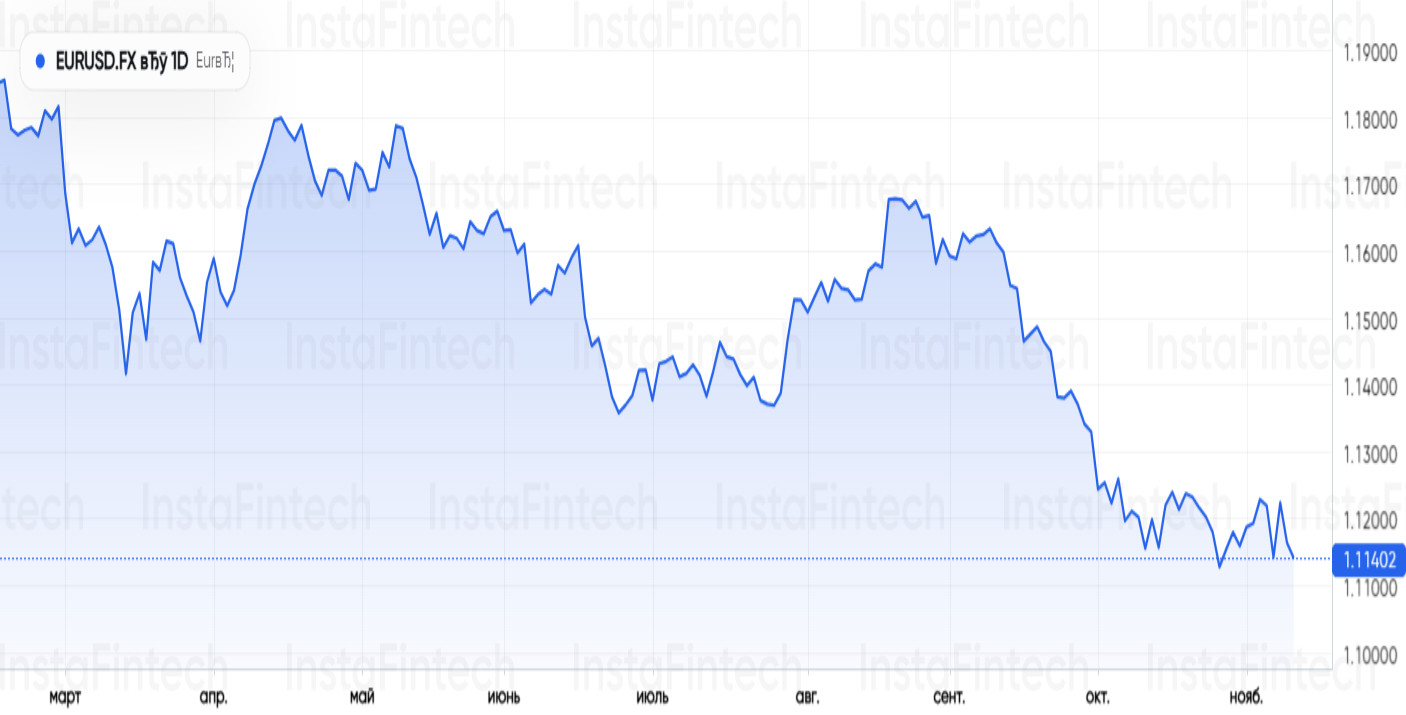
Early in the European session, EUR/USD traded just below 1.1230, off Monday's low near 1.1137. The oil market had a noticeable impact on investor sentiment: diplomatic progress on de-escalating the Middle East conflict drove prices down to two-month lows.
President Donald Trump's decision to refrain from new strikes on Iran amid ongoing talks also calmed the commodity market. As a result, Brent has fallen more than 20% over the past week.
On Tuesday, Brent briefly dipped below $90 a barrel — a level not seen since August, CNBC reports. The fall followed Trump saying the conflict "could end pretty soon."
According to Oil & Gas Journal, benchmark oil has already lost almost 24% from the intraday October peak of $118 per barrel. Rising OPEC production and expectations of a possible global surplus weighed on prices.
Some of the losses were reversed after remarks from Iranian official Mohsen Rezaei denying talks with Washington. By the close, Brent was down roughly 1.2%.
But oil is not the only driver. The US Bureau of Labor Statistics recorded a 0.4% rise in consumer prices in October, with core CPI up 0.3% — both readings above forecasts.
Year-over-year figures were not published because data collection in October 2025 was suspended during the government shutdown. Bloomberg Economics notes that the core index has risen 0.3% for the third month in a row, increasing pressure on policymakers.
Comments from Federal Reserve officials added uncertainty. Board member Christopher Waller said the same day that if core inflation remains around 0.3% or higher, a half-point rate hike should be seriously considered.
After the release, CME Group's FedWatch tool sharply raised the odds of tightening: the chance of a 25-bp hike at the December 8–9 meeting is now roughly 85%, while the probability of a 50?bp move is about 15%. Two-year Treasury yields have risen, and the dollar index has strengthened. The ECB reference rate that day was 1.1214.
In short, EUR/USD remains hostage to two forces: cheaper oil supports the euro through a better trade balance for Europe, while a stronger dollar — driven by inflation risks and the potential for further US rate hikes — works against the single currency. Investors and traders will have to weigh which factor will prevail in the coming weeks.
The instruments and currency pairs mentioned in this article are available for trading on the InstaForex platform. To participate, open a trading account with InstaForex and download the company's mobile app.
When AI brings not only risks: Asian markets claw back losses after CoreWeave report
Asian equity venues opened Wednesday on a positive note: regional stocks rose after AI cloud provider CoreWeave released quarterly numbers that beat expectations and eased some of the jitters around the AI sector.
The rally in Asia partially offset Tuesday's Wall Street sell-off, which was triggered by hotter-than-expected US inflation data. At the same time, bond prices across the region fell following moves in Treasuries, Bloomberg notes.
In Tokyo, the Nikkei 225 and Topix advanced, while South Korea's Kospi oscillated between gains and losses. Nasdaq 100 futures were up even though the index itself fell during the main session.
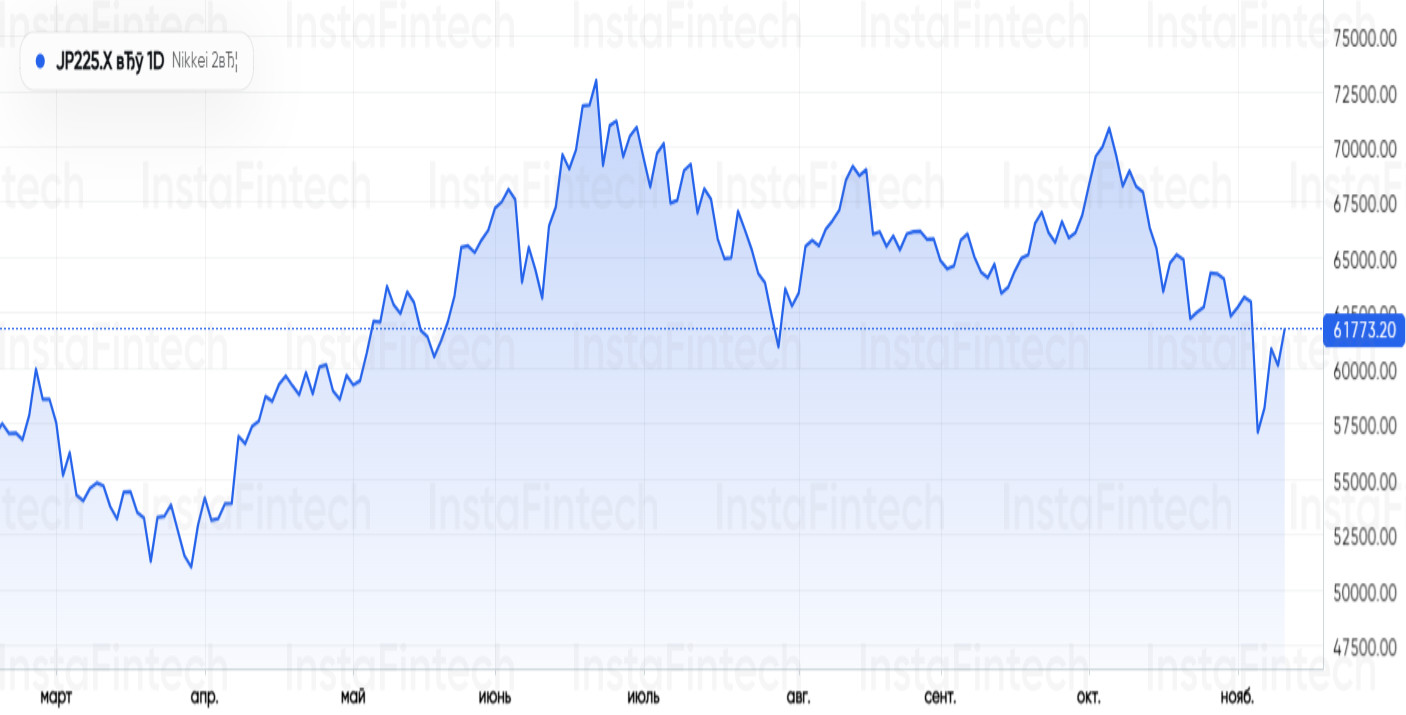
The advance was far from uniform: not every issuer rode the optimism — SoftBank shares slid 8% after the company reported a loss of £1.12 trillion for the second fiscal quarter, blaming write-downs of advances on US data-center projects.
The day's rally star was CoreWeave. The company's Q3 revenue rose to $3.661 billion — more than $1 billion above the prior quarter and above the LSEG consensus of $3.55 billion.
CoreWeave also raised its revenue target for 2026 to $13–13.3 billion. CEO Michael Intrator described the quarter as "breakthrough."
But the picture has nuances: CoreWeave posted a net loss of $709 million for the period, and interest expenses reached $846 million. At the same time, its backlog expanded significantly — to about $132.5 billion from $104.2 billion at the end of June.
In after-hours trading, the stock jumped sharply — a relief for investors who feared the highly levered business might slow.
Microsoft shares fall after Anthropic launches Office rivals

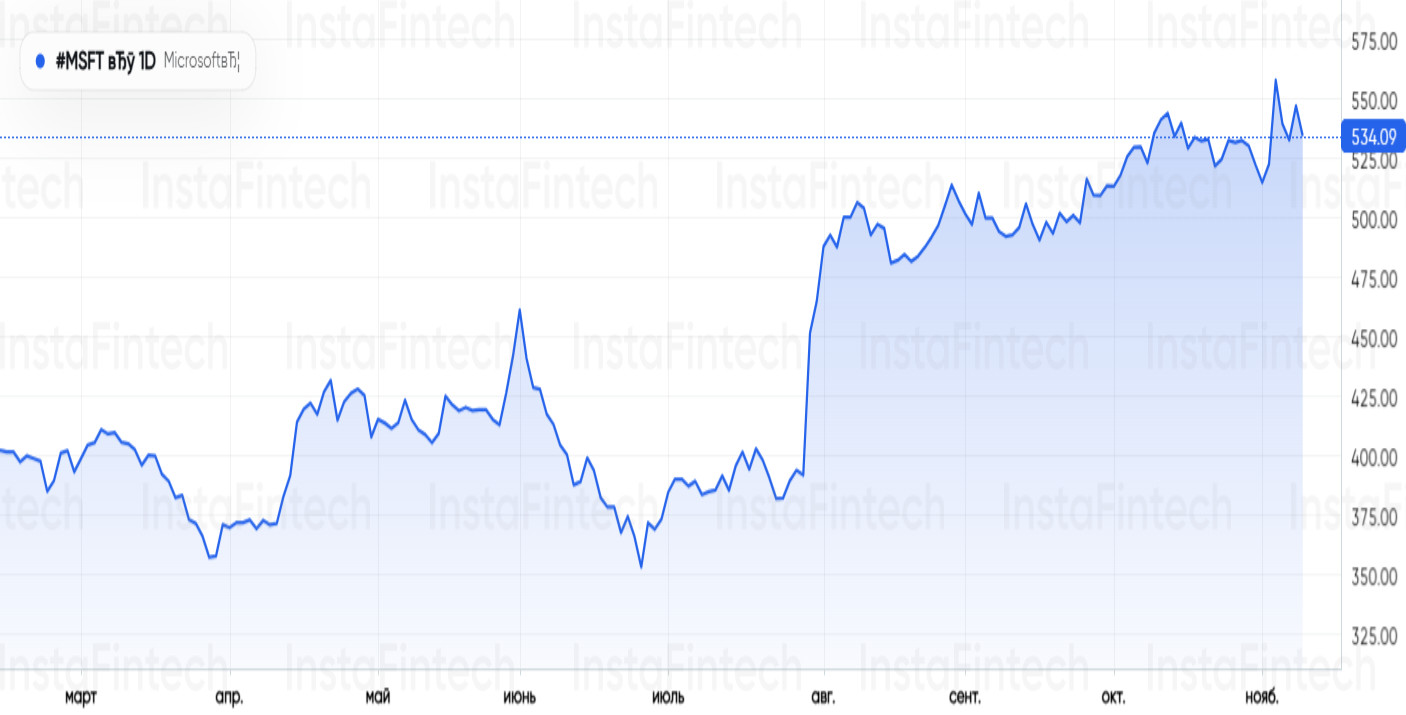
On Tuesday, November 10, Microsoft stock closed down roughly 2.2% after Anthropic unveiled office tools that directly compete with parts of Microsoft Office. The day began quietly with little change at the open, but by midday Microsoft shares were down about 3%.
Other software names followed: the iShares Expanded Tech-Software Sector ETF, where Microsoft is the largest holding, lost around 2%, Investor's Business Daily reports.
San Francisco-based Anthropic rolled out several beta products at once: Claude Sheets and Claude Whiteboards, and announced a meeting assistant called Claude Meetings, The Verge reports. The data tool formerly known as Claude Dashboards was renamed Claude Data and made generally available. From today, Claude can help your team create spreadsheets, whiteboards and dashboards. These new releases complement existing Claude features — Docs, Slides, Design and Motion — together forming an emerging office app suite.
Anthropic itself says Sheets is not intended to be a full Excel replacement. Product head Nicholas Lynn told Bloomberg that Sheets is relatively simple and not designed for complex financial modeling. For users who need advanced capabilities, export to Excel and integration via the Claude for Excel add-in are provided, Forbes Middle East writes.
Investors, however, are not panicking. Barron's strongly advised against hasty conclusions: the moderate share decline suggests the market needs convincing evidence of a mass migration from Excel to Claude Sheets before a large sell-off begins.
The outlet also notes that since the April 10 low, the software ETF is up 34% after the spring sell-off sparked by discussion of Anthropic's AI tools. Microsoft 365 revenue grew 17% year-over-year last quarter to $27.8 billion. Microsoft did not comment.
A curious intraday episode: before the intraday drop, Microsoft briefly overtook Nvidia to become the world's second-largest company by market cap, but after the pullback, Nvidia reclaimed the spot.
The big AI bet: why AMD is paying billions for Anthropic shares

Venture-style interest in AI has escalated: Advanced Micro Devices (AMD) has agreed to buy Anthropic stock worth about $2.5 billion in a private placement that will occur alongside the company's planned IPO, according to an amended S?1/A filed Tuesday, November 10.
The filing shows AMD is the third-largest buyer in the $26 billion private round — after Google and Nvidia, each of which plans to invest about $10 billion. It's important to note this is not a new initiative but fulfillment of an existing agreement between AMD and Anthropic.
Previously, the chipmaker committed to purchase up to $5 billion of Anthropic shares contingent on completing agreed supply and integration milestones for its processors. The remaining $2.5 billion still depends on meeting those milestones, the Economic Times reports.
The amended filing also names several other major tech players participating in the private placement. In addition to Google, Nvidia and AMD, Broadcom, Micron and Microsoft are each estimated to put in about $1 billion, while TSMC will participate with roughly $500 million.
An interesting detail: the Class N shares being purchased in this round carry no voting rights and, according to the S-1/A, appear not to be subject to a standard lock-up after the IPO.
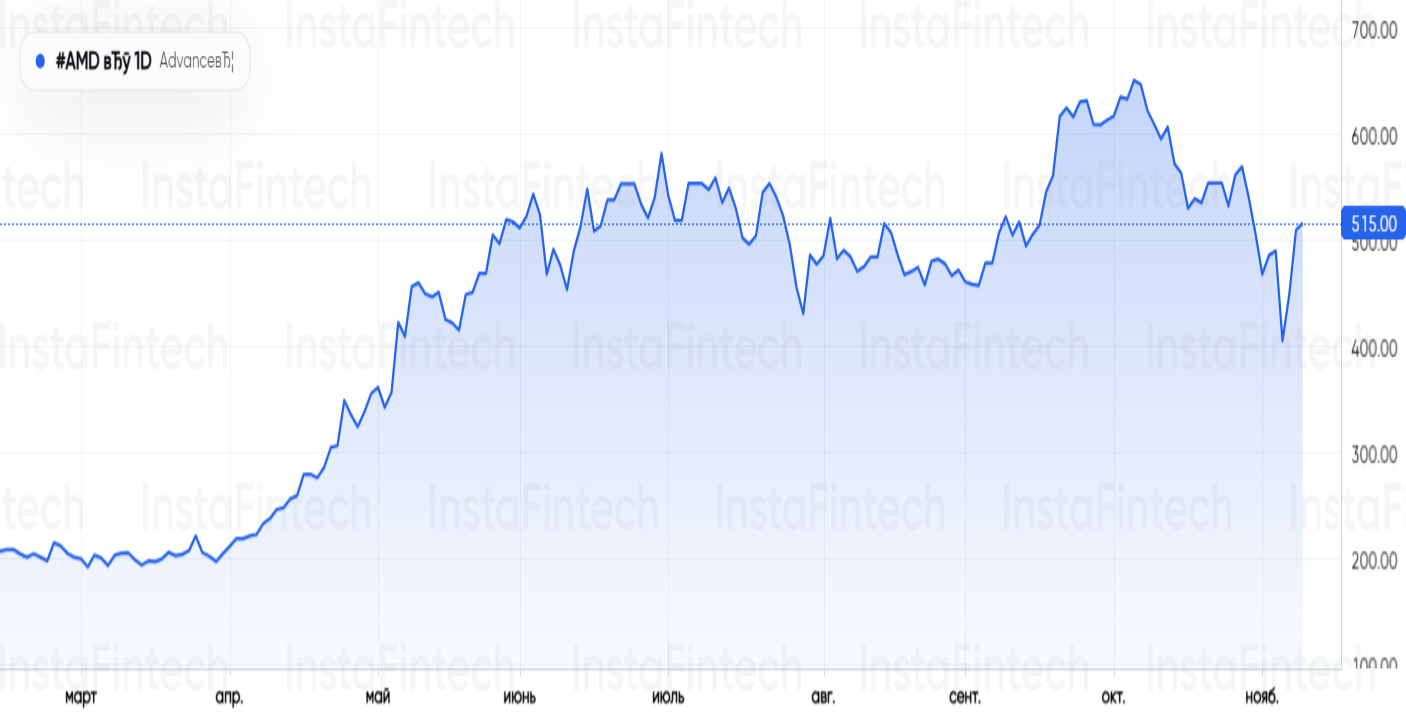
Under the document, about 33.8 million shares that AMD will receive at a median price of $74 "will cover part of the obligation to purchase our Class N common stock under the equipment supply agreement."
The Anthropic IPO itself is also eye-watering. The company is offering 825 million Class A shares in a range of $70–$78 each and expects to raise up to $64.4 billion in the public offering. With private purchases included, the total could reach $90.4 billion, Fox Business reports. Anthropic plans to list on Nasdaq under the ticker ANT.
The filing shows rapid revenue growth: Anthropic's revenue for the first nine months of 2026 was $33.2 billion versus $2.5 billion in the same period a year earlier — a jump that helps explain the massive investor interest.
The stocks and instruments discussed are already in focus for large market participants and available on modern trading platforms. These and other popular trading instruments are tradable on InstaForex; to follow and trade them, open an InstaForex account and download the firm's mobile app.