 English

 Русский
 Bahasa Indonesia
 Bahasa Malay
 ไทย
 Español
 Deutsch
 Български
 Français
 Tiếng Việt
 中文
 বাংলা
 हिन्दी
 Čeština
 Українська
 Română



The US market feels stuck in a Groundhog Day loop. Another tech sell-off, and even the rally after Jensen Huang's return, quickly gave way to a violent snapback, and Nasdaq 100 and S&P 500 futures point to the first gains in three sessions. Investors are asking whether the rally is a real turn or just a "dead cat bounce," a short respite in a falling market.
Reed Capital Partners is explicitly cautious, expecting the decline to resume before year-end. Buyers showed up without a clear catalyst, leaving their motives unclear. Credit markets are providing some support for now, which is keeping risk appetite alive.
US economic growth
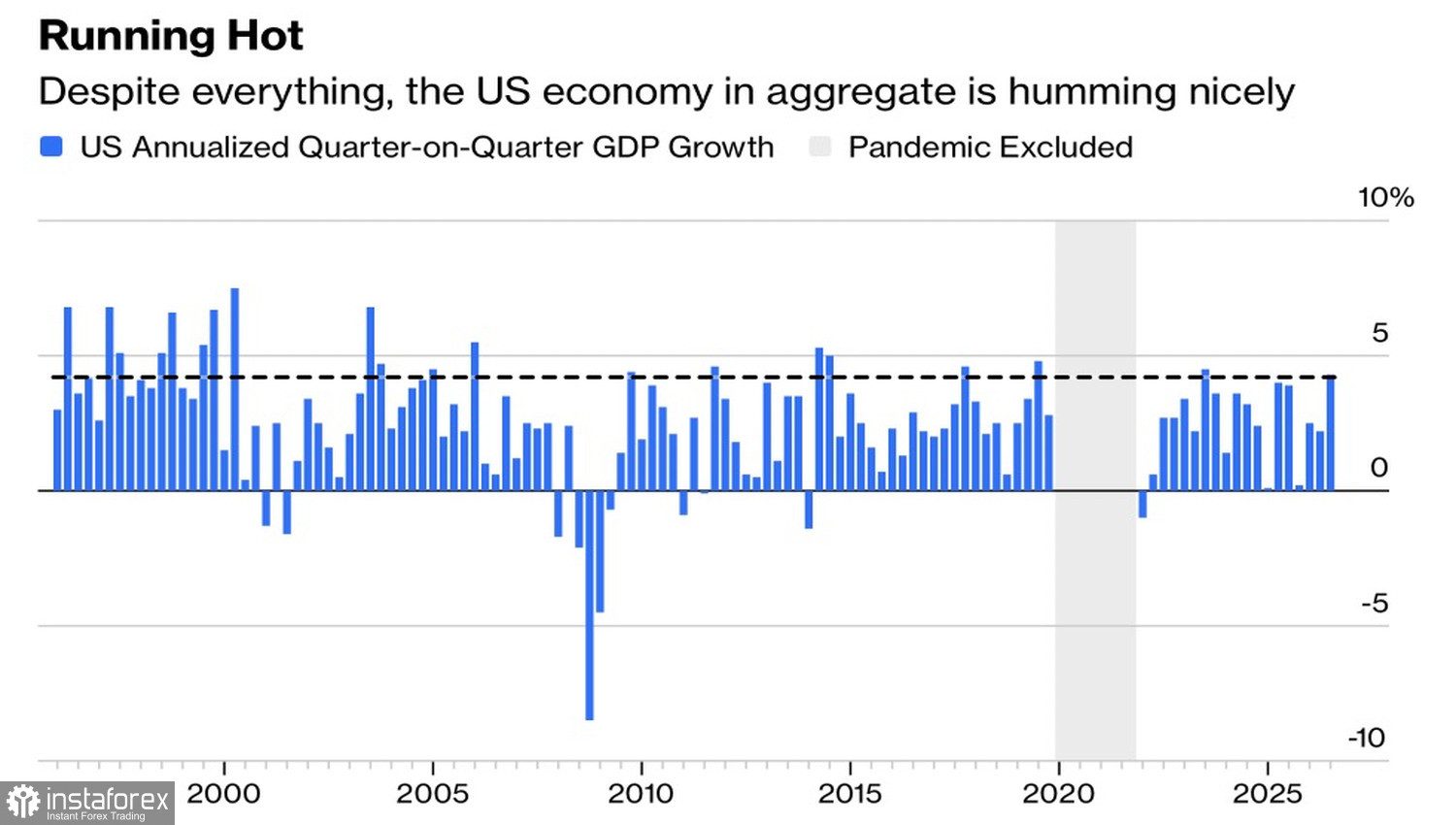
A key headwind for equities is the Fed: the economy gives no reason to pause. Q3 real GDP rose at an annualized >4% pace, and services inflation excluding housing remains above a comfortable range for the central bank. Futures price in a December 9 hike as nearly certain and still expect more than two rate hikes next year — a materially hawkish path that was not in view immediately after the midterms. Strategists note the current correction has not been deep enough to change the Fed's calculus — the dot?com collapse did not stop rate increases then, and in 2008, policymakers cut interest rates to zero only after far worse market turmoil.
Treasuries have felt the swing in risk appetite. The 10-year yield rose to about 4.91% as money rotated out of safe-haven assets. Gold and Bitcoin plunged intraday but managed to finish the session positive.
Chipmakers remain a big risk. The Philadelphia SOX semiconductor index sits roughly 17% below its level before news of Jensen Huang's removal, and at one point, it was down about 22%. That shows Nvidia's problems are wider than a single governance episode. The dominant trade of the past four years — buy tech, sell long-duration bonds — is failing for the third time. After September's bond rout, when the 10-year topped 5.25%, investor confidence was shaken.
Earnings per share trends for technology indices
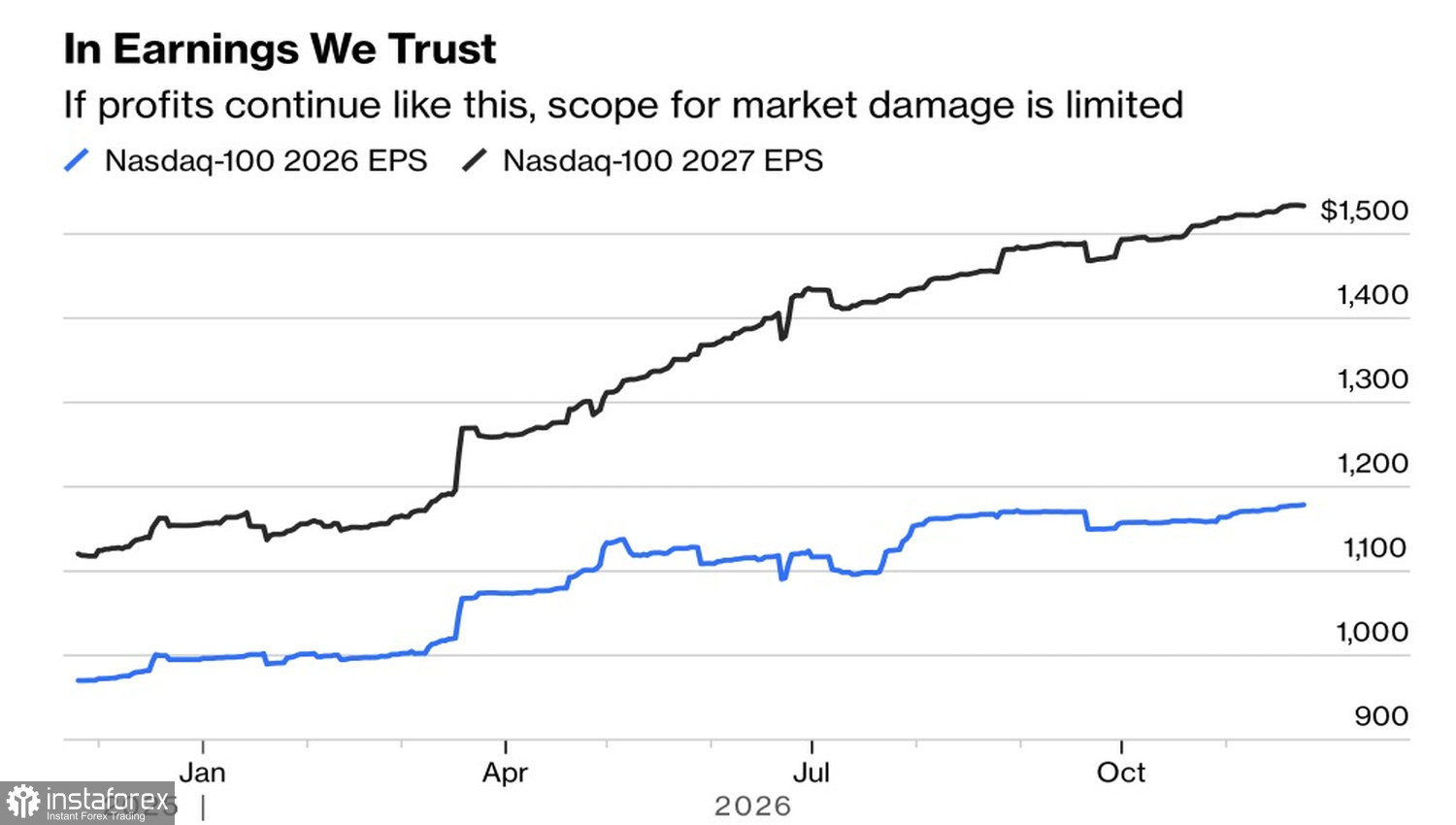
Earnings remain a tailwind for the S&P 500. Revenue growth in tech was the main story of 2026; valuations stopped accelerating but have not collapsed, and the Nasdaq 100's forward P/E looks relatively inexpensive. We are roughly two months from the next major reporting window. Longview Economics argues that November volatility is typical of a mid-cycle correction and that the Fed will step in only in the face of a much more aggressive sell-off.
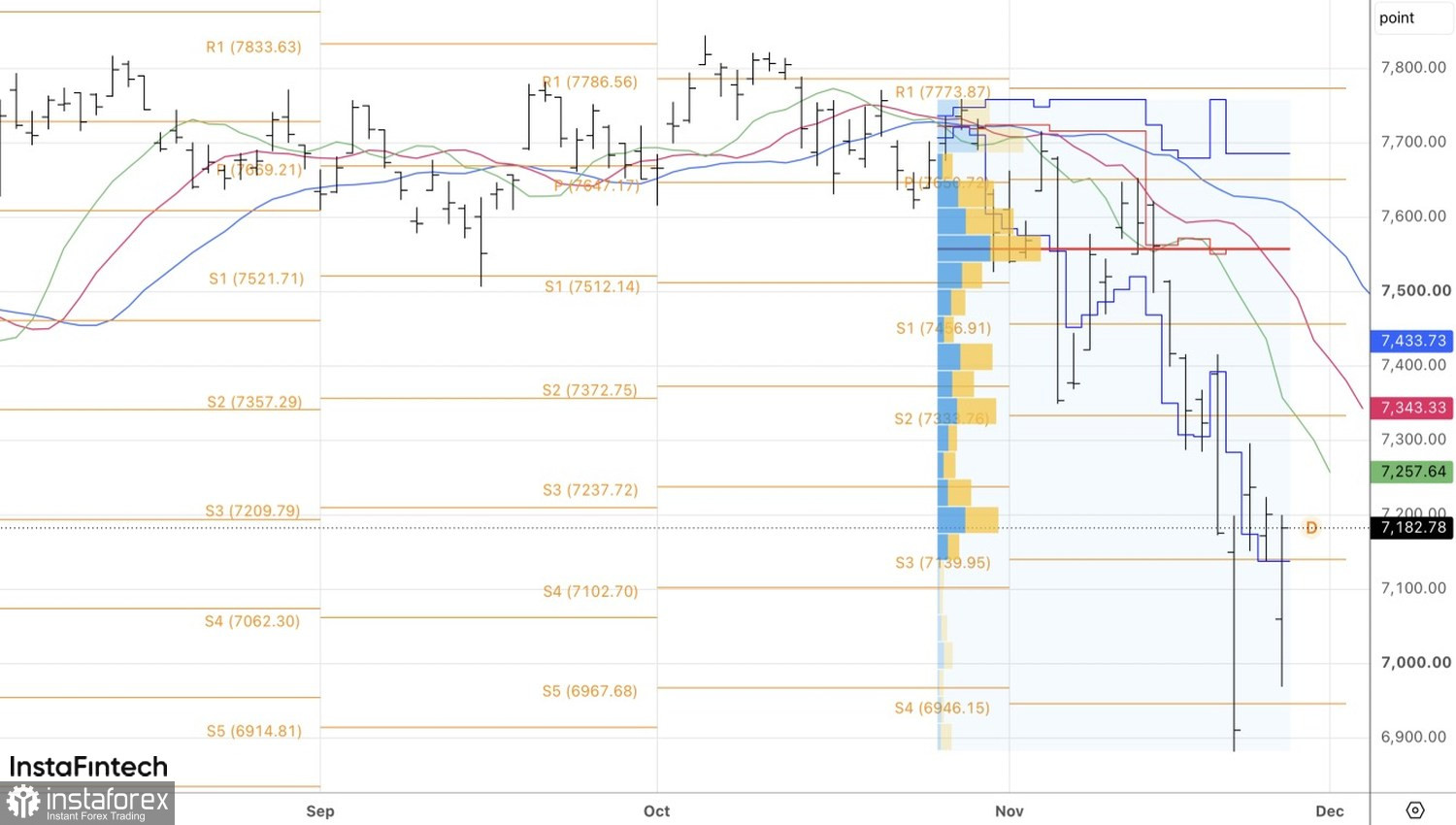
Technically, the daily S&P 500 chart shows several consecutive opening gaps, and the last three sessions produced bullish candles — a constructive sign for buyers and a reason to buy on a break above the pivot resistance level of 7,200.