 English
 Русский
 Bahasa Indonesia
 Bahasa Malay
 ไทย
ไทย Español
 Deutsch
 Български
 Français
 Tiếng Việt
 中文
中文 বাংলা
বাংলা हिन्दी
 Čeština
 Українська
 Română

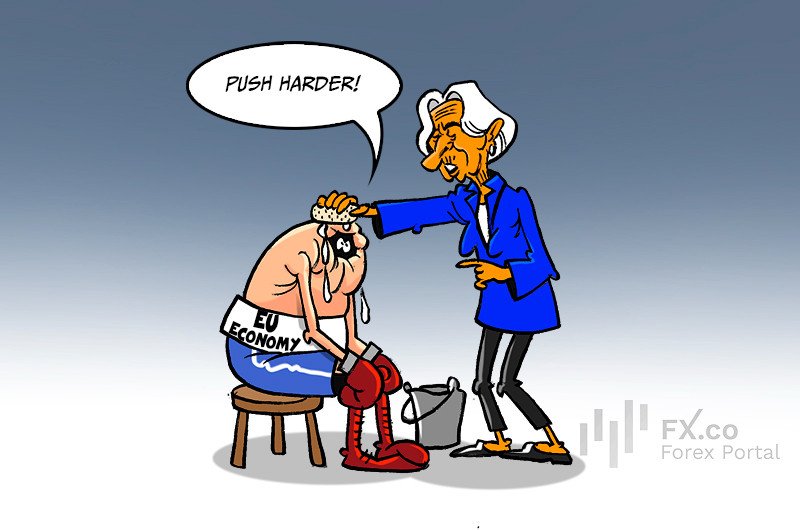
The euro area has developed remarkable resilience to external macroeconomic shocks. This gives the European Central Bank (ECB) the ability to raise interest rates in a measured way with minimal risk of triggering severe financial stress. ECB President Christine Lagarde made this remark in her speech at the regulator’s forum on central banking. She predicts that the currency bloc, which currently comprises 21 countries, will inevitably face an increasing number of unpredictable inflationary shocks over the coming years. In this context, monetary authorities will regularly be confronted with a dilemma: either to completely ignore emerging price volatility or to respond to it with the most decisive and stringent measures.
The current geopolitical and economic situation has already forced the European regulator to be ahead of the game. This month, the ECB became the first among the world’s major central banks to raise interest rates in response to a large-scale energy crisis triggered by the war in Iran. Against the backdrop of prolonged inflationary pressures, ECB policymakers continue to hold active discussions about whether the euro area economy will require additional tough measures to finally rein in inflation. Christine Lagarde explained that economic resilience has increased thanks to the ECB’s expanded crisis-fighting toolkit, improvements in the euro area’s financial architecture, and the effective functioning of the Single European Banking Supervision.
Summing up her points, the ECB chief stressed that the institutional protections built up in recent years would significantly limit the negative impact of future shocks on the real economy. According to Lagarde, leaders of the EU countries will increasingly find themselves in the so-called “grey area” — a border zone between short-lived market fluctuations that the monetary regulator can safely ignore and fundamental threats that require immediate intervention.
Comments: