 English
 Русский
 Bahasa Indonesia
 Bahasa Malay
 ไทย
ไทย Español
 Deutsch
 Български
 Français
 Tiếng Việt
 中文
中文 বাংলা
বাংলা हिन्दी
 Čeština
 Українська
 Română

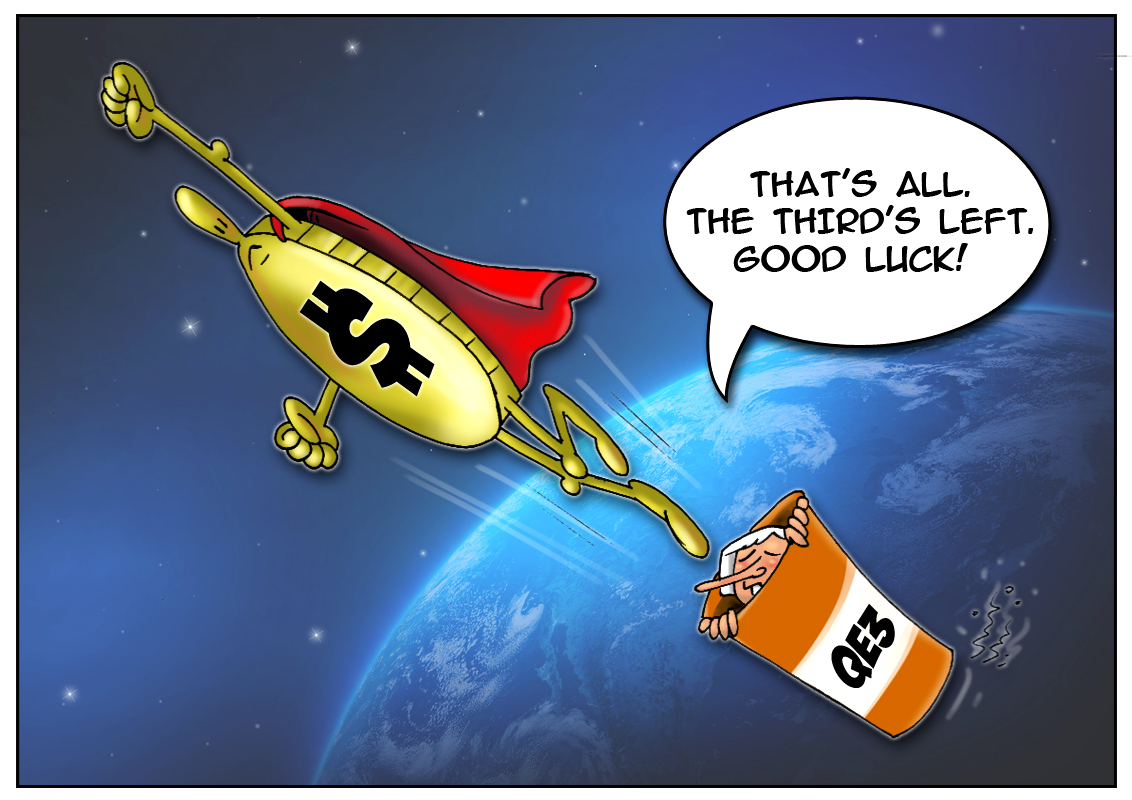
One of the main factors that influenced a sharp increase of the U.S. dollar was the Fed decision to taper the quantitative easing program. Experts believe it was the main reason for growth. During the Federal Open Market Committee (FOMC) meeting, it was decided to stop buying bonds completely. In other words, the QE program approached its logical end. The market instantly reacted to this report. The U.S. dollar rate began to rise against key currencies. There is no precise opinion about this program, though most experts call QE a useful one citing economic data. The only controversial issue is the program’s time interval. Some experts believe that 6 years is a very considerable time line. In their opinion, this program will be more attractive as a tool of the short-term stimulus. The QE program was launched by the Fed in November 2008 shortly after Lehman Brothers declared its bankruptcy, and the government started to rescue banks. At that time it was necessary to prevent a full-on financial panic. According to the plan, it was decided to stimulate the economy using traditional measures such as the reduction of short-term interest rates. Ben Bernanke, who was the head of the Fed at that time, pioneered the program. The financier’s team was going to play more constructive role in assistance to economic recovery. However, there are some opponents who consider that Bernanke made it worse. Time put the things right. Economic indicators speak for themselves. There is a real benefit from the Fed’s actions.