 English
 Русский
 Bahasa Indonesia
 Bahasa Malay
 ไทย
ไทย Español
 Deutsch
 Български
 Français
 Tiếng Việt
 中文
中文 বাংলা
বাংলা हिन्दी
 Čeština
 Українська
 Română

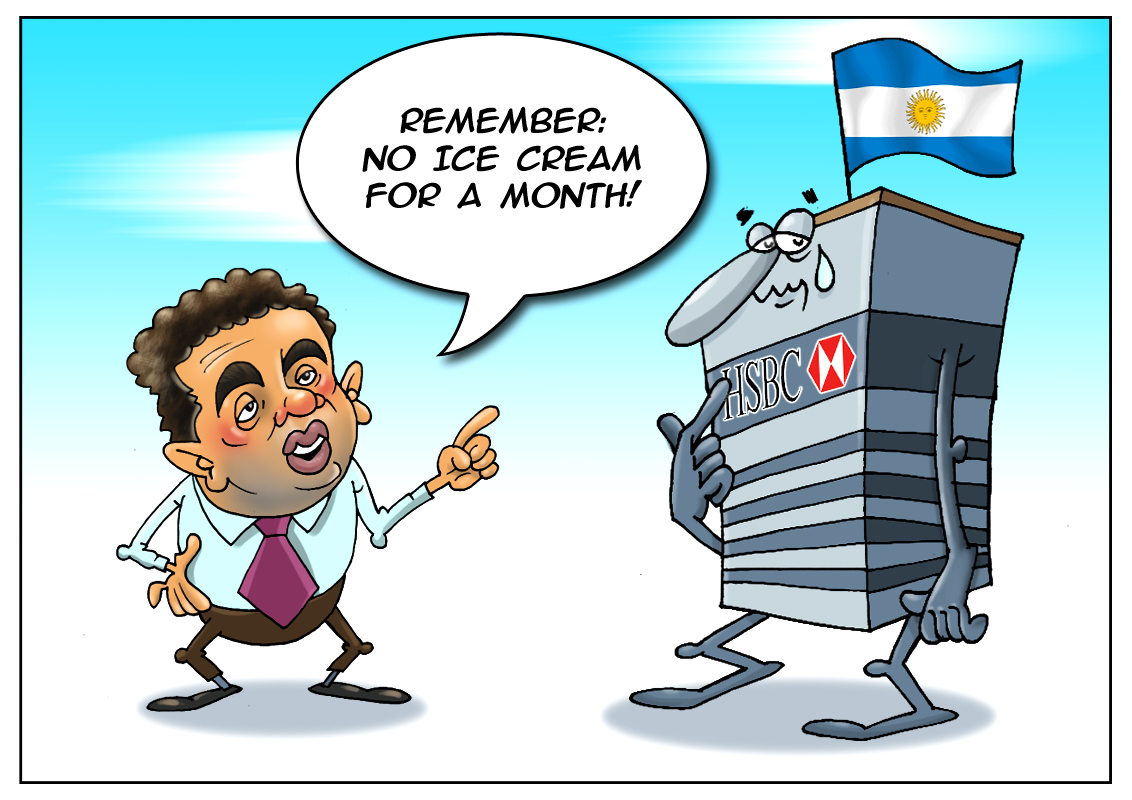
On January 12th, Argentina’s central bank (Banco Central de la República Argentina, BCRA), temporarily blocked HSBC, one of the largest global banks, from transferring money and assets abroad. So, HSBC was hit with a 30-day ban on outgoing international money transfers. The decision was announced by Alejandro Vanoli, the central bank’s Governor. The regulator judged that HSBC Argentina had failed to correct irregularities in its credit transfers as planned. BCRA officials indicated that the 30-day freeze could be shortened if the bank introduces “the necessary corrective measures”. It will depend on HSBC Argentina’s eagerness to streamline the current security system according to the local legislation. HSBC has already been spotted by the watchdog. For example, tax evasion charges were brought against HSBC Argentina last November. The country’s tax authority detected account information proving that HSBC helped 4,000 customers to avoid domestic taxes by transferring their money to secret bank accounts in Switzerland. The tax authority’s director stated that HSBC had assisted clients in tax evasion at roughly $3 billion. However, the Argentine economy has struggled to maintain tax revenue and foreign exchange reserves in recent years; the government has introduced a series of measures, including tougher capital controls on outgoing forex transfers, in order to maximize public revenue and keep capital in the domestic economy.