 English
 Русский
 Bahasa Indonesia
 Bahasa Malay
 ไทย
ไทย Español
 Deutsch
 Български
 Français
 Tiếng Việt
 中文
中文 বাংলা
বাংলা हिन्दी
 Čeština
 Українська
 Română

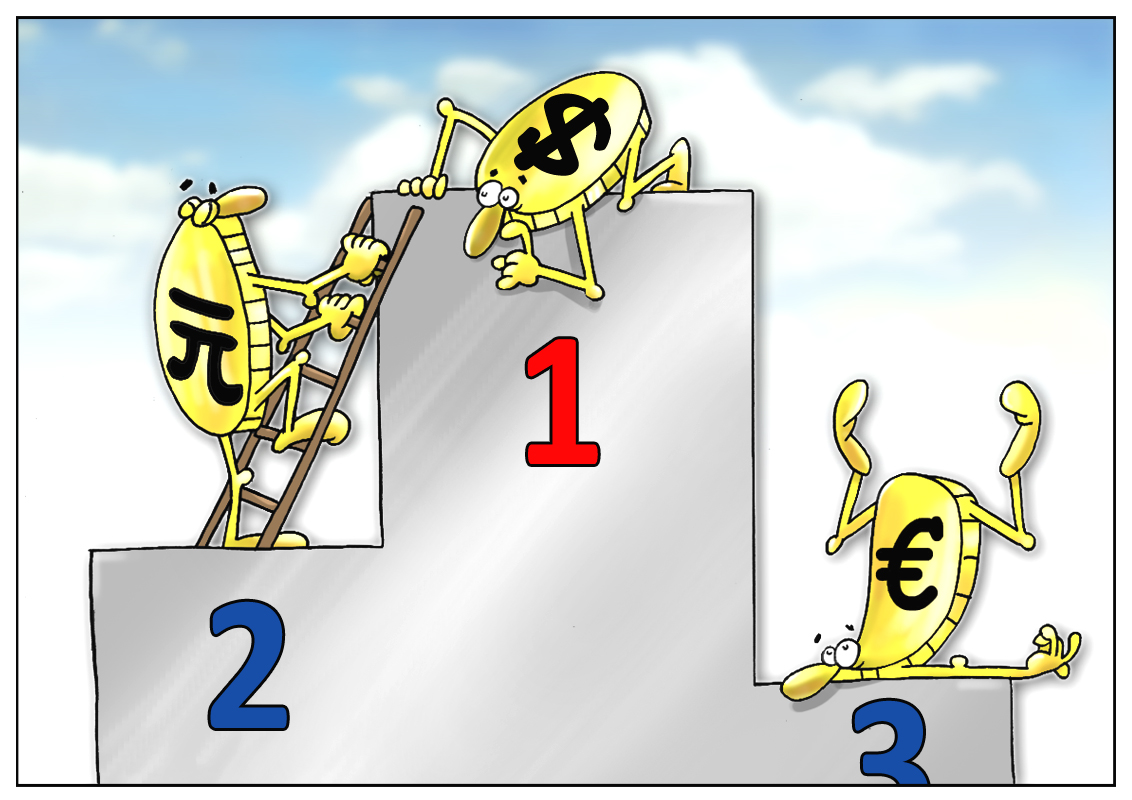
China is rapidly gathering momentum. After a modest fall at the beginning of the year, the Chinese economy could not only to bottom out, but also make up leeway. Meanwhile, the yuan is moving with the trend as the globalization plans are being implemented. According to international agency, currently, the yuan takes the second position among the most actively traded currencies. Complying with the Society for Worldwide Interbank Financial Telecommunication (SWIFT) statement, the share of the yuan in trade finance has surged this year. Thus, in 2012 the indicator clocked at 1.89%, while in October 2013 it jumped to 8.66%. Meanwhile, the U.S. dollar still leads with 81.01% of trade settlements. The euro loses its allure falling from a market share of 7.87% last January to 6.64%. The top countries using the Chinese currency were Australia and Germany (2%), Singapore (12%), Hong Kong (21%), and China (59%). Considering this situation, the Chinese government, which usually adheres to tight currency control, now aims to make the yuan freely convertible by 2015. In the wake of such news, some of the largest European cities are set to ink bilateral agreements with China to boost the international use of the yuan. London, Paris, and Frankfurt-am-Main are among them. Today only Hong Kong has such a benefit, but the yuan’s expansion has just begun.