 English
 Русский
 Bahasa Indonesia
 Bahasa Malay
 ไทย
ไทย Español
 Deutsch
 Български
 Français
 Tiếng Việt
 中文
中文 বাংলা
বাংলা हिन्दी
 Čeština
 Українська
 Română

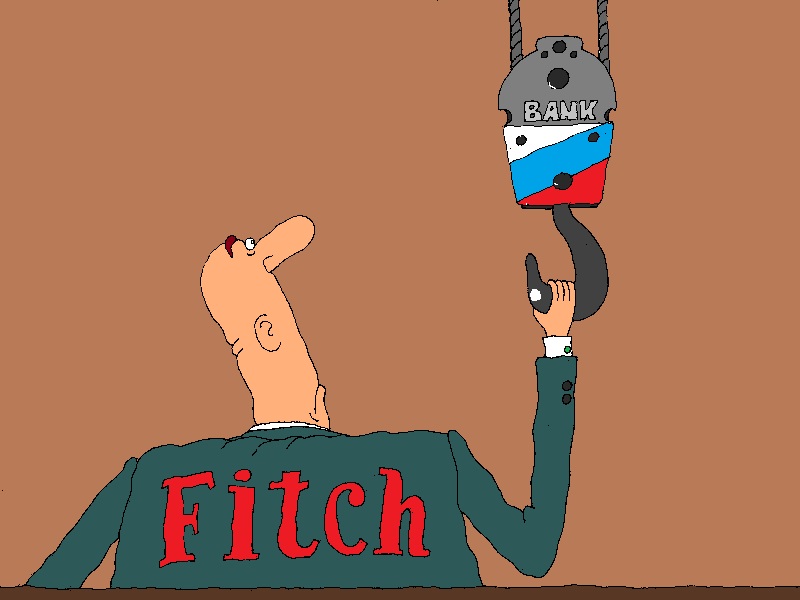
Fitch has cut the ratings of 15 Russian banks from stable to negative, including Sberbank and its subsidiaries, Vnesheconombank and its subsidiaries, Globeksbank, Svyaz-bank, Gazprombank, Rosbank, Rosselkhozbank, Rosagrolizing, Deltacredit, Alfa Bank, as well as Sitibank, Raiffazenbank, Nordea bank, and Credi Agricol CIB. Moreover, the international agency downgraded the rating of the following Russian state-owned companies: Atomenergoprom, Gazprom, Gazprom Neft, Sukhoi Civil Aircraft, Lukoil, Russian Railways, Rusgidro, FSK EES, Federal Passenger Company.
This move by the rating company underlines a potential impact of Western sanctions, following Crimea’s rejoining Russia, on the economy and business environment in Russia.
Earlier, both Fitch and Standard & Poor’s revised down outlook for long-term issuer default rating of Russia in national and foreign currencies from stable to negative. On top of that, Fitch revised its outlook on 5 Russian regions – Moscow, St. Petersburg, Tatarstan Republic, Tyumen Region, and Khanty-Mansyisk Autonomous Region.
On March 20, U.S. President Barack Obama ordered sanctions targeting more Russians as Crimea voted to rejoin Russia. The new list includes businessmen Gennady Timchenko, Arkady Rotenberg and Boris Rotenberg, Yury Kovalchuk, and Vladimir Yakunin. Besides, the sanctions were extended to the Bank Rossiya with Kovalchuk the main shareholder. After the sanctions were announced, Visa and MasterCard payment systems blocked any transactions on Bank Rossiya and Sobinbank bank cards. One hundred percent of Sobinbank shares belong to Bank Rossiya.